Showing posts with label somber. Show all posts

Friday, February 4, 2011

Black Death (2011)

According to Wikipedia, the Black Death was one of the most devastating pandemics in human history and is estimated to have killed 30% – 60% of Europe’s population, reducing the world’s population from an estimated 450 million to between 350 and 375 million in 1400. This has been seen as having created a series of religious, social and economic upheavals which had profound effects on the course of European history. It took 150 years for Europe’s population to recover.

The death and pestilence spread by this deadly plague was of Biblical proportions, and it seems that the dark mark it left upon history would be the perfect material for a horror film. Lucky for us, Magnolia Pictures’ Black Death has risen to the occasion.

The year is 1348. Europe has fallen under the shadow of the Black Death. As the plague decimates all in its path, fear and superstition are rife. In this apocalyptic environment, the church is losing its grip on the people. There are rumors of a village, hidden in marshland that the plague cannot reach. There is even talk of a necromancer who leads the village and is able to bring the dead back to life.

Ulric (Sean Bean), a fearsome knight, is charged by the church to investigate these rumors. He enlists the guidance of a novice monk, Osmund  (Eddie Redmayne) to lead him and his band of mercenary soldiers to the marshland, but Osmund has other motives for leaving his monastery. Their journey to the village and events that unfold take them into the heart of darkness and to horrors that will put Osmund’s faith in himself and his love for God to the ultimate test.

Black Death is a gripping film dealing with issues of faith, temptation, redemption, salvation…all huge issues back in the Dark Ages and still relevant today. It has a bit of Wicker Man-feel, only because of the dark secret the blissful and untouched village hides. It also has a much more somber feel and isn’t a film to take lightly. I liked how the film subverted the usual Christian vs. Pagan dynamic and made the pagans vicious instead of their usual hippie-dippy selves.

Speaking of viciousness, the film also boasts some wicked medieval battle scenes, complete with swords, maces, axes and even an iron maiden, among other torture devices. Despite the bloodshed being far and in-between, I was surprised how bloody the film actually was, especially in contrast to the subdued tone of the film and stark beauty of the cinematography.

The film looks stunning, from the cobblestoned streets of medieval Europe to the dark woods the characters travel through to the sun-dabbled village they finally arrive at. The mostly cold and bleak visuals echo the overall ominous atmosphere of the film. The grand scope of the cinematography makes me wish I had seen Black Death in a theater, but even on the smaller screen its grandiose scope wasn’t lost.

I liked the storyline because it had an epic feel and because of the themes it explored. As mentioned previously, I liked how the Christian vs. Pagan dynamic was flipped, with the pagans persecuting the Christians instead of the other way around. I also liked how the film showed unwavering faith in the characters as they were faced with temptations and challenges. The film ends on a brutal, downbeat note that was definitely disturbing and shows how evil can corrupt even the most faithful.

The actors gave performances equally intense to the storyline and visuals. Sean Bean is especially good as the God-fearing Ulric, but I also liked Eddie Redmayne’s performance as the conflicted Osmund. In my opinion, though, Carice van Houten stole the show as the village’s necromancer Langiva.

Director Christopher Smith has crafted another unique film with Black Death and is definitively one of the most versatile directors of the horror genre. He gave us the spooky Creep, the darkly humorous Severance, the intense Triangle and now the bleak Black Death. His films are always engaging, entertaining and original, and Black Death is no exception.

Buy it on Amazon!

Wednesday, October 20, 2010

Make-Out with Violence (2010)


Zombie movies are usually brainless (ahem, pardon the pun) but fun romps in the horror world. However, lately many have become disenchanted by the subgenre, usually forgoing seeing a zombie film with the assumption that it’ll be like all the rest, with nothing new or interesting to contribute. For most films, these assumptions would be correct. However, the zombie film Make-Out with Violence is an entirely different animal and takes the zombie film to amazing emotional depths.

Make-Out with Violence tells the story of twin brothers Patrick (Eric Lehning) and Carol Darling (Cody DeVos), newly graduated from high school and struggling to come to terms with the mysterious disappearance of their friend, the bright and beautiful Wendy Hearst. When a drive through the countryside surrounding their posh suburban community leads to the discovery of Wendy’s mysteriously animated corpse, the boys secretly transport the zombie Wendy to an empty house in hopes of somehow bringing her back to life. As the sweltering summer pushes on, they must maintain the appearance of normalcy for their friends and family as they search for ways to revive the Wendy they once knew, or, failing that, to satisfy their own quests for love amongst the living and the dead.

Make-Out with Violence feels more of like a drama rather than a horror film, and in fact focuses more on the trauma of growing up instead of inundating us with blood, guts and hordes of zombies. In fact, there is only one zombie in the movie, the lovely in life and death Wendy, and there are only a few instances where she is really scary. In fact, most of the time she just lays there, staring at nothing with her glazed-over eyes (until she tries to move, and then her jerky movements will send shivers up your spine).

You might be thinking that the plot line of teens keeping a pretty girl zombie as a “pet” sounds an awful lot like Deadgirl, which is what I thought before viewing the film. However, Make-Out with Violence takes an entirely different route than Deadgirl. The boys don’t ever sexually exploit the living corpse, but instead take careful care of her and try to get her to do normal things, like sit at a dinner table and eat some birthday cake. Instead of being shocking, vulgar and offensive like Deadgirl, Make-Out with Violence is a much more subtle film on the loss of innocence and growing up, with no less traumatizing results.

I also thought that all the actors did an amazing job. You really believed what they were going through and came to relate to them, especially through their unrequited loves. Eric Lehning and Cody DeVos were the standouts as the Darling twins. They expressed so many different emotions as their characters went through so much. Special mention must also be made of Brett Miller, who played the twins younger brother Beetle. For his young age, he was very impressive! Leah High was commendable as Addy, the twins long-time friend and Carol’s love interest. I would be remiss if I didn’t mention the lovely Shellie Marie Shartzer, who played Wendy. Though she is silent and still most of the movie, she does an excellent job conveying the hopelessness of her situation and just how truly changed she is from when she was alive.

This is the first feature film from the Deagol Brothers, which I never would have guessed from watching Make-Out with Violence because it looks so stunning and polished. The visuals perfectly captured the bittersweet feeling of summertime, from singing cicadas to melty milkshakes. The melancholy feel and dreamy-like visuals reminded me of the film The Virgin Suicides, which also explored death and the malaise of summertime.

Make-Out with Violence isn’t for everyone, and if you go into it expecting a regular, run-of-the-mill zombie flick you’ll probably be disappointed. However, if you don’t mind introspective and intelligent films that are beautifully haunting and heartfelt, you just might want to cozy up with Make-Out with Violence.

Available from Amazon!

Monday, June 28, 2010

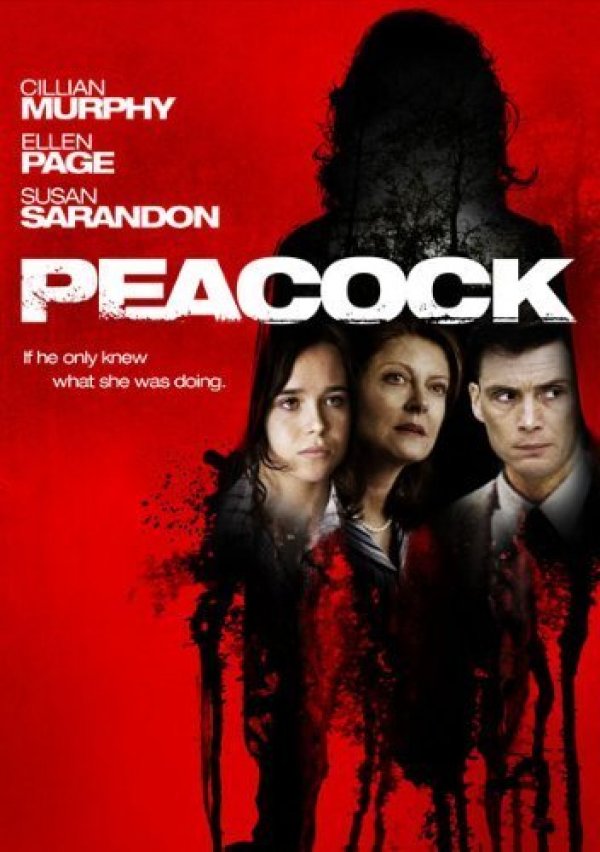
Peacock (2010)


John Skillpa (Cillian Murphy) is a timid, socially-awkward bank clerk living in tiny Peacock, Nebraska who prefers to keep to himself. This might have to do with John’s secret: he has another personality no one knows about, a woman named Emma, who each morning does his chores and cooks for him before he starts his day. However, everything changes when a train derails into Skillpa’s backyard, exposing Emma to the curious neighbors, who assume “her” to be John’s wife. As John struggles to maintain control over his other personality as well as keep up the façade that she is his wife, his already disturbed psyche becomes further unbalanced.

Peacock is an above-average thriller, but I’ll tell you right now it definitely won’t be for everyone. It’s a slow, subtle character-study about a man with a fractured psyche that plays more of like a drama than a thriller (though it’s pretty darn suspenseful!). If you aren’t put off by languidly paced films, however, Peacock is an intensely psychological experience that I definitely found to be worth my while, despite its flaws.

The best thing about the film is no doubt Cillian Murphy’s amazing performances as both John and Emma. These are two completely separate people, with distinctly different ways of talking, walking and different personalities and facial tics, but Murphy makes them both believable and I even starting thinking of them as two separate people instead of one man. How Murphy didn’t receive more accolades for his performance is beyond me, because he is purely brilliant in this film.

Rounding out the cast are several other famous faces – Ellen Page, Susan Sarandon, Bill Pullman, Josh Lucas, Keith Carradine. Not even against these accomplished actors is Murphy’s performance diminished, though the other actors do a fine job as well. Page played the role of a desperate young mother, Carradine and Sarandon played the wealthy mayor and his wife, Lucas the town cop and Pullman the annoying boss at the bank. While each character adds another layer of complexity to the story, some of these extraneous characters felt like they weren’t really vital to the story. Perhaps the connection between some of these characters and John/Emma never really meshed for me, but something was a bit lacking in their development.

Nevertheless, the best parts of the film were when John/Emma went behind the others’ back to interact with the townsfolk. When Emma would approve something (like a political rally in the backyard), John would find out later and just lose it! John was so out-of-control that you came to prefer Emma’s cool-headed way of approaching problems, even if she was manipulative and calculating. As she slowly took over more and more of John’s life and became the more dominant personality, John really begins to panic and this unbalance creates a lot of tension and suspense.

Now, a lot of people have commented that it’s not at all believable that the townspeople couldn’t tell that John/Emma were the same person, and while watching the movie I tended to agree. However, looking back I realized that if Murphy’s performance was so convincing to me, I suppose it would also work on the townspeople. Plus, the two separate personalities had completely different ways of moving and speaking. However, I still think it would have been more believable if writers Michael Lander (who also directed) and Ryan Roy had just made Emma John’s sister or cousin. At least that way it would explain the striking resemblance between the two!

Despite this, I found myself getting sucked into the twisted, dreary story. Besides the fantastic performances, director Michael Lander creates a somber, post-Dustbowl era (the movie could be set anywhere from the 1930’s to the 1950’s) atmosphere. The film itself is beautifully filmed and its dark tones create a melancholy, ominous tone. Even the obligatory backstory of John being an abused little boy or the previously mentioned flaws didn’t really sully the hauntingly filmed movie.

Peacock doesn’t work all the time, but if you are looking for a sophisticated, tense psychological film it is worth checking out!

Available from Amazon!

Wednesday, June 9, 2010

Book Review: Valley of the Dead by Kim Paffenroth


What if Dante’s Inferno was based on truth? What if in his life Dante faced such insurmountable horror that he wrote it all down but had to pass it off as fiction because it was just too unbelievable?

Well, that is the premise behind Kim Paffenroth’s new novel, Valley of the Dead.

From the back cover:

Working from Dante’s Inferno to draw out the reality behind the fantasy, author Kim Paffenroth unfolds the horrifying true events that led Dante to fictionalize the account of his lost years…

For seventeen years of his life, the exact whereabouts of the medieval Italian poet Dante Alighieri are unknown to modern scholars. It is known that during this time he traveled as an exile across Europe, working on his epic poem, The Divine Comedy. In his masterpiece he describes a journey through the three realms of the afterlife. The most famous of its three volumes, Inferno, describes Hell.

During his lost wanderings, Dante stumbled upon an infestation of the living dead. The unspeakable acts he witnessed – cannibalism, live burnings, evisceration, crucifixion and dozens more – became the basis of all the horrors described in Inferno. Afraid to be labeled a madman, Dante made the terrors he experienced into a more ‘believable’ account of an otherworldly adventure filled with demons and mythological monsters.
But at last, the real story can be told.

This may sound like another piece of classic literature being updated to include monsters like zombies (see Pride and Prejudice and Zombies, its sequel and a ton of other reconstituted classics), but Valley of the Dead is different. First off, it doesn’t take the original text and warp it to fit the author’s goal. Instead, VotD is an entirely original work, and the only text used from the original epic Inferno are a few lines before each chapter. Author Kim Paffenroth delivers another original, stunning and exciting novel that weaves an epic journey through a zombie-infested landscape with philosophical leanings. Through his story, Paffenroth perfectly captures the sheer ruthlessness of the human race as well as showing their compassion.

The cruelties that the living humans inflict not only on the zombies but on each other are truly shocking. It seems that with each new page Paffenroth has Dante encounter some truly horrific stuff – an army slaughtering innocent men, women and children, rape, cannibalism, witch burnings and many more evil acts besides all the zombie slaughtering going on. However, contrasted against the chaos and depravity are the virtuous lead characters of Dante, soldier Radovan, pregnant peasant Bogdana and monk Adam.

I am not intimately familiar with Dante’s Inferno, so I can’t really say what scenes in Paffenroth’s book take their cue from the classic poem, but the scenes in VotD are truly horrific and quite hellish! I really enjoyed how Paffenroth created such a vivid picture of the surrounding countryside Dante and his companions must traverse to escape the zombies. It starts off with green fields and lush forests, but as they are forced to escape higher and higher into the mountains the landscape becomes more desolate and otherworldly…and yet it seems the undead dwell there nonetheless. Despite the hopeless evil that seems to surround Dante and his friends, they grimly continue on in hopes of escaping the zombies and I was rooting for them the whole way.

As in his previous novels (Dying to Live and its sequel), Paffenroth’s character development is extremely strong. We care for each and every one of the main characters and through their journey really understand who they are and what they stand for. This makes the horrors they must face all the more cringe-worthy and terrifying for the reader. The characters seem to always be in constant danger, whether from the undead, the approaching army and from the strangers they encounter. This creates a tension that makes the book hard to put down! And when the characters do have to stand their ground and fight (which they do plenty of times in the book) we are treated to suspenseful battles.

However, to balance out all the action is the somber tone that permeates the story. Like in Inferno, Dante laments the horrors occurring around him and is disheartened by all the violence. While it isn’t quite Hell in VotD, it’s damn close! The tone reflects this and is more thoughtful, pensive and philosophical. I think this restrained, downbeat tone works beautifully within the confines of the story and perfectly matches the appalling actions that Dante and his friends are witness to.

Valley of the Dead is another stunning novel from Kim Paffenroth that mixes philosophical meanderings with gruesome zombie action and a creative re-telling of Italian poet Dante Alighieri’s inspiration for his most famous work, Inferno. Any fans of intelligent and sophisticated zombie stories will no doubt enjoy VotD!

Available from Amazon!

Wednesday, June 2, 2010

After.Life (2010)


Christina Ricci naked.

That seems to be the film’s only selling point, at least according to most reviews of this film. However, its actual storyline is pretty intriguing and this film has a lot more going for it that Ms. Ricci’s nudity.

After being involved in a car accident, Anna (Christina Ricci), wakes up in a funeral home where the sole proprietor Eliot Deacon (Liam Neeson) tells her she is now dead as he prepares her body for burial. Though Anna still feels very much alive,  Eliot tells her he has a special gift to speak with the dead and is there to help her make the transition to her afterlife. Anna’s distraught boyfriend Paul (Justin Long) comes to believe that the funeral director is hiding something and that Anna could still be very much alive. He has just a few days until her funeral to get to the bottom of Anna’s demise, but he may already be too late as Anna comes to accept her fate.

Besides all the fanboys going gaga over the nudity, there is a lot more to After.Life than T&A. It is a much more complex and intriguing film than others have given it credit for and definitely deserves a look.

Director Agnieszka Wojtowicz-Vosloo (who also co-wrote the film with Paul Vosloo and Jakub Korolczuk) crafts a beautifully subtle film about appreciating one’s life before the inevitability of death. The first thing that really grabbed me was the color symbolism used throughout the film. The color red, the color of blood and of life and vitality, is used predominately. Before her accident, Anna has frequent nosebleeds and has her hair dyed red, both blood and dye shown swirling down the drain. Also, the clinical white interior of the funeral “preparation room” and the autumnal world outside symbolize the transition from life to death, the “preparation room” acting as a sort of purgatory while the changing seasons outside show the cycle of life. I don’t mean to get all analytical on you, though, so let’s get back to what works about After.Life!

Besides the symbolism surrounding the visuals, director Wojitowicz-Vosloo also infuses the story with mystery, and we as the audience are never quite sure of each of the character’s culpability or innocence. Is Anna really dead or is Eliot some sick psycho? The answers are neither clear-cut nor easy, which makes After.Life a much more satisfying and complex film.

Also, the actors all do a fabulous job in their roles. I especially loved Liam Neeson as Eliot Deacon, the creepy funeral director. He played the part with equal parts menace and charm, never letting Anna or the audience know if he could be trusted or not. Christina Ricci also gives a remarkable performance as the unhappy Anna. There are parts of the film where she is naked, but I felt the direction made the nudity feel cold and clinical, never erotic. Plus, the nudity never distracted from Ricci’s strong performance as the confused Anna. Justin Long also appears as Anna’s distraught boyfriend and gives quite a solid performance.

With all these positives going for the film you might think After.Life was without flaw, but that isn’t the case. Its slow pace certainly won’t work for everyone, and the film tends to drag a bit in the middle. It doesn’t feature visceral action, instead opting for psychological drama. Very little blood is spilled in the film as the psychological terror of being dead is explored instead. However, I thoroughly enjoyed how After.Life explored themes of life and death and what comes after. It kept me guessing up until the end, and with no clear-cut answers it stayed with me long after I had finished viewing it.

Available from Amazon!

Tuesday, January 19, 2010

Contact (2009)


In this gorgeous and grim short film from director Jeremiah Kipp, two lovers (played masterfully by Zoe Daelman Chlanda and Robb Leigh Davis) score a drug from an underpass drug dealer and have an unpleasant and increasingly horrific trip back at their apartment.

From eerie opening scenes showing an older couple setting the table and waiting for a guest (I never thought setting a table could be so creepy!) to a beautifully framed shot of the couple as viewed through a window, Contact oozes sinister style.

From the beginning, it’s apparent the lead characters are going to be taking a strange journey, a la Alice in Wonderland. The drug dealer, played by B-movie cult figure Alan Rowe Kelly (who also produced), reminded me a bit of the Mad Hatter and the whimsical, old-fashioned bottles the drugs were stored in reminded me of the “Drink Me” bottles Alice encounters in the Lewis Carroll story.

There is a sense of foreboding and unease throughout the short, which only builds when the couple takes the drug. Dialogue is very limited, creating an even more surreal atmosphere, which is further developed with the freaky visuals of faces melding together and then stretching apart. The direction by Jeremiah Kipp and cinematography by Dominick Sivilli is stunning. The movie is filmed in black and white, giving it an artistic look, and Kipp creates a claustrophobic, paranoid atmosphere of confusion and vulnerability.

Besides the beauty of the visuals and the tension they create, the actors should also be commended for their terrific performances. As mentioned earlier, there is hardly any dialogue, so it’s up to the actors to portray their emotions and what they are going through solely through body language and facial expressions. Zoe Daelman Chlanda gives an absolutely amazing performance, filled with horror and vulnerability, and commands her screen time.

Contact is a stunningly sinister short film that is probably one of the best anti-drug films I’ve seen! It perfectly captures the horror of being trapped in a trip and the repercussions of drug use on family members. Reach out and make Contact today!

Watch the film on IndieRoar.com!

Thursday, January 7, 2010

Sauna (2008)


I’ve always loved period horror films, especially those that features rich history and superstitious folklore come to life. Period horror films are few and far between so, when I first heard about the Finnish film Sauna, set at the end of the 1500’s, I was excited to check it out. I will say the name threw me off a bit, which to me sounded more like a been-there, done-that J-horror than anything else. Yet, when I popped the DVD I was immediately taken in by the eerie atmosphere of Sauna as I let the film chill me to the bone.

Sauna is set in 1595 at the end of a war between Russian and Sweden. A new border between the nations is being mapped out in the far reaches of northern border by a group of Russian soldiers and two Swedish brothers, the hot-headed soldier Eerik (Ville Virtanen) and the more cerebral and sensitive Knut (Tommi Eronen).

One night, Eerik and Knut seek refuge in a local peasant’s home belonging to a father and daughter, but after discovering some religious iconography pointing to the father’s Russian loyalties, Eerik kills the father. Knut tries to protect the daughter from Eerik’s violence by locking her in a shed. As they rejoin the group of Russian soldiers and continue their trek across the dismally gray landscape, Knut begins to see the peasant girl following them. Eerik tells him to snap out of it and confesses he never let the girl out of the shed and left her to die.

As the eerie images of the peasant girl continue to haunt Knut, the group presses on until they come across a village in the middle of a misty swamp. The village is uncharted on the map, so the group decides to stay there to decide whether the village goes to the Russians or the Swedes. Yet, there is something very unsettling about the village and its inhabitants. The weirdness seems to stem from the half-submerged sauna that sits apart from the village. In folklore, saunas are supposed to cleanse you of your sins, but this particular sauna seems to force people to face their sins.

Sauna is a very deliberately paced and cerebral film that asks more questions than it answers. If you are looking for a ghost story filled with jump scares, look elsewhere, because Sauna is a much more of a thinking person’s horror film with many layers and subtexts. It raises many questions about guilt and redemption, salvation and repentance and at what cost can sins be cleansed. While these philosophical questions (and many more) are raised, the film never really seeks to answer them and instead leaves them up to the viewer to decide. The film is very ambiguous and it’s left open for interpretation by the viewer. Personally, I enjoyed the open-endedness of coming to your own conclusions that director Antti-Jussi Annila and writer Iiro Küttner offered the audience and how the consequences that the characters suffered really got you thinking.

I also loved the heavy, ominous atmosphere that Sauna offered. Throughout the entire film there is a palatable uneasiness that creeps up on you. Through the bleak cinematography (lots of gray skies, leafless trees, muddied water, dead grasses, etc.) and several eerie events like the appearance of the peasant girl to Knut as well as several dead villagers that scratched out their own eyes (reminding me of the Bible passage in Matthew 18:9 – “And if your eye causes you to sin, gouge it out and throw it away. It is better for you to enter life with one eye than to have two eyes and be thrown into the fire of hell.”) and the stark and sinister sauna itself, the film builds tension and unsettles the viewer.

It is this eerie atmosphere where Sauna succeeds the most. Some horror fans might not appreciate its deliberate pacing, but I thought the slowly building suspense was well worth it! And the film’s final frightening images sent shockwaves through my system! Director Antti-Jussi Annila and writer Iiro Küttner, along with the amazing cast, have truly delivered an artistic, emotional and grim horror film, and while it is not for everyone, those who appreciate more cerebral horror films will no doubt enjoy Sauna.

Buy it on Amazon!

Friday, December 11, 2009

Carriers (2009)


Am I sick of zombie movies? Well, truthfully, kinda. With the exception of a few entertaining ones this year (Zombieland!), I really wasn’t feeling the gut-munchin’ sub-genre in 2009. It’s not that I hate zombie movies (I in fact LOVE them) but nowadays it seems like everyone is churning out a formulaic film with the same gory set-pieces I’ve seen a billion times before.

So, I was kinda iffy on Carriers, even if “technically” isn’t really a zombie movie (like 28 Days Later, the victims are called the “infected” and have a virus). Like I really need another unoriginal post-apocalyptic movie to put me to sleep! Luckily, Carriers surprised me with its intelligent and emotional take on Armageddon.

Carriers tells the tale of four survivors, two brothers and their two girlfriends, who are making their way across the desolate American landscape after a virus has annihilated most of the population. The virus is extremely contagious and once you are infected and there is no cure and you’re as good as dead. There is not much else to the plot, which pits the survivors mostly against themselves and other humans who are simply trying to survive in a world gone topsy-turvy. There are no big chase scenes, no hordes of infected pursuing the survivors, but, to tell you the truth, I thought this take was refreshing. I liked how the action focuses on the drama that occurs between the still-living characters instead of on the infected.

You can’t go into Carriers expecting it to be another 28 Days Later, Land of the Dead or even Zombieland. It can barely be compared to zombie films, because it really isn’t one itself. There is no breakneck action and it is a very slow moving, quiet film whose intent is to show the horrors of being alone in a world where most people are dead or dying. Writers/directors Alex and David Pastor have created a movie that shows how frightening that loneliness really is.

The direction by the two directors is breathtaking. There are lots of shots of the wide-open road, desolate towns and stretches of empty land as far as the eye can see. When the characters enter buildings that may contain the infected or other squatters, the directors build dread and unease with the claustrophobic and dark settings. They even managed some effective jump scares scattered throughout the film!

The acting is top notch as well. You’ll recognize Chris Pine from this year’s Star Trek as tough older brother Brian as well as Piper Perabo as his girlfriend Bobby. His younger, Ivy League brother Danny is played by Lou Taylor Pucci and rounding out their rag-tag group is Kate, played by Emily VanCamp. Christopher Meloni plays a survivor looking for help for his infected young daughter, but other than a few other people the cast is extremely small. Most of the action is directed towards the four survivors, and they all do a fantastic job portraying a weariness that seems far too heavy for them to endure at their young age.

I know some will complain that nothing happens in the film, but I preferred the horrific drama unfolding with the survivors rather than suffer through another brainless (hehe) zombie/killer virus/end of the world flick. This movie will make you think, could I do that if my life depended upon it? It will make you ponder how scary isolation really is and make you wonder if you could leave your loved ones (or even kill them) if they became infected. How far would you go to survive? Carriers really shows the brutality of the human race but how that callousness comes with a price, even when it is necessary.

Carriers is not your typical horror movie, but in a genre over-saturated with insipid zombie flicks and over-the-top end of the world movies, this isn’t necessarily a bad thing. A downbeat, bittersweet film to be sure, Carriers is something to check out if you want something a little deeper than the typical brainless horror movie.

Order it on Amazon!

Thursday, July 30, 2009

Acolytes (2009)


Hailing from Australia, Acolytes is a slow-paced yet thrilling film that has quite a few surprises. Though the synopsis might make it seem like a straightforward story of kids blackmailing a serial killer to get revenge on a bully, the film is much more than that. It takes its time building up the tension for an explosive and bloody finale, all the while commenting on how evil can live behind the white picket fence just next door.

Our story opens with three teens – Mark (Sebastian Gregory), Chasely (Hannah Morgan Lawrence), and James (Joshua Payne) hanging out after school. Mark and James have been friends since they were little kids, but there is friction between them now that James is going out with Chasely, whom Mark is obviously infatuated with. When James and Chasely start to get into some heavy petting, Mark wanders off into the woods, where he comes across a man burying something. After getting a glimpse of the man’s distinctive SUV (it has a butterfly design on the back of the spare tire cover), Mark runs back to tell James and Chasely. The three return to the woods with shovels to see what the man was burying and discover a body in the shallow hole. When the cops don’t believe them, they track down the killer (Joel Edgerton) and try to blackmail him into helping them kill a bully (Michael Dorman) who caused them irreparable harm when they were kids. What they don’t count on is the killer’s truly sadistic nature as he quickly turns the tables on them.

Acolytes is quite a chilling, thrilling film from Down Under. The most chilling aspect of it was its suggestion that evil can live right next door with the seemingly pleasant married couple who have just had a baby. If you really think about it, our society is so distant from one another that it is not hard to believe you would ignore screams if they were coming from next door. Or is you saw your neighbor carrying what looked like a body bag into his house. Chances are, you would just ignore what you saw, mentally brushing it off as none of your business. So, living next door or in the same town as a serial killer really isn’t that hard to imagine. Neither is it hard to believe that if pushed far enough, you could also become a killer…

Director Jon Hewitt filmed Acolytes on a relatively low budget, but from looking at the picture you’d never be able to tell. There are some truly gorgeous shots in the film, like a panning shot of a blue-tinged dawn in the beginning of the film. The film on a whole looks great, from bright, wide-open shots at the beginning of the story to more dark and claustrophobic shots as the film nears its end. Though it does take a while to get doing, I thought the slow burn approach was appropriate as we get to know the characters and their pasts. Some viewers might find it a bit languid, but I felt the pacing was near perfect.

The story, written by Shayne Armstrong, Shane Krause and Jon Hewitt, is intriguing and surprising. Even if the synopsis seems straightforward, it really isn’t and the story takes you dark places you didn’t think the film would go. While the first half of the film focuses on the teens, the latter half focuses more on the killer as he turns the tables on them. The characters are all realistically portrayed and even the bad decisions the teens make seem entirely plausible. Plus, there is a wicked twist towards the end that explains the whole “acolyte” (meaning a “devoted follower or attendant”) title.

Most of the violence is reserved until the last half of the film, but there is a jarring opening sequence that shows a young, half-naked girl being terrorized in the woods. As for the rest of the action, we get lots of exciting car chases (and crashes), cross-bow hunting, a head getting repeatedly bashed in by a large rock, stabbings, kidnappings and so on. While the first half of the film has a tense, ominous feel to it, the last half revels in the release of pent-up aggression.

I’m not sure what I expected out of Acolytes (perhaps a standard slash ‘n’ hack movie) but what I saw far exceeded my expectations. It’s moody, atmospheric beginning slowly gives way to bloody violence that eventually leads to a grim conclusion.

Buy it on Amazon!

Monday, July 20, 2009

Alice Jacobs is Dead (2009)


How far would you go for an ill loved one? Would you endanger yourself to keep them alive? Would you endanger the entire world’s population if it meant that a cure for their disease might be found?

In Alice Jacobs is Dead, the world has long been overtaken by the Z-virus, but one scientist, Dr. Ben Jacobs (John La Zar), has created a drug that actually slows down the development of the virus. A cure hasn’t been found, but Dr. Jacobs is tirelessly working on finding one, especially since the life of his infected wife, Alice (Adrienne Barbeau), hangs in the balance.

Written and directed by Alex Horwitz, this 20-minute short film is a subtle, slow burn as the audience anxiously waits to see if Dr. Jacobs will find a cure before his wife turns into a full-fledged zombie. While the horror isn’t graphic, the film’s true strength lies in the anticipation of what might happen. Dr. Jacobs is willing to sacrifice his own safety, as well as the world’s, to find the cure for his wife. We get a glimpse of the destruction the Z-virus caused in the opening scene of a destroyed Golden Gate Bridge, but the rest of the film is limited to the locations of Dr. Jacobs’ lab and his home. The claustrophobic, isolated atmosphere works well in the film because the audience can imagine the destruction that is just beyond the Doctor’s walls.

Another strength of the film lies in the interaction between actors John La Zar (Beyond the Valley of the Dolls) and Adrienne Barbeau (The Fog, Creepshow, Carnivale, etc.). The two have a wonderful chemistry that really makes us believe they are a married couple fighting a degenerative disease. From loving moments to when they argue, their relationship rings true. It also doesn’t hurt that they are both highly accomplished actors! Rounding out the cast as Dr. Jacobs’ lab assistant George is Peter Cambor, whose credits include television shows Pushing Daisies, Numb3rs and Notes from the Underbelly, who also does a fantastic job in his role.

The film’s tone is somber, and if it weren’t for the zombie virus, it could just be another drama about a husband taking care of his sick wife. The zombie angle is what gives the film an edge, though, and makes it unique! There aren’t too many zombie films that give such humanity to turning into a member of the undead, and on the flip side there aren’t that many dramas that deal with the degenerative effects of a zombie virus!

There isn’t much gore in the film, but if you’ve been paying attention you’d know that wasn’t the aim or the focus of this short. We do get a bit of gut-munching towards the end of the film, but don’t come into Alice Jacobs is Dead expecting much blood-letting! To be honest, this film doesn’t need the gore and works just fine as a quiet study of a man going to great lengths to try to save the one he loves.

If you were in Dr. Jacobs’ place would you do any different?

Alice Jacobs is Dead may be a more subdued short film, but it will definitely get you thinking about what you would do if you were in the same place. My bet is that most people would indeed risk their own lives as well as the worldwide population’s if there was a chance they could save a loved one.

Alice Jacobs is Dead will be premiering at the San Diego Comic-Con on July 23rd, 2009 at 1:45pm in Room 26AB! Definitely don’t miss your opportunity to view this short!

Visit Alice Jacobs is Dead’s Official Site!

Thursday, July 16, 2009

Jack Be Nimble (1993)


Jack Be Nimble is a pretty obscure 1993 New Zealand horror film starring Alexis Arquette (back when “she” was a “he”) that deals with evil foster families, deaths by hypnosis and a psychic sister who has a rather icky relationship with an older, equally psychically-gifted man. It is a very dark and solemn film that really doesn’t have much of a strong plot, instead focusing on the odd characters scattered throughout and its somber atmosphere.

The film begins with two young siblings witnessing their mother have a nervous breakdown. When their father comes home, the mother has split, and the children are placed in an orphan’s home. Soon the siblings are separated as the little girl, named Dora, is adopted by doting parents, while little Jack is adopted by a cruel farming family. As Dora grows up with kisses, presents and lots of love, Jack grows up being mercilessly abused by his foster father, mother and four sisters, both mentally and physically. The two never stop thinking about each other, and eventually Jack builds a kind of hypnosis machine and dispatches of his cruel family, setting out on the road to find his sister. His sister has also developed psychic abilities and is able to pinpoint where Jack is. With the help of an older psychic, whom I suppose becomes her boyfriend (such awkward sex scenes…), she finds Jack and the two set out to find their biological parents. Yet, Jack harbors a lot of hatred for them, and Dora fears what he might do with his hypnosis machine. Also, Jack is being trailed by his four sisters, who are out for revenge for what he did to their parents.

Where to even begin with this odd little flick? I suppose the first thing I noticed was the somber mood throughout. This is a dark film that unflinchingly deals with child abuse and the ensuing psychological damage that occurs. It could also be seen as a study of nurture vs. nature, with two siblings being reared in extremely different circumstances. It is definitely not a “fun” horror flick and carries its grim tone throughout. The tone is almost otherworldly, like it was lifted straight out of a Grimm Brothers’ fairy tale.

Adding to the fairy tale-like atmosphere are the almost-caricatured characters of Jack’s evil family – from brutish father to uptight and cruel mother to the silent yet menacing four sisters. I also liked the use of chiaroscuro throughout the film. Deep, dark shadows dominated the first part of the film, only to be juxtaposed with lighter, brighter colors later in the film. Most of the film carried with it a bleak atmosphere, though, and utilized the contrast of light and dark to show just how black the darkness really was.

Story-wise, the plot wasn’t that developed, and it felt like writer Garth Maxwell (who also directed) was a bit all over the place with the psychic/telekinetic/hypnotic powers of the lead characters. Nonetheless, the result was intense interactions between the two siblings. Actors Alexis Arquette and Sarah Smuts-Kennedy, who played Jack and Dora respectively, had a great chemistry and really gave the roles their all. I was surprised at how intense and serious Arquette could act, considering I only remember him from The Wedding Singer and Bride of Chucky. And Smuts-Kennedy (poor girl, doesn’t she have a separate stage name?) was equally good as Dora, even in the intensely awkward sex scenes she had to do with the creepy older guy.

The film isn’t that gory or bloody, but the deaths were very satisfying to watch, especially since most of the victims deserved it. Jack’s hypnosis machine was especially intriguing, but it wasn’t explained much. I think he, like his sister, had certain telepathic abilities but needed the machine he built to channel them. Anyways, I really enjoyed seeing him getting payback against his family in rather satisfying ways. The ending when they must face the four sisters was pretty tense, with someone’s grisly death being somewhat unexpected and a bit of a letdown. And the strange last scene just seemed really unnecessary, like out-of-nowhere unnecessary!

Jack Be Nimble is a very odd, off-kilter horror film that feels more of like a twisted fairy tale rather than a straight-forward horror film. Despite its flimsy story, I was nonetheless intrigued by the characters and their abilities. Add in some evil people you can enjoy watching die via hypnosis and telekinesis and you’ve got yourself an overall satisfying, if not weird, horror flick! If you are looking for something completely different with a grim, somber feel to it, you should give Jack Be Nimble a look!

Buy on Amazon!

Thursday, June 5, 2008

Colin (2008)


Hailing from Britain, Colin is a touching, yet no less visceral, one-of-a-kind zombie film that turns the tables on the audience by presenting the film from a zombie’s point of view. The debut film from Nowhere Fast Productions and filmmaker Marc Price, Colin reinvigorates the zombie subgenre with its unique, bloody and meaningful story.

The zombie in question is the title character of Colin (Alastair Kirton), who becomes a zombie after being attacked in an apartment kitchen. Once his violent transformation is complete, he attempts to open the door to get out…but his stiff hands can’t work the handle. Night passes into day and he is still trying to get through the door. He finally gets out when he becomes enraged and accidentally trips and falls through a window (this little bit of humor works marvelously in the film, and there are sprinklings of subtle humor throughout the rest of the film). Once outside, Colin shambles around a city that looks post-apocalyptic. Smoke rises in the distance, gun-fire crackles at random, stray newspapers and dead bodies litter the streets and screams are heard regularly. Even when Colin runs into his family, who is still trying to stay alive and is overjoyed with finding him, the reunion is bittersweet. Colin shows no recollection of who they are and is only interested in their flesh. As the world comes crashing down around Colin, all he can do is continue to shamble onwards towards some vaguely familiar, unforeseen goal.

Colin is a stark, beautiful film that packs ample depth and emotion into its zombie storyline. Besides the storyline about Colin’s family, which is heartbreaking in itself, there is also a subplot that flashes back to when the outbreak first occurred and shows how Colin really became infected and what became of his girlfriend. This segment is shown towards the end of the film and nearly had me bawling at its emotional scenes.

Besides the emotional punch, the film also packs a visceral one. The gore here is ample and messy – oozing wounds, chomped off ears, a feast of fresh intestines, blown apart zombies – Colin certainly doesn’t disappoint in the grue department! Even the zombies are impressive and full of character! Each one seems to tell a story as they are all costumed differently and have different wounds. The makeup effects, done by Michelle Webb, were also well done. As Colin decomposes, his face clearly shows the decay. There are also nifty things done with someone’s face that gets partially blown off. All the effects look very believable, realistic and utterly fantastic, which is impressive considering the low budget of the film.

The film’s direction and cinematography are equally impressive. There are some truly memorable shots, including some time-lapse photography showing skyscrapers framed against a deep blue sky, completely empty streets of London and a spectacularly shot scene showing zombie-Colin being transported with a burlap sack on his head – but the scene is shot from under the sack, giving us a view of Colin’s reactions. There are also two explosive, action-filled scenes. One involves zombies surging through a home (and the survivors trying to fight them off) and another involves an epic street battle between zombies and humans. On the down side, the film makes ample use of the “shaky cam” technique. The good news is that it works very well 80% of the time, but the bad news is that it wears out its welcome towards the end of the film.

That, my fellow fiends, is about the only complaint I have of this fantastic indie film. There is little dialogue throughout the film, but if you think watching a zombie shamble around could get a bit boring, think again! Writer/director/producer/editor Marc Price wisely injects plenty of action into the film, including scenes of survivors duking it out with hordes of the undead! Despite the fact that Colin is a flesh-eating ghoul, you’ll find yourself rooting for him rather than any survivors. I really grew attached to him (Alastair Kirton puts on an amazing performance, which helps you sympathize with his character), especially after the ear-eating scene where he takes a victim’s Walkman to listen to! These zombies are stumbling around, but it is like they are searching for bits and pieces of the human lives they lost. Colin is especially infused with remnants of his humanity and his journey is heart-wrenching to watch.

I think I can safely admit that Colin is the only zombie movie ever to bring me to tears with its moving storyline. It’s not mushy (unless you count the gore), but Colin will definitely have you counting your blessings and being thankful for the loved ones around you. This low-budget film has reinvented the subgenre and shows that humans, not zombies, are the real danger.

Colin is truly one of the best indie films so far this year and I urge you to check it out should you be lucky enough to track it down.

Monday, June 2, 2008

Quench (2007)


Brimming with angst and a heavy, somber tone, Quench tells the tale of Derik (Bo Barrett), who hitchhikes to Indiana after an unspecified tragedy in his life to see his best friend Jason (Ben Schmitt). Though he hasn’t spoken to his friend in three years, Derik is expecting some sort of comfort and deep understanding from Jason. Problem is, Jason is a changed man, both in the way he dresses and the way he acts. He belongs to a close-knit group called “the family” that he excludes Derik from and doesn’t have time to spend with his old friend. Derik eventually comes to the conclusion that Jason is hiding something from him. After puttering around Jason and his girlfriend Veronica’s (Samantha Eileen DeTurk) house for a few weeks, Derik finally becomes fed up and leaves…but he runs into one of Jason and Veronica’s friends, Gina (Mia Moretti) who’s just as lonely and lost as he is. She convinces him to join their “family,” but Derik has his own secrets to hide.

Quench has a lot going for it and just as many things against it, but I must warn readers that this isn’t a straightforward horror movie. It’s more of a slow-burning character study of a man who has lost everything…but has much more to lose. Though it does feature some nudity and blood, most mainstream horror fans will be turned off by the slow, brooding pace of this low-budget flick.

The production values themselves are stunning, especially with such a low budget (reportedly in the $40,000 range). Shot in the Midwest in the autumn, the color palate is full of rich reds, bright oranges, deep blues and bleached yellows. The direction, by Zack Parker, is impressive considering this is only his second low-budget film. The shots are tight, crisp and straightforward with no annoying amateur “shake.” As a director, Parker looks like he will go far…I just wish he had better material to work with.

See, the actual story aspect of the film, co-written by Parker and Brandon Owens, is a little weak. I understand the concept of a man returning to seek acceptance and comfort from an old friend, but people change and the most annoying part was watching the sullen Derik stubbornly refuse the fact that Jason wasn’t the same person he used to know. Who would masochistically stick around while their former best friend ditches them time and time again, even though they are staying as a guest at his house? Also, the “family” aspect of the film seemed pretty stereotypical and trite. Is anyone really shocked by people that drink their own blood anymore? I mean, really? The whole stereotypical “goth” crowd that made up the “family” was also mundane and tired. Does that mean that anyone who dresses in black and wears heavy eyeliner is a sanguinarian? I think not…

The story builds slowly (a bit too slowly) and doesn’t cover a lot besides Derik moping around, looking dejected. It’s not until the last few scenes where a curveball is thrown, but by then it’s a little too late. The story failed to carry much tension or suspense, reveling in its high school dramatics more than anything else, which is a pity considering the high-caliber direction and acting.

Yes, the acting was surprisingly decent for a low-budget flick. While I found the character of Derik to be annoying and unlikable (now that I think about it, most of the characters were unlikable), Bo Barrett did a commendable job playing the sad character. Other characters, including Ben Schmitt as Jason, did a decent job as well, while others, like Samantha Eileen DeTurk as Veronica, were a bit wooden. The absolute stand-out of the cast was Mia Moretti as Gina. She did an excellent job of playing cute and seductive yet horribly lonely.

Quench is definitely not a film for everyone in the horror crowd. It’s slow pace and un-horrifyingly story will turn many off, but it may be worth watching for Zack Parker’s impressive direction and overall good performances. While it bills itself as a “gothic tragedy,” it carries none of the traditionally gothic atmosphere…just a bunch of actors dressed in fetish and bondage clothes.

Proceed with caution with this one…Quench won’t satisfy your thirst for horror unless you are looking for a downbeat, somber drama.
Related Posts Plugin for WordPress, Blogger...