The archives of the articles, reviews, interviews and other ramblings written by Sarah E. Jahier (aka Fatally Yours).
Showing posts with label thriller. Show all posts
Tuesday, July 13, 2010
The Perfect Witness (2007)
What was it that grabbed my attention and made me want to sit down and watch this flick? Well, it certainly wasn’t the crappy DVD artwork or the generic name (thought its other title, The Ungodly, is just as clunky-sounding). No, this film was in my queue for a long time before I realized that hunky Wes Bentley was in it, which shot it to the top of my must-see list! Yes, call me shallow but I’m a sucker for the blue-eyed, dark-haired actor and would pretty much watch whatever he’s in! While his scruffy, “independent filmmaker” look in this film didn’t do him justice (no offense to all the fab independent filmmakers out there!), I nonetheless found myself riveted to The Perfect Witness.
The story is about struggling documentary filmmaker Mickey (Wes Bentley) who plans to make it big by tracking down and filming an elusive serial killer. He finally catches up to his subject and films him brutally killing a girl. He then blackmails the serial killer, named James (Mark Borkowski, who also co-wrote the film), into being interviewed on camera in exchange for Mickey not turning in the video of James murdering the girl. However, the tables are soon turned as a tense cat-and-mouse game begins between the filmmaker and the serial killer.
Surprisingly, this film was pretty engaging! It’s definitely not a “perfect” film (hardy har har), but it is an underrated little flick. The use of hand-held camera footage actually works within the film and never once becomes annoying. Plus, the direction by Thomas Dunn is well done…there are several scenes that are nicely framed and he really captures the grittiness of the city setting. In fact, the dingy surroundings – back alleyways, dark apartments, etc. – really add both character and atmosphere to the film.
As for the story, penned by Dunn and Borkowski, it may sound similar to films like Henry: Portrait of a Serial Killer, but it has enough twists, turns and distinct characters to differentiate itself from other flicks. Though James, like many other serial killers, had an abusive upbringing, the film really takes a different direction with the backstory, bringing it to the forefront of film instead of using it as a convenient “explanation” as to why James is the way he is. I loved how his childhood demons came full-circle by the end of the film (in very surprising ways, I may add).
The chemistry between the characters of James and Mickey was spot-on – at first there was uneasiness between the two of them, then acceptance, then a tense trust and then…well, let’s just say that the turn of events is surprising towards the end. Bentley and Borkowski do a really bang-up job portraying their characters. Of special note is Borkowski, who just oozes danger despite his character’s penchant for charity work. He always seems on the verge, and when he finally snaps it is quite explosive!
Though there are some disturbing scenes of violence (one in particular involving a home invasion and subsequent murder of a waitress is particularly cringe-worthy), this is more of a psychological film than anything else. While this might turn off some viewers, I actually appreciated the slow build-up of the film and its increasing tension. The story, acting and direction kept me engaged, and the topsy-turvy ending was just icing on a very satisfying cake!
The Perfect Witness certainly isn’t the best thriller out there, but it was a surprisingly interesting film that kept my attention, especially with its strong acting and story, making it well-worth checking out.
Available from Amazon!
Labels:
faux documentary,
gritty,
psychological,
serial killer,
thriller,
twisted,
underrated
Monday, June 28, 2010
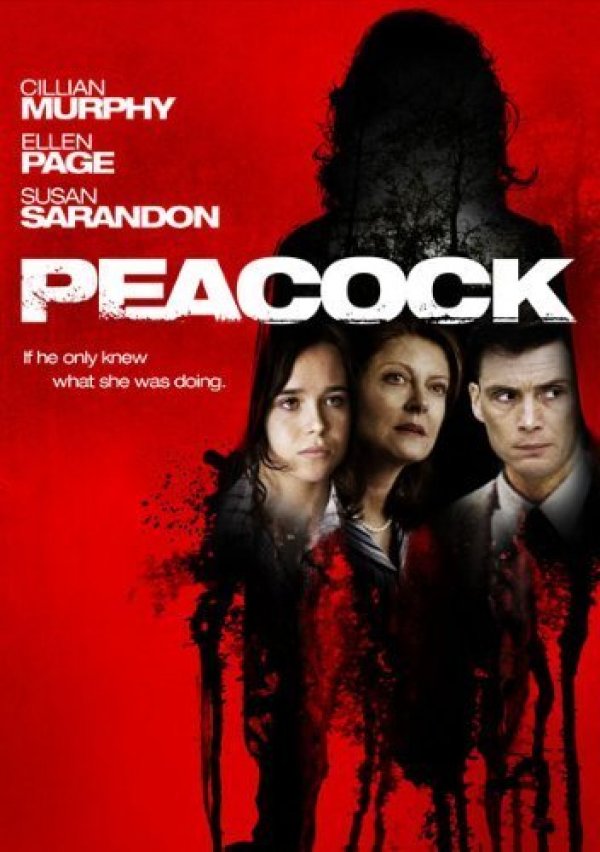
Peacock (2010)
John Skillpa (Cillian Murphy) is a timid, socially-awkward bank clerk living in tiny Peacock, Nebraska who prefers to keep to himself. This might have to do with John’s secret: he has another personality no one knows about, a woman named Emma, who each morning does his chores and cooks for him before he starts his day. However, everything changes when a train derails into Skillpa’s backyard, exposing Emma to the curious neighbors, who assume “her” to be John’s wife. As John struggles to maintain control over his other personality as well as keep up the façade that she is his wife, his already disturbed psyche becomes further unbalanced.
Peacock is an above-average thriller, but I’ll tell you right now it definitely won’t be for everyone. It’s a slow, subtle character-study about a man with a fractured psyche that plays more of like a drama than a thriller (though it’s pretty darn suspenseful!). If you aren’t put off by languidly paced films, however, Peacock is an intensely psychological experience that I definitely found to be worth my while, despite its flaws.
The best thing about the film is no doubt Cillian Murphy’s amazing performances as both John and Emma. These are two completely separate people, with distinctly different ways of talking, walking and different personalities and facial tics, but Murphy makes them both believable and I even starting thinking of them as two separate people instead of one man. How Murphy didn’t receive more accolades for his performance is beyond me, because he is purely brilliant in this film.
Rounding out the cast are several other famous faces – Ellen Page, Susan Sarandon, Bill Pullman, Josh Lucas, Keith Carradine. Not even against these accomplished actors is Murphy’s performance diminished, though the other actors do a fine job as well. Page played the role of a desperate young mother, Carradine and Sarandon played the wealthy mayor and his wife, Lucas the town cop and Pullman the annoying boss at the bank. While each character adds another layer of complexity to the story, some of these extraneous characters felt like they weren’t really vital to the story. Perhaps the connection between some of these characters and John/Emma never really meshed for me, but something was a bit lacking in their development.
Nevertheless, the best parts of the film were when John/Emma went behind the others’ back to interact with the townsfolk. When Emma would approve something (like a political rally in the backyard), John would find out later and just lose it! John was so out-of-control that you came to prefer Emma’s cool-headed way of approaching problems, even if she was manipulative and calculating. As she slowly took over more and more of John’s life and became the more dominant personality, John really begins to panic and this unbalance creates a lot of tension and suspense.
Now, a lot of people have commented that it’s not at all believable that the townspeople couldn’t tell that John/Emma were the same person, and while watching the movie I tended to agree. However, looking back I realized that if Murphy’s performance was so convincing to me, I suppose it would also work on the townspeople. Plus, the two separate personalities had completely different ways of moving and speaking. However, I still think it would have been more believable if writers Michael Lander (who also directed) and Ryan Roy had just made Emma John’s sister or cousin. At least that way it would explain the striking resemblance between the two!
Despite this, I found myself getting sucked into the twisted, dreary story. Besides the fantastic performances, director Michael Lander creates a somber, post-Dustbowl era (the movie could be set anywhere from the 1930’s to the 1950’s) atmosphere. The film itself is beautifully filmed and its dark tones create a melancholy, ominous tone. Even the obligatory backstory of John being an abused little boy or the previously mentioned flaws didn’t really sully the hauntingly filmed movie.
Peacock doesn’t work all the time, but if you are looking for a sophisticated, tense psychological film it is worth checking out!
Available from Amazon!
Labels:
child abuse,
dark,
historical,
psychological,
somber,
thriller,
twisted
Wednesday, June 23, 2010
Fugue (2010)
After viewing director Barbara Stepansky’s film tense psychological film Hurt last winter, I was excited to check out her newest effort, Fugue, which promised another psychological storyline, only this one included the possibility of the supernatural.
Fugue’s premise is based upon a rare disorder called a fugue state or dissociative fugue, which according to Wikipedia is “characterized by reversible amnesia for personal identity, including the memories, personality and other identifying characteristics of individuality. The state is usually short-lived (hours to days), but can last months or longer.”
Fugue begins with Charlotte (Abigail Mittel) moving into a new house with her older, college professor boyfriend Howard (Richard Gunn). Charlotte has just suffered an accident that is barely hinted at, but that’s okay because she and Howard are trying for a baby and seem happy for their new start. However, it’s not long before Charlotte begins to sense a malevolent presence in the house and begins seeing visions of a threatening black-haired woman. She comes to suspect that something horrible happened in the house, and is determined to find out what…but at what cost?
I wasn’t as impressed with Fugue as I was with Hurt, but that doesn’t mean it was necessarily a bad movie. On the contrary, it boasted a story with plenty of twists and turns, excellent acting and even a few disconcerting scares.
The story’s details felt unique, even if the whole “is she crazy or isn’t she” angle seems overplayed. Luckily, writer Matt Harry balances out these clichés with plenty of surprises. In fact, I enjoyed how Fugue messed with your head, and just when you thought you had it all figured out it threw you for a loop and took the story in an entirely different direction. However, the story also tended to drag in places and didn’t quite grab my attention from the start. The film’s saving graces were its unexpected twists and turns as well as a bloody finale, which turned it from typical psychological thriller to something much more engrossing.
Also superb were the performances by all involved, but especially Abigail Mittel as Charlotte. Mittel made her character believable and likable (perhaps even when she shouldn’t have been), and I found myself rooting for her the whole time. I also thought Richard Gunn did a fine job as her boyfriend, who patiently endured or tried to explain away Charlotte’s ghostly visions.
The direction by Stepansky really captured the claustrophobic feel of the house and surrounding garden terraces. It made you feel boxed in and trapped, adding even more tension to the film. While the film was more a thriller than anything else, Stepansky included several nice scares and disturbing scenes. The ghost haunting Charlotte looked marvelous with a few simple effects of blurring out her eyes and mouth. Plus, the action scenes near the end really wake the film up and were filmed in such a way that they really put you in the moment.
My biggest complaint of the film probably won’t affect its official release at all, but I think it’s worth mentioning that the audio levels were absolutely awful and I couldn’t understand about half of the dialogue. Why you ask? Throughout the ENTIRE film there is an annoying music track that drowns out the dialogue. The constant music ruins the mood of the film instead of enhancing it. The film would have greatly benefited from less music and more silence, or at least have balanced audio levels. One minute I was cranking up the audio to hear dialogue, the next turning it wayyyy down so I wouldn’t have to hear the repetitive music. I think the fugue that Charlotte plays on the piano and keeps humming would have sufficed for music as opposed to the tiresome score used throughout the film. I hope this is an issue they resolve before released Fugue to the public, because this grating annoyance made it difficult to sit through.
Despite that and a few pacing problems, Fugue was a low-key indie thriller that kept me on my toes with its twists and turns. If you happen to see it at a film festival and enjoy slow-burning thrillers don’t pass it up!
For more info, visit Fugue’s Official Site!
Monday, June 21, 2010
Golden Earrings (2010)
Golden Earrings is the debut feature-length film from first-time filmmaker Marion Kerr. I had been looking forward to Golden Earrings ever since I heard that it would be screening at Dances with Films Festival this June. As a strong supporter of seeing more women in horror, especially behind the camera, I was pleased as punch to see that Kerr not only handled both writing and directing duties in the film, but also starred in it! That is the kind of hardworking filmmaker I like to see in indie films! Not only that, but the film is very well done!
One night, a group of L.A. friends gather in an apartment to send off their friend Sara (played by writer/director Marion Kerr). Sara is heading to her parents’ house for the weekend after having a nasty fight with her boyfriend. Her best friend and roommate, Ronnie (Julia Marchese), is especially concerned for Sara, but everyone convinces her Sara is fine and not to worry. Sara leaves and Ronnie along with friends Fay (Lauren Mora), Julian (John T. Woods), Jack (Teddy Goldsmith) and Alex (Anthony Dimaano) continue to hang out.
Later that evening, Ronnie convinces everyone to mess around with a Ouija board, but they appear to make contact with a spirit that died that very evening in a car crash named S-A-R…well, Ronnie chucks the Ouija board before the spirit can finish spelling, but you get the idea. Everyone is understandably upset, most of all Ronnie, who insists that someone is playing a trick and kicks everyone out after they deny any involvement.
The next day, Sara’s mother calls saying Sara never showed up at home and can’t be reached on her cell. Over the next few days, Sara’s friends are fraught with worry, wondering what could have happened. Hit hardest is Ronnie, who slowly comes undone when she considers the possibility that Sara might be gone forever.
Eventually Ronnie starts to experience supernatural elements in the apartment. An old record plays in Sara’s room, objects move, doors close, drawers open…all signifying to Ronnie that Sara has returned to the apartment.
Golden Earrings is more of a drama/thriller film than straight-up horror, but it is a very nuanced, “grown-up” film. Watching it, it’s hard to believe that this is Kerr’s first film since everything is so tight and focused. It looks absolutely fantastic and immediately sucked me into its story.
The first things that really struck me were the stellar acting and writing. When we first meet the group of friends the dialogue is playful and witty, really drawing us into the story and making us care for the characters. Additionally, this engaging writing is coupled with some amazingly realistic performances by all involved. THESE are the kind of actors indie productions should strive to use! Each and every one of the actors was very natural, very believable and very likable. Of extra special mention is Julia Marchese as Ronnie. She gives an awe-inspiring performance as Ronnie. Her character not only faces jealousy, love, loss, alienation, loneliness and guilt, but she also faces being haunted and friends who simply doubt her and blame her “visions” on her ego. Marchese lets all these tumultuous emotions and experiences express themselves in her body language and facial expressions, but has the ability to reign them in, resulting in a nuanced performance instead of one that’s over the top. Her performance is subtle, but so good that you can see her character’s cracks and manic energy just starting to surface in the beginning of the film. When her emotions let loose it is an intense experience, resulting in a lot of suspense for the rest of the film.
I also enjoyed the film’s story. Even though Kerr opens the film with a dialogue-heavy scene and nothing much happens for the first 30 minutes, I was still enthralled by the likable characters and clever dialogue. Good writing really goes a long way, remember that indie filmmakers! Once the film picks up steam, Kerr adds some surprising twists and turns that not only make sense but also add even more depth to the film. The film may start off as straightforward, but the ending certainly threw me for a loop!
I also appreciated how Kerr kept it simple effects-wise. The haunting scenes were appropriately creepy without having to resort to cheap gimmicks, tons of fake-looking CGI or cheesy special FX makeup that would have taken away from the sophisticated feel of the story. Keeping it simple certainly proved effective and added to the overall “grown-up” feel of this psychological thriller.
My only tiny complaint is that some of the camerawork is a bit amateurish. This only happens in the first few scenes of the film, though, when some shots are a little wobbly, but thankfully doesn’t happen for most of the film. I also thought the name of the film was a bit mystifying (unless I missed something in the film alluding to the significance of “golden earrings”…anyone want to enlighten me?). However, neither of these small quibbles affected my overall enjoyment of the intense experience that was Marion Kerr’s Golden Earrings.
This is how indie filmmaking SHOULD be done!
Visit Golden Earrings’ Official Site!
Labels:
creepy,
emotional,
female filmmaker,
ghosts,
haunted,
indie,
insanity,
low-budget,
recommended,
smart,
thriller,
visions,
woman directed
Monday, June 14, 2010
Bunny Lake is Missing (1965)
In this stylish and tense ‘60s British mystery, young mother Ann (Carol Lynley) has just moved to London to be with her brother Steven (Keir Dullea). Her young daughter, Bunny, goes missing after Ann drops her off at her first day of school, but no one even remembers seeing the child. Steven is overprotective of Ann and immediately blames the school, but when the police become involved Detective Newhouse (Laurence Olivier) can’t seem to find any evidence to show that Bunny ever existed.
I’d heard of Bunny Lake is Missing on and off for years, but never checked it out before now. I’m not sure why I waited this long, because it’s a fantastically tense and well-done thriller that still holds up to this day!
The audience is continually held in suspense because we’re never quite sure whether Bunny is real and missing or if she is just a product of Ann’s imagination. Director Otto Preminger does a fantastic job of keeping us in rapt attention as Ann tries to retrace her steps to prove that Bunny is very much a real person. The mystery is heightened by the shadowy black-and-white that gives it a noir feel and the stunning chiaroscuro photography (I especially love the sinister and suspenseful sequence at a doll shop that changes everything!). All in all, the film is beautifully filmed and additionally gives us a nice peek at ‘60s London.
The acting by Carol Lynley as Ann is brilliant. She is continually standing up for herself, asserting that she isn’t crazy and that Bunny really does exist, but she does this with just a shred of doubt so that the audience isn’t quite sure it can trust her. Keir Dullea was also great as the concerned brother who wanted to blame everyone but Ann. He had great intensity in the role and it was hard to take my eyes off him whenever he was in a scene! The legendary Laurence Olivier did a serviceable job as the detective, but this character didn’t seem like much of a challenge for him and his performance feels phoned in. That’s okay, though, as the real star of the show is Lynley and all her frenetic and frustrated energy as Ann!
Now, I don’t want to spoil the ending for anyone, but it’s a doozy! I certainly didn’t see it coming, though as it gets nearer to the conclusion it becomes a vague possibility. The reveal is perfectly timed so when it does happen you are left momentarily shocked and then immensely satisfied. The ideal way to end a film, no?
I was surprised watching Bunny Lake because of how tense and intense of a film it is – especially since before watching I’d heard claims of its campiness. However, I found no evidence of camp, but just a straightforward thriller that kept me on my toes. Though it is regarded as a cult classic, I believe Bunny Lake is Missing deserves a much wider audience and would fit in nicely with other classic psychological horror.
If you are into classic horror mysteries with plenty of twists and turns, I highly recommend checking out Bunny Lake is Missing, an underrated psychological thriller.
Available on Amazon!
Friday, March 5, 2010
Shutter Island (2010)
From the previews, Shutter Island looked like another slam dunk for legendary director Martin Scorsese. It looked like it was chock full of chills and thrills, from the surreal sequence of Leonardo DiCaprio’s character holding a woman who turns to ash to the foreboding look of the island itself. It continues to top the box office and even the reviews for it have been mostly positive.
However, I wasn’t too terribly impressed with this ho-hum thriller.
It’s 1954 and U.S. Marshal Teddy Daniels (Leonard DiCaprio) arrives on the high security Shutter Island, home of some of the most criminally insane patients in the U.S., to investigate the disappearance of a female patient with his new partner, Chuck (Mark Ruffalo).
As Teddy and Chuck get deeper and deeper into their investigation, twists and turns appear around every corner. The man who caused Teddy’s wife’s death is supposedly a patient at the institution, there appears to be some mad Nazi-like experimentation going on with the prisoners, a mysterious lighthouse stands guarded day and night, the missing woman either vanished into thin air or had help, and the patients seem to be cooperating with the doctors to hide something from the Marshals. Through all this, Teddy has nightmares about his wife as her death haunts him.
As Teddy uncovers more secrets, he starts to believe that there is a conspiracy afoot and starts to believe he will never make it off the island.
I had been looking forward to Shutter Island ever since I first heard about it, but after seeing it I can say I expected a little more from it. I’m not saying it’s a terrible film by any means, but if you can guess the big twist just minutes into the movie, it’s safe to say it has some flaws.
Before we get to the flaws, though, let’s discuss its merits. The first thing I enjoyed was the woefully gloomy atmosphere. From the dilapidated cells of the institution to the constant stormy weather (oh ya, they experience a hurricane) and grey surf that pounds the rocky island and drab clothing of the nurses and orderlies, the film just gives off a dismal feeling. And the cinematography – from the dizzying heights of the high rocky cliffs to the claustrophobic cells of the institution – is breathtaking.
However, no matter how pretty it looks the film starts to drag after the first hour or so. There also aren’t very many “scary” instances, though there are quite a few horrifying ones. One occurs when Teddy sees an old woman with only a few clumps of hair on her head as he arrives to the institution (see preview). There are a few other startling patients Teddy has encounters with, but not many. And if you hope to see more scenes like the one where his wife turns to ash in his arms (as seen in the preview) you can probably forget about it – the main focus of the film is Teddy and his partner digging for clues in the rain as to the whereabouts of the missing patient, and later, what the institution is hiding.
While Shutter Island wasn’t a bad film, I was expecting something a bit more complex and interesting from a Scorsese “psychological thriller”. Yet, Shutter Island didn’t really thrill me and I left the theater thinking “meh”. Am I glad I saw it? Sure, but would I ever want to see it again? Probably not.
Available from Amazon!
Labels:
disappointing,
experiments,
haunted,
hospital,
insanity,
isolated,
missing,
mystery,
thriller,
twisted,
visually striking
Tuesday, January 26, 2010
7 Days (2010)
7 Days (aka Les 7 Jours du talion) just had its world premiere at 2010’s Sundance Festival and this torture thriller opened to a lot of buzz. I wasn’t expecting much with this film, perhaps just a more artsy version of Saw, but 7 Days explores much more emotional depths with its gritty and melancholy look at vengeance.
Surgeon Bruno Hamel (Claude Legault) and wife Sylvie (Fanny Mallette) have a strong, loving relationship and a cute young daughter named Jasmine (Rose-Marie Coallier). One afternoon, Jasmine goes out to distribute invitations to her upcoming birthday party but never returns home. The frantic parents and police search the nearby neighborhood and soon find the brutalized body of Jasmine, who has been raped and killed. The police soon track down the alleged rapist and killer, Anthony Lemaire (Martin Dubreuil), who has a long rap sheet of sexual offences. Bruno is not satisfied with what the police have in store for Lemaire and after a carefully orchestrated plan kidnaps Lemaire as he is transported by police and takes him to a remote cabin. Bruno tortures Lemaire for the seven days that lead up to the date that would have been his daughter’s ninth birthday. As he slowly wrenches the life out of Lemaire, the police, led by Detective Hervé Mercure (Rémy Girard) who has experienced his own family tragedy, try to stop Bruno from becoming the monster he is trying to kill.
7 Days is certainly an affecting piece of cinema, one that will certainly leave viewers stunned and shaken up. It is not, as I first assumed, Saw for the art crowd. First off, it has a stark and cold gray color palette that sets the somber and grim mood of the film and makes it heartbreakingly beautiful. The direction by Daniel Grou is unsettling and unwavering in its look. For example, there is a truly disturbing shot of the lifeless Jasmine that lingers over every spot of blood and every speck of dirt on her brutalized and broken body. It is one of the most horrifying images of a murdered child I’ve ever seen in a film and it makes the viewer terribly angry and hopelessly sad all at once. Grou also lets the camera linger on the tortured body of Lemaire as well as a dead carcass of a deer, and while some shots are drawn out too long (and frustratingly indulgent), for the most part the demented direction of Grou fits the melancholy mood of the story perfectly.
The story, adapted for the screen by Patrick Senécal and based on his book, is certainly nothing new (a parent who will sacrifice everything to see that the murderer and/or rapist of their family member is appropriately punished), but it is the emotional turmoil of the story that kept me watching. The more and more Bruno tortures Lemaire the more and more he himself is turning into the monster he is so desperately trying to punish. Some of the torture is so harsh (sledgehammer to the knee, whipped with chains, a surgery where Lemaire can feel it all even though he is paralyzed, etc.) that I sometimes found myself starting to sympathize with Lemaire, even though he was a pedophile, rapist and murderer. This conflict is also echoed in Bruno, who begins to struggle with the idea of killing Lemaire. Writer Senécal really makes us think about what is right and what is wrong or if there is just gray area that is better left to one’s own interpretation. And, gosh darn it, I like a film that challenges me to think!
The actor who plays Bruno, Claude Legault, does an awe-inspiring job of portraying the conflict mentioned above. The inner turmoil he faces is brought to light by Legault’s subtle but strong performance. I must also commend Fanny Mallette for playing the heartbroken mother, Sylvie. She did a wonderful job of playing the mourning parent who was still strong when her husband abducted the killer and she had to face the police by herself.
As for the film being billed a “torture thriller”, don’t confuse that with the term I so loathe, “torture porn”. 7 Days is not about being exploitative at all, but rather examining the complex emotions and actions of a victim-turned-potential-killer. It is heavy on the emotional drama, which definitely won’t please some horror fans. As mentioned before, gorehounds looking for a cheap thrill will probably be disappointed. 7 Days aims much higher than your standard exploitative horror film and while I like a challenging horror film, some people simply don’t and will be put off by the film’s art house themes. However, if you are looking for a thought-provoking and cringe-inducing film 7 Days may be right up your alley!
And guess what? You can catch 7 Days on video-on-demand as part of the Sundance Selects VOD rollout! Check your local cable provider for availability.
Labels:
brutal,
child abuse,
child murder,
emotional,
foreign horror,
France,
gritty,
rape,
revenge,
thoughtful,
thriller,
torture,
violent
Tuesday, September 8, 2009
Book Review: Evil at Heart by Chelsea Cain
Chelsea Cain books appeal to a wide variety of readers, from people who aren’t necessarily horror fans and usually read books like Tuesdays with Morrie to hardcore horror aficionados. Whichever camp you fall into, Cain’s “Beauty Killer” serial killer books promise to entertain and shock you.
The third novel in the “Beauty Killer” series, Evil at Heart, is no less tense than Cain’s previous two efforts – Heartsick and Sweetheart – and continues the saga of infamous and gorgeous serial killer Gretchen Lowell. As with all of Cain’s books, I could not put down Evil at Heart!
The book picks up two months after Gretchen Lowell escaped prison and Detective Archie Sheridan, who had a very complicated relationship with Gretchen, is in the loony bin. Archie is drawn back out after bodies, each with Gretchen’s signature hearts accompanying them, start popping up again. Joining Archie are Detective Henry Sobol and Oregon Herald reporter Susan Ward, who discover that a network of Gretchen Lowell “fan clubs” have sprung up. Could there be a copycat killer or is Gretchen finally back to her old ways?
Evil at Heart is a relentless read that begs to be read from start to finish. The book opens with a bang as eyeballs and other body parts are found at a rest stop restroom outside Portland and it’s not long after that when bodies gruesomely start showing up at Gretchen’s old crime scenes. Cain definitely has some great tableaus of gore in Evil at Heart, gruesome enough for an old gorehound like me to be impressed!
Cain lessens these horrific scenes with humor peppered throughout the novel and a social commentary on how the media tends to glamorize villains. The book describes how Gretchen Lowell has become a media sensation – she is plastered over every magazine and newspaper, women get the “Beauty Killer” manicure (pink nails with blood red French tips), coffee cups that say “I’d kill for some coffee” with Gretchen’s picture on them are sold, women cut and dye their hair like Gretchen’s, tour buses take tourists to her crime scenes and there is even a movie being made about her. This makes for some darkly humorous commentary on our own society and our own anti-heroes we tend to sensationalize.
Many characters from the past two books return, namely detectives Henry and Archie and spunky journalist Susan, and it’s nice to see them all back. Gretchen isn’t featured as much in this novel, but her eventual appearance will leave you riveted! To understand the characters, it does help to have read Cain’s past two novels but even if you haven’t Cain takes the time to explain the relationships between the characters and some of their pasts so you get the general gist of the series. Cain also introduces some intriguing new characters, some who are into scarification, suspension and other body modification cultures – and she gives us plenty of squirm-inducing descriptions of these practices as well!
The story itself is fast-paced and entertaining. I really wasn’t joking when I said I couldn’t put it down – I so desperately needed to find out what was going to happen that I finished it in a day! Now, you may want to take your time and really drag out the suspense, but I just couldn’t wait! And the ending is quite a doozy, filled with a mysterious revelation that I can’t wait to see what Cain does with in her next book!
Evil at Heart is another “Beauty Killer” novel that will keep you on the edge of your seat and is highly recommended for all Gretchen Lowell fans, whether you’re a horror fan or not!
Order it on Amazon!
Labels:
books,
female killer,
female villain,
gore,
sequel,
serial killer,
social commentary,
thriller
Thursday, July 9, 2009
Maniac Cop (1988)
With one of the best taglines ever committed to a film (“You have the right to remain silent…FOREVER”), Maniac Cop is one of those action-packed popcorn flicks that are always a pleasure to watch when you need to shut your brain off for a bit. Written and produced by Larry Cohen (It’s Alive, God Told Me To, etc.) and directed by William Lustig (Maniac), Maniac Cop is one of those movies that unfortunately not too many people know about, but those that are in the know can’t stop (maniacally) singing its praises.
In New York City, innocent people are being brutally butchered by a hulking man dressed as a cop. Lieutenant Frank McCrae (Tom Atkins) is on the case and evidence soon suggests that the killer is one of the police’s own. When philandering Officer Jack Forrest’s (Bruce Campbell) wife is found dead in a hotel room, he is fingered as who the media have dubbed the “Maniac Cop”. His girlfriend, Theresa Mallory (Laurene Landon) who is also a cop, must convince Lieutenant McCrae that Jack didn’t commit the crimes, and together they must find out who the real killer is…before it’s too late.
Maniac Cop is a mish-mash of B-movie genres, spanning horror, action and cop-thriller to create an all-around entertaining film! You’ve got car chases, great action sequences, a solid mystery as to who the killer is and why he’s killing, a good smattering of gore as the “Maniac Cop” dispatches his victims and plenty of smart-ass cop-talk (“Whole city’s goin’ to hell. You can’t take a pee anywhere anymore.”).
Maniac Cop’s ability to encompass several different genres and make it all work is what really sells the flick for me. As mentioned earlier, this genre-bender takes an action-packed cop film, throws in a bit of mystery and intrigue along with a whiff of the supernatural, and blends it all with horror, all the while never taking itself too seriously. Things never get too heavy and things are kept light by the characters’ tossing about classic lines like, “Look at the size of those hematomas!” or “You always take a leak with a gun in your hand? That’s a good way to blow your balls off!”
The film also has an amazing cast. Besides the obvious bad-ass contribution of Tom Atkins, we also get Shaft himself, Richard Roundtree, as grumpy Commissioner Pike and Robert Z’Dar as the title character, whose chin rivals that of the film’s other star, Bruce Campbell. Campbell does a great job as well as the wrongly convicted cop – this film is a definite must-see for all Campbell fans! I also enjoyed performances from Laurene Landon as the tough female cop and Sheree North as the cop with something to hide.
The direction by Lustig features New York at its grittiest and dirtiest – similar to what we saw in his Maniac. The city has a grimy feel to it, from oil-slick puddles to dim streetlights, lurking hoodlums, discarded trash and dingy neon signs. This is the sleazy New York when 42nd street was king of grindhouse and exploitation films, before Time Squares was deemed “family friendly” and overrun by MTV tween fans. This is the perfect setting in which to imagine Cohen’s rogue cop creation murdering innocent people in dark alleys while neighbors shut their windows to the screams! The nitty-gritty atmosphere of the flick just fits so well and I really couldn’t imagine any other place where the story could have been set.
Maniac Cop is something of a cult favorite, but I’m not sure why it hasn’t quite broken out of its shell and garnered a wider audience. Its mix of cop-thriller, horror and action seems like it would catch on with a variety of movie fans, but I find it surprising how few people have checked out (or even heard of) this film! If you haven’t checked this film out yet, what are you waiting for?! Maniac Cop orders you out of the house with your hands up…to go grab a copy of this classic flick now!
Buy it on Amazon!
Labels:
80s horror,
action,
awesome 80s,
Bruce Campbell,
fun,
gritty,
serial killer,
supernatural,
thriller,
underrated
Wednesday, May 6, 2009
Dark Mirror (2009)
There has always been something inherently freaky about mirrors, windows or other reflective surfaces. Just who looks back at us as we look into them? What they reflect looks like reality, but what if it wasn’t? What if they reflected something more sinister? And what about all the myths and legends that believe evil spirits can be trapped in windows and mirrors?
The new film Dark Mirror seeks to address these questions, but is it another dud like Mirrors was or does it have something new, interesting and scary to say?
A family of three, mother Deborah (Lisa Vidal), father Jim (David Chisum) and son Ian (Joshua Pelegrin) move to L.A. from Seattle after Deb is entranced by a house with beautiful glass pane windows. As the family settles in, Deb attempts to resume her career as a photographer while simultaneously taking care of her son as Jim is usually working late. After having some strange experiences with the mirrors and windows in the house, she talks to her chatty neighbor, who tells her a famous artist and his family used to reside there until they mysteriously disappeared. Her mother also visits and tells Deb that in Feng Shui window panes are used to trap evil spirits and stop them from harming anyone.
Yet, as Deb continues to experience strange occurrences and explores the dark history of the house, she becomes convinced that something evil resides in the mirrors and windows. When people she has photographed start dying, she is convinced that the evil spirit has infiltrated her camera lens and is killing people…or is she just going crazy?
Dark Mirror is a film that is best described as being horror movie lite. It lacks the gut punch most serious horror fans seek, but its story is interesting enough to entertain the casual thrill-seeker.
Though the film’s story is intriguing, I found that overall the film is a bit lacking and comes across as just a slightly better-than-average, thriller (and a tame one at that). Think of it as horror film that you could watch with your own mother (hey, with Mother’s Day coming up that may not be such a bad thing!).
While the flick was a solid effort from director/co-writer Pablo Proenza, the story could have used a bit more OOMPH! to hold my interest. This thriller probably won’t tickle the fancy of serious horror fans, though more casual viewers will easily enjoy it.
I thought the story, written by Proenza and Matthew Reynolds, was decent, but there were certain scenes that lacked cohesiveness and the pacing of the film as a whole was a tad slow. For example, I thought it was a bit too convenient the way Deb found out about evil spirits being trapped in mirrors and windows. And the concept behind it is so intriguing I would have liked to see a little more focus on the “evil hidden within glass” idea. I felt that the idea remained too undeveloped and could have been explored further. The film also moved at a slow pace and could have benefited with actually showing us what happened to the victims instead of cutting away after a scream. I also felt that the “scares” were overly generic and you could see them coming from a mile away.
However, I thoroughly enjoyed the part of the story where the mirrors/windows would reflect a different reality than the physical one that Deb and her family were in. Looking in the mirrors, Deb saw a doorway that shouldn’t be there, plus her husband being a little overly flirty with their neighbor. These were the most thrilling aspects of the story, along with a stunning finale, but still didn’t quite make up for the rest of the slightly underdone storyline.
The problems I had with the film certainly didn’t have anything to do with the actors, though. Lisa Vidal was great as Deb. She really kept the viewer guessing as to whether she was crazy or if something evil really was responsible. Her character really makes the audience appreciate working (or even single) mothers, who play the dual roles of raising a child as well as pursuing a career. The rest of the cast did a fantastic job as well, and I had absolutely no problem with believing each and every one of them.
Though Dark Mirror isn’t a real stand-out in the horror arena, it is still better than some of the remakes that Hollywood seems to be pumping out. Plus, with Mother’s Day right around the corner it seems like the perfect movie to sit down and watch with dear old Mom!
Available from Amazon!
Labels:
alternate dimension,
disappointing,
haunted,
spirits,
thriller
Thursday, September 25, 2008
Pathology (2008)
Pathology and forensics have always fascinated me. The science that’s behind discovering how, why and when someone died is inherently interesting to me, as is what happens to our bodies after we die. Which is why the film Pathology, finally seeing a release on DVD, had me pretty intrigued. I wasn’t expecting something as disturbing as the great Aftermath but I did expect something better than the horrible Unrest. Sadly, Pathology is DOA.
Dr. Ted Grey (Milo Ventimiglia) has got it all going for him – a beautiful, wealthy fiancé named Gwen (Alyssa Milano), graduating at the top of his medical class in Harvard and now, a residency at one of the most prestigious pathology labs in the country. He moves across the country and away from his fiancé to attend, but is quickly greeted with disdain by most of his peers, lead by the cocky Dr. Jake Gallo (Michael Weston). Jake and Ted soon go head-to-head in trying to show off, but once Ted shows his dark side he is inducted into their little group. Problem is, the members of Jake’s group like to play a game where they kill “deserving” (wife beaters, child molesters, pimps, cheaters, etc.) victims in unique ways so that everyone else can have a grand old time trying to figure out just how they did it.
With a little coercing, Ted becomes entangled in the group, as well as with Juliette (Lauren Lee Smith), the fiery redhead of the group who also happens to have a kinky relationship with Jake and other members of the group. Do these residents know how to party or what?! Soon, our Dr. Grey is smoking crack, cheating on his fiancé and having sex on autopsy tables…oh yeah, and killing people in creative ways with his newfound buddies. He finally sobers up after a visit to his fiancé and realizes he wants out…but is it already too late?
Pathology is a slick little movie that tries to walk to line between mainstream and hardcore horror audiences, yet fails at both. This film will be too graphic for mainstream audiences (though I wouldn’t call it gory) but too tame for horror fans (it really is more of a thriller than a horror movie). The story of falling into deep void and having to find your way out again is nothing new, and the writers (Neveldine and Taylor, who also wrote Crank) don’t try to add any twists or anything that would elevate it past its been-there-done-that vibe.
Probably the biggest problem with the story is the lack of sympathy we have for any of the characters. We hardly know anything about Ted Grey, yet we are expected to sympathize him when he falls into “the game” of Jake and his cohorts. If you ask me, he joins the game rather willingly and with little prodding from Jake. Ted is supposed to be this great, independent and highly intelligent individual, yet he caves into peer pressure at the whisper of a threat. Also, when he joins the group he throws away all his morals and willingly kills patients, cheats on his fiancé and starts taking drugs. None of this was very believable and made me not care what happened to Ted.
As for the other characters, they are also underdeveloped. Jake Gallo (and Michael Weston steals the show with his portrayal) is supposed to be the leader of their little group and one of the top residents, but he is so unstable I wonder how he didn’t get kicked out of medical school. It’s strange that none of his professors or superiors caught on to his craziness. Don’t doctors have to take psychological tests?? As for the other characters, we don’t even get to know them. Juliette is mainly there so both Ted and Jake can have violent sex with her, and the other members of the group just disappear after a while with no real point for them to be there in the first place. No attempt at all is made to develop them. I didn’t even know their names! As for Alyssa Milano, she is just wasted as Ted’s sugary sweet fiancé. She didn’t even seem to serve a purpose in the film except to spurn Ted into action at the end of the film.
Instead of constantly focusing on Ted’s minuscule guilt and scenes of partying and sex, it would have been a lot more interesting if some of the murders were actually shown (most happen offscreen and none are particularly violent). There aren’t even that many that happen!
One thing that this movie actually does right is the special FX by Tatopoulos Studios. The cadavers are incredibly realistic, both inside and out (of which we see plenty of both). I would have loved if the movie focused a bit more on pathology so we could have seen more of the corpses, but what I saw was very satisfying indeed. Keep in mind, hardcore horror fans will be disappointed by the lack of gore in regards to the “kills,” but these realistic-looking corpses try to make up for that fact (though they don’t quite make up for the crappiness of the movie).
Pathology is directed by Marc Schoelermann, whose previous efforts included music videos and commercials. The effect is a slick movie, but one that has no emotional depth. Pretty typical for a commercial director, but the weird thing is that the film carries a heavily somber tone throughout that makes you think some deep revelation is coming at the end, but when we get there, there’s absolutely no philosophical questions answered (not that they were asked in the first place). The abrupt ending, while it does tidily wrap up all loose ends, feels as empty as the rest of the film.
Like the autopsy rooms it takes place in, Pathology is a cold, clinical film. Though it’s not incompetently shot, it lacks emotion, a complex story line and believable characters so it ends up stiffer than a corpse.
Available from Amazon
Labels:
avoid at all costs,
corpses,
dark,
hospital,
thriller
Tuesday, July 1, 2008
The Tattooist (2008)
I’ve always been enamored of tattoo culture and have a few of my own tattoos I’m pretty proud of (always planning on getting more, though), so when I heard about a horror film called The Tattooist I was overly eager to check it out. Everyone looks hotter with tattoos (the film’s poster proved that itself) so I went into The Tattooist thinking that if little else, at least there’d be some wicked-cool tattoos to check out. Surprisingly, The Tattooist was an entertaining flick and not just because of the tattoos on display, though it is a stretch to call it a horror film.
Tattoo artist Jake Sawyer (Jason Behr, looking smokin’ hot) is renowned for using his tattoos to heal people and utilizes symbols from many various cultures and religions to do so. At a tattoo convention in Singapore, he is intrigued by a group of Samoans performing their traditional tatau on a man. Well, truthfully he is intrigued by a woman, Sina (Mia Blake), that is part of the Samoans group. He ends up swiping an old, ritualistic tattoo tool from the Samoans, but when he cuts himself on the tool, he unwittingly releases a vengeful spirit that kills anyone he tattoos by basically flooding their bodies with tattoo ink.
Before Jake realizes he’s got a demon on his back, he heads down to New Zealand to catch up with the Samoans to learn more about their tattooing practices and also to return the tool, which has brought him some wicked visions. He’s also keen on reuniting with Sina. He gets a job and a place to live through an old tattooing buddy at a tattoo shop called Bedlam, but when he starts tattooing clients, they end up dying grisly deaths soon after.
Can Jake figure out how to stop this curse and figure out just who the spirit is before more people die, including the newly inked Sina?
This New Zealand film must be given credit for having a pretty original premise. It’s not too often that you see a horror film whose basis is cursed tattoos or Samoan tribal customs, but The Tattooist manages to do both. Writers Jonathan King (whose name might be familiar because he wrote and directed the hilarious Black Sheep) and Matthew Granger (who was also a contributor to the Black Sheep script) do a great job of acquainting the audience with both the tattoo and Samoan cultures. The fascinating world of Samoan tatau (the originators of the word “tattoo” and perhaps of the art form itself) was especially interesting, delving into their culture and beliefs on the sacred art of tatau and how it is passed from one generation to the next. Any misuse of it can bring great shame on a family, a theme that runs throughout the film and weighs importantly on the climax.
Though I found the film to be engaging, it was pretty tame for my tastes. The R-rating it received mainly comes from the language used throughout the film and not from too much gore or nudity. It really feels like a PG-13 film at heart, with not too many scares or gross-outs for hardcore horror fans. The story played out slowly, more like a thriller or mystery rather than a straight-up horror movie, which will no doubt annoy some. Initially, this lack of scares annoyed me too, but I have to admit I did get wrapped up in the story and did enjoy it for what it was.
One thing that added to the enjoyment of the story was the well-rounded set of characters. Jack Sawyer, played by Jason Behr, comes complete with a troubled childhood (he was raised by a religious zealot that condemned his tattoos and actually cut one off his skin) while Sina, played by Mia Blake, is the strong yet silent type that plays against her cultural role by inviting a white boy into her Samoan home (much to the chagrin of her uncle and cousins). I also enjoyed the little boy who acted as a medium for the spirit to talk through and his two older homies. They had one sweet ride…
The actors all held their own and I can’t say I have any complaints with anyone’s acting. Maybe Jason Behr’s rock-hard abs were distracting me too much, but I think everyone did a great job.
The deaths, though not overly scary or gory, were still pretty cool. The victims’ tattoos would start spreading and branching out across their bodies, then they would start to cough up black ink and eventually die painfully in an inky, bloody pool. The special FX when this happened was flawless and extremely well done. Glimpses of the spirit inflicting the pain can also be seen in several instances (reminiscent of Asian horror spookfests), and these scenes are pretty creepy, but still not scary. The spirit itself looked very cool, though, and not at all hokey. It’s too bad director Peter Burger played it safe and didn’t really give us more of these visually arresting and horrifying images in The Tattooist, which is a pity because the solid story was there. It was also strange how the film was shot in bright, cheery colors as opposed the the dark and drab atmosphere most horror movies are filmed in. This bright and cheery exterior really dampened the overall “scare factor” of the film.
Thought not a very scary horror movie, The Tattooist does have its moments where the story sucks you in and some pretty revealing tidbits on the Samoan culture and tatau. It’s not a bad way to spend an hour and a half, just don’t expect to be scared.
Available from Amazon
Labels:
curse,
mythology,
New Zealand,
occult,
spirits,
supernatural,
thriller
Tuesday, April 22, 2008
Psycho II (1983)
I’ve always felt Norman Bates was one of the most sympathetic, yet terrifying, horror villains to ever grace our screens. Anthony Perkins’ pitch-perfect portrayal of the psycho makes him seem so innocent and naïve, yet so unstable at the same time. Another great thing about the character is that everyone knows a lonely person like Norman Bates, one whose social skills have been stunted and who come off a little creepy.
Anthony Perkins returns to play Norman Bates in Psycho II, a highly underrated sequel that continues the legacy and furthers the original story of Psycho.
Twenty two years after killing numerous people at the now infamous Bates Motel, Norman Bates (Anthony Perkins) is released after being deemed “rehabilitated” by his doctors. He just wants to lead a normal life, but there are some that aren’t too pleased with his release. Victim Marion Crane’s sister, Lila Loomis (Vera Miles, reprising her role from the original) warns Norman’s doctor that he will rue the day he was released and his motel manager Toomey (Dennis Franz) calls him a loony.
Nonetheless, Norman returns to his motel and manse on the hill, determined to put his past behind him. He starts working at a nearby diner and befriends waitress Mary (Meg Tilly). After some boyfriend trouble, he invites her to stay in his house. Soon after, he begins receiving phone calls and mysterious notes from someone claiming to be his mother.
As people go missing or end up dead, Norman’s façade begins to crack. Has he fully slipped back into his mother’s persona or is someone trying to drive him mad?
There is no doubt in anyone’s mind that Psycho was a landmark movie. It was one of the film’s that paved the way for horror movies and is cited by many filmmakers as an inspiration for their films. You’d think that Psycho II couldn’t possibly live up to the genius of the first Psycho, but this is one sequel that ranks up there with its predecessor!
The story, written by Tom Holland (Fright Night and Child’s Play), is seamless and really pulls the viewer in. There is no hokey-jokiness that ruins most sequels – Psycho II is straight-up suspense and takes itself seriously. There aren’t any plot holes, it stays true to the original and Holland does an excellent job of keeping you guessing and even surprising you in the end! This is probably one of the most solid and loyal-to-the-original sequels I have ever seen in the horror genre!
The acting is also fantastic. Perkins returns as Bates and again makes us equally pity and resent him. We see him more in this film than we did in Psycho and really get a feel for his “unbalanced” personality (even when he is supposedly “cured”). Meg Tilly is wonderful as Mary, who’s hiding her own true self. It was also a great pleasure to see Vera Miles in the role of Lila again. There are also several familiar faces that pop up throughout the film (Dennis Franz, anyone?!).
The atmosphere of the Bates’ big house is decidedly creepy, and the filmmakers use that to the utmost advantage. I especially like the homage of the shower/peephole scene as well as the set up of Norman’s mother’s old room. Director Richard Franklin does a tremendous job and creates some dramatic shots Hitchcock himself would be proud of.
The killings themselves are subtle affairs (except for that butcher knife through the mouth or the shovel over the head bits), but work marvelously with the mysterious atmosphere.
I had always avoided the Psycho sequels because I figured they would be grossly sub-par (and even offensive) to the original, but I have to admit that Psycho II greatly impressed me. If you enjoyed Psycho, you will most likely enjoy its sequel because it honors the original with its spectacular performances, loyal, believable and impressive script and direction all the while keeping you on the edge of your seat.
Available from Amazon
Labels:
80s horror,
atmospheric,
awesome 80s,
creepy,
homage,
insanity,
mystery,
recommended,
revenge,
sequel,
serial killer,
thriller,
underrated
Thursday, February 7, 2008
Joshua (2007)
Joshua is a sophisticated, restrained and eerie horror movie that didn’t get the credit it deserved when it hit theaters. Instead of a typical “evil child” flick like The Omen or even Village of the Damned, Joshua shows us a somber and harrowing disintegration of a family at the hands of their young son, Joshua.
The Cairns are a wealthy Manhattan family who has just added newborn Lily to their lives. Mom Abby (Vera Farmiga) and dad Brad (Sam Rockwell) couldn’t be happier with their little bundle of joy, but their son Joshua (Jacob Kogan) is none too pleased at the lack of attention and affection he is getting. The happy family soon begins to go to pieces when Lily begins to constantly cry, driving Abby into a deep despair, which she had also faced when Joshua was a baby. Brad is preoccupied with work and isn’t home that often, though he does what he can to help. The exhausted Abby just can’t cope anymore, especially after being put on crutches after an accident. The peculiar Joshua certainly isn’t helping things, either. After a game of hide-and-go-seek that goes horribly wrong, Abby is hospitalized in a mental health facility. After Brad is forced to take care of Lily and Joshua, he becomes convinced that Joshua is behind the family’s problems. What he fails to realize, however, is the extent of Joshua’s manipulations and how far the child is willing to go.
I fully expected Joshua to be an unoriginal mish-mash of The Omen and Rosemary’s Baby, but I was pleasantly surprised when it avoided any satanic plot devices while still creating a stylish and tense film.
One word of warning, though, as horror fans might be a bit disappointed at the lack of any real “horror” in the film. Just when you think you are going to see just how evil Joshua really is and what he is capable of, the shot either cuts away or moves to the next scene. While I do think this was the appropriate case in the context of the film, I know this will leave many viewers disappointed. Still, the “scares” in Joshua aren’t aimed at making you jump out of your seat. Instead, the film aims to get under your skin, much like the film Bug, and scare you with the possibility of “what if…” What if your child was coldly calculating your own family’s demise? What if he had every angle covered and anticipated your every move? What if your own child framed you for child abuse and no one would believe the real story?
The story, written by David Gilbert and George Ratliff (who also directed), is calculated to move slowly, but under the surface tension continues to mount. Joshua’s true nature is revealed a tiny bit at a time, and so carefully and slowly that it’s easy to forget that this weird child is the instigator in the family’s problems. The story unfolds very naturally until the ending, where things really start to unravel.
The direction and cinematography only reflect the pace and atmosphere of the storyline. At first, everything is airy, bright, clean and cheery. As the story progresses and bad things begin to happen, the lighting dims, the family’s apartment becomes dingy and messy and things become cramped and claustrophobic. This doubles the effect of the tension that continues mounting throughout the film. Furthermore, the cacophonous sounds used throughout the film – discordant piano music, the constant crying of the baby, screaming, banging from the upstairs apartment – adds another layer of discomfort for the viewer.
Equally impressive is the acting in the film. Vera Farmiga is wondrous as the loving Abby who quickly loses her grip on her family and reality. Her transformation from put-together and happy wife to unkempt and desperate mother is shocking and heartbreaking. Sam Rockwell as detached hubby Brad isn’t quite so impressive, but still holds his own, though on a much more subtle scale. The real revelation, of course, is Jacob Kogan as Joshua. He plays his character so well that I actually sided with him at first over the family. His somber and matter-of-fact delivery, devoid of emotion, is extremely effective and eerie.
Joshua may not be a film for everyone, but I certainly enjoyed its slow-building story and the nefarious plans that Joshua had in store for his family. This underrated flick deserves to be seen, but is perhaps enjoyed more by those that enjoy intelligent horror films such as Bug.
Available from Amazon
Labels:
atmospheric,
creepy kids,
evil kids,
family,
insanity,
smart,
thriller,
underrated,
young killer
Saturday, November 10, 2007
Book Review: Heartsick by Chelsea Cain
I’m going to have to agree with great author Chuck Palahniuk (and about a bazillion critics) when he says, “With Gretchen Lowell, Chelsea Cain gives us the most compelling, most original serial killer since Hannibal Lecter.” Not only does Cain create an iconic serial killer (who, by the way, is only a subplot), but with Heartsick she weaves an engaging and exciting story populated by memorable main characters, a gloomy setting and enough twists and turns to satisfy any fan of thriller fiction.
Detective Archie Sheridan is a damaged man. For ten years he was part of a Beauty Killer Task Force, obsessively hunting down a notorious serial killer. Well, the tables were turned when the killer, Gretchen Lowell, finally tracked and trapped him. She lovingly tortured Archie for very long ten days, leaving him physically and emotionally broken. After carving him up, breaking all his ribs, stabbing him, cutting out his spleen, pumping him full of hallucinogens, slowly killing him with drain cleaner and stopping his heart, Gretchen, for no apparent reason, called an ambulance on the tenth day and allowed herself to be arrested. After pushing away all that used to be important to him (his family, his career), Archie is now addicted to pain killers and to his visits with Gretchen every Sunday in hopes she’ll give up the location of her more than 200 victims as well as for some twisted comfort.
After a two year leave of absence, Archie is called back as the old members of his task force are reassigned to a new serial killer case. Young girls from the Portland area’s high schools have been disappearing, only to be found naked, dead and, strangely of all, bleached days after their abductions. While on the case, Archie asks that Susan Ward, a young, pink-haired newspaper reporter for the Oregon Herald, to document the case and get his story out, hoping to purge himself from Gretchen. Susan’s got some past secrets of her own, though, that may tie into the After School Strangler case…Will the spunky reporter and the tortured detective be able to solve the case before more teenage girls die?
The main focus of the book is the current After School Strangler case at hand. Between the perspectives of main characters Susan and Archie, Cain also takes us back in time to show us the gruesome torture Archie suffered at the hands of Gretchen Lowell. This back and forth between characters and time periods is done skillfully by Cain, and really keeps the reader engaged and the pace moving along at a fast clip.
The characters are one of the strongest aspects of the book. From the horrifyingly intriguing serial killer Gretchen Lowell to the tormented Archie Sheridan and the determined but flawed Susan Ward, Cain gives us well-developed and realistic characters. Even the secondary characters, like FBI profiler Anne Boyd and Archie’s boss, Henry Sobol, are fleshed out to the point where we feel like we know them. I genuinely liked all the characters and cared what happened to them. Even the evil ones like Gretchen Lowell and the After School Strangler, whom I didn’t necessarily root for, were made morbidly fascinating by Cain.
As for the story, Heartsick is definitely not your typical serial killer novel. It’s not some noirish tale of gumshoes going after the bad guys and saving the damsels in distress. Those hardboiled novels are all well and good, but Heartsick takes a different, more terrifying look at serial killers, and, even more so, at our own flawed psyche’s.
Cain, with her luridly vivid descriptions of Archie’s torture and the washed-up bodies of the After School Strangler’s victims, definitely knows how to paint a nausea-inducing picture, but also knows how to tell a whole-heartedly engaging story. Once I started reading Heartsick, I found it almost impossible to put down! Hopefully Cain will write more books about Gretchen Lowell and Archie Sheridan, because she already has a fan of her books right here!
If you are looking for a fast-paced, gruesome and fresh serial killer story complete with interesting characters and a new iconic serial killer, look no further than Chelsea Cain’s Heartsick.
Available from Amazon
Labels:
books,
female killer,
female villain,
mystery,
serial killer,
thriller,
torture
Friday, October 19, 2007
Believers (2007)
There are many different beliefs out there, with each cult, religion and following claiming to have the absolute truth. Each says their way is the only key to life everlasting. Most people dismiss cults, religions and belief systems that aren’t their own, but haven’t you ever wondered if, just what if, the supposed “crazies” were actually right? What if the End Times ARE here? What if the Hale Bopp comet really took the Heaven’s Gate crew to a better place? What if Jim Jones, David Korsesh and all the other suicide cults were, in fact, correct? To some, these are preposterous questions to even ponder, but the film Believers, co-written and directed by Blair Witch co-creator David Myrick, really makes you think about those questions and reevaluate your own beliefs.
Paramedics Dave (Johnny Messner) and Vic (Jon Huertas) answer an emergency call from a young girl (Saige Ryan Campbell) who says her mother (Deanna Russo) has lost consciousness. When they arrive at the deserted area, they try to save her life, while the daughter, named Libby, warns them that “they” are coming. Before they can administer CPR, a group of men with guns pull up and forcefully take Libby and her mom, then kidnap Dave and Vic. The men soon find themselves prisoners in an isolated building and begin learning more about the people that kidnapped them. The group is actually a secretive cult that follows their leader, The Teacher (Daniel Benzali), who claims he has cracked a mathematical code that tells when the world will end. The cult believes that they alone are responsible for perpetuating the human race, albeit from across the universe after their “rebirth.” Dave and Vic are kidnapped on the cult’s eve of “departure” from Earth. Vic, a devout Catholic, and Dave, an atheist, find their personal beliefs challenged as the cult members begin preparations for their “rebirth.”
Raw Feed has really put out some fine releases lately. The surreal and eerie Sublime was released to DVD a while back, and now comes the tense and thought-provoking Believers. I was really quite surprised at the high quality of Believers. I expected it to pander to the lowest common denominator and take a sensationalist and tabloid-esque look at cults, but instead it took the intelligent high road. By taking a more subtle approach, the film actually becomes more terrifying.
Director Myrick wisely leaves the cult shrouded in mystery, and builds dread with the eerie atmosphere and cult members themselves, who seem to know a little two much about the two paramedics. Strange experiments happen behind closed doors, one involving bringing Libby’s mom back to life, all the walls (and even some of the cult members) are scrawled with mathematical formulas and a sinister and distorted voice plays over a speaker system in the compound. Everything is kept dark, dim and grimy, which takes its psychological toll on both the two paramedics as well as the audience.
The acting is another thing I wholeheartedly enjoyed. Both Johnny Messner and Jon Huertas put on excellent performances. Their two characters are complete opposites and each makes his struggle with the cult’s beliefs distinctly his own. Daniel Benzali is sufficiently creepy as The Teacher, soft-spoken and utterly convincing as a leader. All of the characters are well-developed and we actually care about what happens to Dave and Vic, even when we are intrigued by the cult’s beliefs.
It’s refreshing to see a horror film that relies on atmosphere and an original story that doesn’t require buckets of blood to make it frightening. Believers is a thought-provoking, intelligent horror film that avoids the current “gore core” trend and succeeds in being genuinely frightening, with an ending that’ll knock your tin-foil hats off!!
Believers comes highly recommended to those that enjoy “thinking horror” like Sublime and Bug, or for those that want some psychological thrills.
Available on Amazon
Labels:
atmospheric,
cult,
experiments,
kidnapped,
psychological,
religious,
smart,
thriller
Wednesday, September 12, 2007
Arang (2007)
Arang is a beautifully shot Korean chiller about a detective (Yooh Ah) and her new rookie partner (Dong Wook) who are investigating a series of strange deaths. The victims, all who happen to be childhood friends, die from a poisonous gas that seems to originate from inside their own bodies. The deaths seem unexplainable, especially since all the victims had a very scared look on their face when they died. The detectives soon uncover deep buried secrets having to do with a supposedly haunted salt mill on the coast and a girl who’s been missing for ten years.
I put off watching Arang, mainly because I thought it was the same tired Asian ghost movie that featured a long-haired woman. While it does feature a long-haired ghost woman, Arang still manages to be suspenseful and immensely engaging. This is the first Asian horror flick that in quite some time that didn’t have me rolling my eyeballs at it in exasperation. It actually kept me glued to the screen, scared me and managed to have a twist I didn’t see coming at the end.
Arang has similarities to other Asian horror movies, but the story takes a very different approach. Instead of focusing those threatened by a curse or a ghost, Arang’s focus is on the two detectives on the case. While the victims are dispatched one-by-one, the detectives start piecing together the puzzle of the deaths and become aware of the supposedly haunted salt mill. The movie plays more like a mystery or thriller with some truly terrifying scenes that feature the long-haired ghost.
Besides being genuinely creepy, Arang has some very elegant shots. This is director Ah Sang Hoon’s first feature film, and he and cinematographer Sir Laosson Dara certainly infuse the film with a classy feel, at the same time scaring the pants off of viewers! I was genuinely creeped out at the wedding photo scene (even though it was very similar to Shutter) and the desk scene. While these scenes both felt slightly familiar, they still made me jump outta my seat! The scenes of the Korean coast were breathtaking, and the salt mill was appropriately creepy.
The only place Arang failed me were some confusing scenes that seemed a little too convenient for my liking. For example, one of the victims has a dog that either died alongside him or died before he did (I never did catch which). The detectives randomly decide to dig it up, then slice open its belly to find an incriminating film. Hmmmm, how handy! Also, things are never quite clear towards the end (why was the man with the scar on his hand a target?) and don’t quite add up.
Beside these plot holes and weak points, the film was still entertaining. The mix of the detective story and ghost story worked quite well and I found myself wholeheartedly enjoying Arang, even when I had expected the same old Asian horror clichés. I even enjoyed myself when the film did stoop to the tired clichés, which is saying a lot.
You won’t find many new ideas within Arang, but its fresh perspective on the typical Asian ghost story will keep you intrigued, scared and perhaps even surprised at the twist at the end.
Available on Amazon
Labels:
atmospheric,
foreign horror,
ghosts,
haunted,
Korea,
mystery,
recommended,
thriller
Friday, August 17, 2007
Duel (1971)
I finally dusted off my copy of Duel, Steven Spielberg’s first major film, at the request of a friend who had fond memories of the killer semi-truck driver flick. Let me tell ya, I had reservations about watching a film that basically took place inside a car (bad flashbacks of watching Penny Dreadful) but Duel pleasantly surprised me. It was a rip-roaring, gas-guzzling good time!
The premise is very, very simple: A middle-aged business man named David is driving on his way to a business appointment in the middle of Nowhere, California and pisses off the wrong truck driver who is driving a souped-up but very rusty and old gas truck. From there on out it is a game of cat and mouse as the dangerous driver toys with the man.
I was always curious about this movie and after buying it a while ago, I’m glad I finally sat down to watch it. From the cool opening credits that show the point of view from the driver’s seat of a car to the explosive finale, Duel is definitely an entertaining film that will keep you on the edge of your seat.
Dennis Weaver does a fantastic job as the business man who unwittingly picks a fight with a semi and its driver. He is the embodiment of a middle-aged man. He’s not heroic or courageous but entirely believable as he becomes angry, then panicked, then paranoid and eventually decides to stand and fight against his harasser. We never see the truck driver, and besides a few patrons at a café, The character of David is the only one we see or is developed. The semi-truck driver is never seen, and because of this the actual semi takes on its own persona. Every time the semi is seen in a rearview mirror, barreling down the road or stock still at a gas station, it fills you with a foreboding sense of dread.
The film is packed with suspense, much due in part to the fantastic camera work. There are some truly stunning shots in the film, many of them coming from within the car that David drives. There were some great shots where the semi can be seen in the rear view mirror before David sees it and it took all my strength not to scream out, “Look behind you!!”
I thought David’s interaction with the few other characters in the film ratcheted up the suspense even more. There is one scene in particular that involves a broken-down school bus and little kids milling around the road. Whew! Was I gripping the edge of my seat on that one! I also enjoyed the scene in the café where David’s paranoia gets the better of him and he believes anyone inside could be the truck driver.
Duel does tend to drag a bit in some parts and others have complained of the rather abrupt ending. The ending seemed fitting to me and didn’t bother me too much. The film does get bogged down a few times, but it’s only for a few minutes and didn’t affect my overall enjoyment of the film.
Duel was released in 1971 and it is considered Spielberg’s first major film. The budget may have been slim compared to his other endeavors, but even with his first film anyone could tell this guy had talent. Duel is packed full of action, suspense, great performances and stunning direction.
Available from Amazon
Labels:
70s horror,
action,
machines,
road trip,
thriller
Friday, July 27, 2007
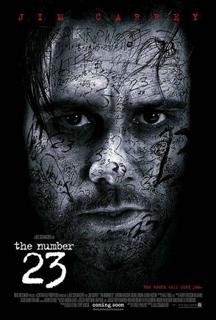
The Number 23 (2007)
I didn’t see The Number 23 in theaters, though I wanted to under the pretense that it was an intelligent thriller. And starred a very “smmmmmokin’!” Jim Carrey. Still, I never had the chance to check it out…until now.
Walter Sparrow (Jim Carrey) leads a pretty charmed life. He’s got a loving wife (Virginia Madsen), a close relationship with his teenage son (Logan Lerman) and a job he enjoys, even if it is animal control. For his birthday, his wife buys him a book entitled The Number 23, a novel of obsession authored by a mysterious author . He is soon lost within the story of Detective Fingerling (Jim Carrey) and his dark, noir-ish world populated by femme fatales, murder, paranoia, and, of course the number 23. Sparrow quickly notices startling parallels and too-close similarities between Fingerling’s life and his own, leading him to become obsessed with the number 23. Mysteries, secrets and hidden pasts come to light as Sparrow delves deeper and deeper into the book and into the cryptic 23. Are his and Fingerling’s fates intertwined or is everything just mere coincidence?
I remember when this movie looked oh-so promising and I though, “Oh, lookie! It’s an actual smart, suspenseful Hollywood movie based around numerology! And a hot Jim Carrey!” Looking back, one out of those three assumptions was correct. I’ll let you guess which one…
Now, The Number 23 wasn’t a terrible movie, just a terribly boring one! It started out promisingly enough, especially as Walter is introduced to the character of Fingerling. The audience is shown Fingerling’s gritty and dark world, and I really thought this is where the film shined. The visuals in Fingerling’s world are just breathtaking to look at, including his fairy tale-like childhood and the crime-streaked streets that he haunts as a detective. As things took a turn down Paranoia Lane, though, the film devolved into a confused mumbo-jumbo of a movie.
First of all, the film’s mysterious number 23 is never fully explained. Instead the real focus of the movie is Walter’s reading of the book and a mystery from the past that ties into everything. His whole family gets involved Scooby-Doo style to try and solve the big mystery and the movie starts to drag at the 45 minute mark. It relies heavily on mere coincidence and happenstance to keep things going (or “fate” and “destiny” as the characters like to call these convenient occurrences). The ending is anticlimactic, trite and expected.
Again, though, even through all my poo-poo’ing The Number 23 wasn’t all bad. I wholeheartedly enjoyed seeing Jim Carrey in two serious roles – one as family man Sparrow and one as the gritty ‘n’ greasy Detective Fingerling. Sparrow’s son, played by Logan Lerman (whom you might recognize as playing Ashton Kutcher’s younger counterpart in The Butterfly Effect) was great to watch as well. It’s always refreshing to see a teenage character that doesn’t sit around and sulk all the time. My only complaint with the acting was the chemistry between Jim Carrey’s characters and Virginia Madsen’s (she played both Sparrow’s wife and Fingerlings femme fatale), which just wasn’t there.
Despite my misgivings about the pacing, the convoluted storyline and my mistaken assumption that this would be a “smart” thriller, The Number 23 did manage to entertain…at least in small doses. Again, the Fingerling storyline and its execution were very enjoyable to me, as was some of the Scooby-Doo detective work the Sparrow family dove into. There were some suspenseful moments, but overall I just wished it were a lot more intelligent and much more cohesive.
Perhaps next time I’ll be more cautious when an edgy, tattooed Jim Carrey lures me to see an otherwise bland suspense-thriller…
Available from Amazon
Sunday, April 22, 2007
Feed (2005)
An Australian cybercrime investigator named Phillip (Patrick Thompson) stumbles across a fetish site featuring morbidly obese women called FeederX. These women are willingly being fed by a “feeder” until they grow so large that they cannot move. The featured attraction of the site is a woman named Deidre (Gabby Millgate), who has surpassed 600 pounds and can be watched via live webcam. After noticing that the fetish site had a surprising number of security measures, Phillip decides to investigate further. He suspects that the “feeder” is force-feeding the women until they die and discovers that there are bets being placed on when the women will die. Phillip tracks down the webmaster of the site, Michael Carter (Alex O’Loughlin), who lives in Ohio. Phillip travels to Ohio and soon becomes involved in a cat-and-mouse game with Michael.
Feed is an extremely well-done film that has many layers and operates on many levels. It’s first and foremost theme is consumerism, and our need as a society to consume at obscene levels. Secondly, it deals with sexual deviation, both in the fetish realm of “fat appreciation” that Michael’s website panders to as well as Phillips own sexual preferences, which involve violent and rough sex with his girlfriend. Its third main theme is the aesthetic of “beauty” in our culture and how rail-thin women are revered while women with curves are typically looked down upon. There are constant parallels that are drawn between the characters of Michael and Phillip while at the same time they are juxtaposed. The two different, yet very similar characters are both presented as unlikable, vulgar and repulsive persons but both of their obsessions draw the viewer in and we can’t look away.
The script by Kieran Galvin is self-aware, satirical and bitingly intelligent, while at the same time vulgar and disgusting. The characters are all well-developed and either become more likable (oddly, the killer Michael) or more repulsive (investigator Phillip) as the film progressives. Director Brett Leonard does an excellent job at capturing all the morbid action and crafting some nail-biting and obscene scenes. I was surprised how Leonard kept everything in check and didn’t let the story devolve into a cheap, exploitative flick.
The acting is all solid throughout, with Alex O’Loughlin giving a stand-out performance as Michael Carter. The characters many psychological layers are revealed as the film goes on and it was a pleasure to watch O’Loughlin play the villain with pizazz and emotional intensity. The initial explanation by Michael as to why he does what he does was entirely convincing and therefore that much more creepy. The psychopath actually made sense and it seemed as though Phillip was the one confused…this turned the tables considerably and really made me stop and think, who am I rooting for? The rest of the cast does a commendable job, with special mention going to Patrick Thompson as Phillip and Gabby Millgate as Deidre (who had to wear one of the biggest fat suits ever created for a movie).
There were some believability issues within the movie, such as why did Phillip never call for backup when he tracked Michael down? Why did he let himself become involved with Michael’s games? I felt these points were lacking explanation, but they didn’t really dampen my enjoyment of the film.
Feed is a horrifying movie, but it felt more of like a thriller than a horror film. The focus is more on Phillip tracking Michael down and then Michael toying with the cop. There are quite a few unpleasant scenes involving force-feeding (and, more specifically, what the women are being forced to eat), corpses, morbidly obese women and so forth, but no gore. I was expecting an extremely nasty, exploitative film, but thankfully got something much more intelligent that had a lot to say about Western culture and society.
Feed surprised me with its intelligent script, stellar acting and its social commentary. It’s also a sick, satisfying and subversive little film that I highly recommend!
Available from Amazon
Labels:
body horror,
disturbing,
favorites,
fetish,
kidnapped,
serial killer,
shocking,
smart,
social commentary,
thriller,
underrated
Subscribe to:
Posts (Atom)