Showing posts with label psychological. Show all posts

Saturday, May 28, 2011

Sole Survivor (1983)


Sole Survivor is a little-known and underappreciated horror film that had obvious influence on the Final Destination series. When I watched it a few days ago, I was surprised that I hadn’t given it a look sooner, as it was a solid, entertaining film.

Denise (Anita Skinner) is the sole survivor of a deadly plan crash. The crash and Denise’s survival was predicted by a washed-up actress named Karla (Caren Larkey) that Denise is working with on a commercial. After the crash, Karla seems to want to warn Denise of some other imminent threat and her doctor warns her of “survivor’s guilt”, where Denise may experience intense depression and guilt over her survival. Soon, strange things start to occur…Denise begins seeing menacing people and is involved in several near-death accidents. Turns out that Death is after Denise and is sending the recently deceased to try to finish her off…

Sole Survivor is a well-made film that manages to maintain a sense of tension throughout its entire running time. It also has some pretty haunting images, especially one where we see Karla’s vision of Denise after surviving the plane crash. The camera pans over the mangled, lifeless bodies of the crash victims and comes to rest on Denise, still strapped in her airplane seat with a shocked look on her face. I also thought the creepy people that come after Denise were very effective, with their slack, expressionless faces and zombie-like movements.

The story combines psychological terrors with real-life threats in a very effective manner. Its story’s twists kept my eyes glued to the screen for the entire running time and I loved the downbeat ending and creepy last scene. Sole Survivor is an intriguing and entertaining film that you should definitely check out!

Available on Amazon!

Monday, May 2, 2011

Book Review: Crucified Dreams edited by Joe R. Lansdale


Like any self-respecting horror fan, I’m a huge fan of Joe R. Lansdale’s work. So, I was very excited to check out this collection of short stories Lansdale had hand-picked to appear in Crucified Dreams. In the introduction, Lansdale explains how he set out to capture stories that were similar to his maverick writing style, and I think he has done a fine job with the selections featured in Crucified Dreams. He has plucked unsettling, off-kilter stories from the very best horror authors out there (among them Stephen King, Harlan Ellison and Lansdale himself) that span nearly four decades.

From the back cover:

A naïve young woman witnesses a brutal murder and discovers the soul-deadening price of being a New Yorker. The family man quits smoking with the sinister assistance of a family-friendly corporation. A truck driver takes a simple shortcut, and lands in a living hell and a battle to the death. An aging Hollywood screenwriter’s career is on the wane until he reinvents himself as a less principled man.

Crucified Dreams reaches down through the gutters into the shadowy depths of the imagination. These are the savage tales that unite noir with horror and the ordinary with the unfathomable. Combing the urban, the paranormal, and the downright terrifying, these award-winning stories go where your deepest fears—and inner demons—are already realized.

Classic tales from horror masters reside within the near 400 page collection, and while I enjoyed all of the stories, I did have a few favorites. Harlan Ellison’s “The Whimper of Whipped Dogs” left me breathless and paints quite a gloomy picture for apathetic city-dwellers. “The Mojave Two-Step” by Norman Partridge and “Front Man” by David Morrell show the danger of following fortune and glory, one from the view of a stolen ice cream truck barreling through the desert toward Vegas and the other through the eyes of an award-winning but aging screenwriter looking for work in shallow Hollywood. I wholeheartedly enjoyed the characterization of the two leads in Jeffrey Ford’s “Coffins on the River”, about two old artists who take quite a trip that results in a terrifying ghostly encounter. “Copping Squid” by Michael Shea is an excellent Cthulhu-inspired tale set in the ‘hood, and Ellen Klages gives us an eerie look into an alternate universe through the perspective of a little girl in “Singing on a Star”. “Nightbeat” by Neal Barrett, Jr. offers up another alternate (or future) world filled with made-up words that conjure up a beautiful yet sinister landscape.

These are but a few of the 19 tales featured in Crucified Dreams, and while those mentioned were my favorites I must say that all the short stories in the collection were well worth reading and left an indelible imprint upon my psyche. The collection is a mix of the gritty and graphic with the subtle and psychological and will be a welcome addition to any horror fan’s book collection.

Buy yours today on Amazon!

Wednesday, December 15, 2010

The Bunny Game (2010)


The terror you witness on-screen of The Bunny Game is real. Let me clarify…it’s not just realistic…it actually happened. It’s like watching a snuff film, only no one really died during filming (as far as we know). The actors weren’t merely acting, but they were subjected to most everything you see on film. Ballsy actress Rodleen Getsic gives a graphic blowjob, pees in public, is shaved bald and is actually branded in the film, not to mention the preparation that went into her role as an emaciated, drug-addled prostitute. Getsic fasted for over a month to prepare for her role! As you probably have guessed by now, The Bunny Game isn’t your ordinary horror movie. In fact, it feels more like a brutal snuff film coupled with avant-garde performance art.

The film is about a hard-knock prostitute named Bunny (Getsic) who trolls the streets of LA turning tricks and snorting coke whenever she gets the chance. This prostitute certainly doesn’t have a heart of gold, but nonetheless you feel pretty bad for her as you watch her engage in graphic sexual acts, get high, get raped and get robbed. Things go from bad to worse when she is picked up by a trucker (Jeff F. Renfro) who takes her out to the desert and brutalizes her for days on end.

While the plot might make it seem like just another torture flick, let me assure you that The Bunny Game is anything but. Is there torture? Well, yes, but it’s more the nasty psychological kind that sticks with you for days, rather than straight-up blood and guts. And the intense psychological wringer that the film puts both the victim (Getsic) and viewer through makes the film seem that much more realistic, which, believe me, will further raise the audience’s anxiety! And after all the things the cast (namely Getsic) went through, it is no wonder the film feels so authentic!

Director Adam Rehmeier, who co-wrote the film with actress Getsic, says the film wasn’t written with a strict script (there is very little dialogue) and most of the performances came organically from the actors. They were just sorta let loose on one another and given license to go as dark as they could…and, boy, did they ever go dark! Not only were the performances spontaneous, but so was the camerawork. Most scenes were filmed in only one take (usually unheard of in a film), which only adds to the immediacy and realism of the film.

The film also has a very voyeuristic feel, which adds to the snuff-like, performance art quality of it. The shaky camera angles, the constant zooming in and out and so on really make you feel like you are right there with the characters. And no matter how hard you try and get away (or look away), you just can’t.

Despite its shocking brutality, there isn’t that much blood and gore, if that’s what you’re hoping for. Most of its terror comes from psychological torture. Bunny is just as mentally broken down by the trucker as she is physically abused. He locks her up for days and submits her to all kinds of torment – stripping her down, humiliating her body, flashing a spotlight in her eyes, chaining her up, taking her for walks on a leash, shaving her head, etc. And that doesn’t even begin to detail the physical and sexual abuse he perpetuates against her. It is this kind of damaging psychological horror that is most effective, at least in my opinion. Anyone can do gross-out blood and guts, but it takes real talent to get into the audience’s brains and truly disturb them.

Congratulations are in order for director/co-writer Rehmeier and co-writer Getsic, because they have crafted a hauntingly unsettling film! It may be intensely difficult to sit through, but at least it looks stunning and isn’t just a point-and-shoot affair. There are even some beautifully dynamic shots in the film that momentarily relieve you of the brutality on-screen. It is filmed completely in black and white, which gives it a monochromatic and artistic look.

However, even the way the film is shot echoes the manic madness of the film, for juxtaposed against the gorgeously framed shots are choppy, disorienting edits, frantic shaky cam shots, voyeuristic zooms and more to make the viewer experience even further discomfort. Even the music, which features chaotic metal in the first few scenes but devolves into a creepy score as the film progresses, adds heightened emotion to scenes that are already difficult to watch…And just when you think you can’t possibly take anymore the next scene comes up to further test your limits.

I can only use “disturbing”, “unsettling” and their derivatives so much to describe The Bunny Game, but hopefully by now you get the point. This film definitely isn’t for most people, but if you like challenging films that push limits, you should give The Bunny Game a view. It’s probably the closest you’ll ever get to a snuff film!

The Bunny Game on Facebook!

Tuesday, November 23, 2010

Something Just (2010)


After being impressed with Scott W. Perry’s film Insatiable, I was eager to check out his new short film, titled Something Just.

Something Just stars Alan Rowe Kelly, Jerry Murdock, Evan Robert Smith, Joslyn Jensen and Joseph Zaso. It was written, produced and directed by Scott W. Perry and co-produced by Jeremiah Kipp. If you are a fan of indie horror, more than one of these names is probably familiar to you!

Synopsis: In order to stop a child killer, the guardian of one of his victims seeks the aid of a shady figure from his past.

Alan Rowe Kelly, a regular figure in the independent horror scene, stars as the creepy child killer and delivers quite an imposing performance as a psycho. The first scene where he kills a young girl is very disturbing. It’s not that there’s a lot of blood, but the scene has more of a psychological impact with the disorienting score and echoing effects of the sounds and images on screen.

Don’t expect this film to be your cookie-cutter psycho story, though! Perry weaves a surprising twist into the proceedings with the introduction of one of the victim’s guardians who would do anything to stop the killer, including dealing with a mysterious man from his past. I like how this twist makes the film unique and gives it a much more layered, complex story. And the ending, which I won’t give away, is both surprising and satisfying!

The film also looks fantastic and the cinematography by Dominick Sivilli is great. In the beginning we are in the killer’s dingy house and dark basement, but later the film takes on a dreamier atmosphere with soft, washed-out colors and a park setting.

Something Just just goes to prove how much Scott W. Perry has grown as a filmmaker. Not only has he put together another fantastic cast, but the film feels more mature than previous efforts and deals with the more serious subject matter of child predators. With this steady progression, I can’t wait to see what Perry does next…perhaps a full-length film?

Monday, October 25, 2010

Eyes Beyond (2010)


Two brothers share the same house. One day they invite their next door neighbors over for a house warming dinner. What the neighbors don’t realize is that everything is not as it seems with the brothers and they soon find themselves in a game of ultimate humiliation and degradation. They’re at the mercy of their captors and the only thing that can release them from the nightmare is death – or is it?

When I first started watching this short 26-minute film, I figured it would be another boring torture flick. The two brothers do some pretty nasty things to their guests, but no matter how shocking the torture was, I just couldn’t seem to get into the film. Luckily, things get interesting pretty quick and any assumptions I had about the plot got turned topsy-turvy.

The film is best seen going in blind and I don’t want to give too much away, but I must mention that the filmmakers aim in making the film was to bring awareness to mental illness. In fact, the film is very personal to writer/director/producer/actor Daniel Reininghaus, as he himself deals with bi-polar disorder. He wanted to create this film to not only bring awareness to mental illness, but to also reach out to others with mental illness that could relate with the character(s).

Speaking of the characters, all of the actors did a superb job portraying them. Daniel Reininghaus was especially brilliant as Gabrielle, one of the two brothers who tortures the neighbors. I loved his character arch and the many surprises that are unveiled. All of the other actors did a fantastic job as well, not an easy thing to boast in an independent film, especially considering each character’s multi-faceted development.

As I mentioned before, there is a fair amount of gruesome torture at the beginning of the film. Ears and fingers are cut off, people are beaten and raped and other violence is meted out to the unfortunate neighbors. For a low-budget picture, the quality was impressive! Even for a seasoned horror fan like me there were instances where I was cringing.

Also impressive for an independent short was the overall high quality of the picture. The film looked professional without looking too slick. I also appreciated that there was an important message embedded in the film and that it aspired to do more than to just show bloody torture. Writer/director/producer Daniel Reininghaus and his cast and crew should be commended for tackling such a personal project and succeeding brilliantly.

Eyes Beyond is a very dark psychological film that is as disturbing as it is enlightening. Not only will horror fans be pleased by this hallucinogenic journey, but those that suffer mental illness will also appreciate its message of awareness. From the harrowing performances to the gruesome torture to the surprising twists and overall message, Eyes Beyond is a short film that shouldn’t be missed.

Visit the Official Site!

Friday, October 1, 2010

Walking Distance (2010)


Ever since I first saw Mel House’s Closet Space a few years ago, I’ve eagerly anticipated his next project. Though Closet Space had its flaws, its story was engaging and despite its low budget it had rather impressive special FX. The unique story and effects work made Closet Space a memorable viewing experience and really made me sit up and take notice of “Texas Blood” filmmaker Mel House.

Now, a couple years later, House has completed Walking Distance, a film I’ve been eagerly anticipating since I first heard about it. Like Closet Space, House has written and directed the film, as well as picking up a slew of other duties (producing, editing, etc. – even making a cameo in the film). Would House be as successful with Walking Distance as he was with Closet Space? Read on to find out!

The plot to Walking Distance is very complex and so ambitious it’s hard to describe in detail without taking up a few pages. So, I’ll just give you the official synopsis, found on the Walking Distance website:

“An idyllic, small, self-sufficient community. On the surface, it seems like the perfect neighborhood. Everything you could possibly need is within walking distance. But…the pastoral exterior conceals a dark past and an even darker secret. As a group of individuals – each with their own ties and agendas with the town and each other-converges on the enclave, strange things begin to happen. Very strange things. Strange enough to test – and then break – the very fabric of reality itself.

Walking Distance really shows Mel House’s growth as a filmmaker. Technically, it looks absolutely fantastic. It still has a slightly low-budget look, but it’s much slicker and professional-looking than Closet Space. It also has a much larger cast with recognizable names (Adrienne King, Debbie Rochon, Reggie Bannister, Shannon Lark, Peyton Wetzel, Katie Featherston) and a more complex storyline.

This complex storyline is the film’s one big flaw. House tries to cram so many different backstories, so much character development, so many ideas into the nearly two-hour-long film that I felt a bit overwhelmed. This is a commendable flaw, however. I’d much rather a film attempt more character and story development than none at all! Still, there were so many ideas crammed into Walking Distance that you don’t really get a chance to take a breath, so to speak. I feel like some of the characters didn’t have any real purpose (the activists, for example), because towards they end they just ended up dying anyway. And the multitude of characters robbed me a chance of really rooting for anyone.

Despite the film being overcrowded with ideas, overall it was a positive experience. The acting was quite good from all involved and it was a pleasure seeing familiar faces! For example, we get Reggie Bannister as a pedophile, Adrienne King as an executive for an evil corporation, Debbie Rochon as an abusive mother, Shannon Lark as an activist against the evil corporation and even Katie Featherston (Paranormal Activity) as the lead’s girlfriend. Speaking of the lead, Denton Blane Everett did a fantastic job in his role of Cole Gray. In fact, I can’t really say there was one bad actor in the large cast, quite an achievement for a low-budget film!

Also impressive were the special FX, again handled by Marcus Koch of Oddtopsy FX. There are liquefied remains, people on fire, people melting into each other – pretty much the stuff of nightmares! And it all looks fantastic. My favorite scene is one in which the characters of  are sitting naked in a bathtub full of blood and their skin is sticking and melting together. Very impressive and freaky stuff here! Not to mention the main monsters in the film, who are people that look like they’ve been to Hell and back, complete with black, charred skin that is still on fire in parts. These mysterious entities appear and disappear, leaving a trail of liquefied bodies (or in some cases, no bodies) in their wake. These creatures look very creepy and when their existence is explained, it all makes sense!

Lastly, we have the fantastic story. Though it is crammed full of ideas, making it beneficial to watch the film more than once to fully absorb them all, the story is extremely unique. I love the different avenues of horror Mel House likes to explore and Walking Distance is no different. This is definitely an intelligent horror film and the kind of quality film that horror fans deserve!

Walking Distance is a huge step for indie filmmaker Mel House…it shows his amazing growth as a filmmaker and reaffirms my belief that he is definitely one of the top indie filmmakers to watch!

Walking Distance is making the festival rounds right now, so for more info on screenings and its DVD release, please visit its Official Site!

Monday, August 9, 2010

A Whisper in the Dark (1976)


I gotta tell you, I love slow-burning, mysterious ghost stories. The psychological impact of such films leave me wanting more, so I eagerly seek out titles I’m unfamiliar with. Such was the case with A Whisper in the Dark (aka Un Sussurro nel Buio), a 1976 production from Italy.

In this film, a wealthy family is vexed by the existence of Luca, the imaginary friend of their 12-year-old son Martino. Mother Camilla is affected the most, so much that her nerves are shot. It doesn’t help that she has two bratty daughters, or that her mother, The Countess, is visiting the mansion and her husband is a philandering fool. However, everyone soon begins to fear Martino and his imaginary friend Luca.

Why you ask? Well, it seems that anyone who has anything bad to say about Luca or Martino has something bad befall them. For example, when his sisters play a trick on him, Martino tells them Luca will get back at them. That afternoon, the sisters are to attend a party but it starts pouring rain. Even when they try to attend, their car gets a flat tire. In another instance, Martino discovers his father is having an affair and the adulteress is scared away by a toad placed in her bath.

Pretty tame stuff, but it spooks the family enough that they bring in an “expert” to analyze Martino. When the professor threatens to take Martino away he mysteriously dies. Are all these instances mere coincidence or does Luca really exist?

A Whisper in the Dark starts off very strong. It has the creepy atmosphere of the surrounding countryside and forest, plus the foreboding mansion that lend it much gothic beauty. Then there are some spooky scenes, including Martino “interacting” with Luca, an artful shot of a lone red balloon floating through the gardens, the light sound of a child laughing, a swing swinging on its own, a weirdly unsettling kid’s costume party and a very effective scene where Camilla is kissed by invisible lips.

There is no doubt that the film is beautiful, lushly shot by director Marcello Aliprandi and cinematographer Claudio Cirillo (who actually plays a detective in the film and also does a cute intro before the film!). However, the film never really goes anywhere and the creepy scenes are far and in-between. Mostly we see the family interacting (dear lord those sisters are grating! If I was Luca I would have gotten rid of them long ago) instead of any real ghostly activity. And the fact that there is only one death was pretty disheartening. Of course, since the film is so ambiguous this is supposed to make us question if Luca really exists or if everything is just unhappy circumstance, but for me this wasn’t enough.

While I enjoyed the psychological games the film played with the audience, I just wish a little bit more had been done to scare the audience instead of puzzle them. The ending gives no resolution, but repeats a similar pattern of Martino telling everyone that Luca prefers peach jam on his toast, not plum (yes, a table setting and food is laid out for the invisible Luca). Previous to this scene is a bizarre dream-like sequence where Camilla decides to take care of Luca’s ghost (since he may be her own miscarried child) for herself and through fog and snow leads him out of the mansion’s gates. The next morning she wakes up on the muddy ground (sans snow or fog) and finds Luca back to his old tricks at the breakfast table. So much for resolution…

A Whisper in the Dark is a film I desperately wanted to love. Ghost stories are my absolute fave and the right ones send a delightful shiver down my back, but this film only left me mildly interested. While it is a beautiful film and has its unsettling moments, more should have been done with it. If you are like me and like subtle, atmospheric horror it does deserve at least a look, though!

Available from Amazon!

Tuesday, August 3, 2010

Meadowoods (2010)


You all know that faux documentaries are nothing new in the horror genre. “Found footage” flicks have been popular from Cannibal Holocaust to Paranormal Activity and are now more common than ever thanks to the heightened scare factor, immediacy and realism of faux docs. Plus, they can be relatively cheap to make for filmmakers on a budget! However, they are so “dime-a-dozen” nowadays that sometimes they are more a chore to sit through than a pleasure.

So, I didn’t really have high hopes for Meadowoods, where three college students decide to film themselves planning and executing a murder.

The three disenfranchised college kids are Stephanie (Michelle Roe), a bitter young woman who has lost all faith in humanity, Travis (Connor Thorp), the seemingly happy-go-lucky leader of the group but who hides a sinister, sociopathic nature and the brooding cameraman Ryan (Michael Downey). The three are fed up with being neglected by their parents and living in a small podunk town, so to go down in history they decide to kidnap and kill a random person, filming everything. However, once their plan starts to become a reality, Ryan starts having second thoughts, especially after he gets close to their intended victim.

I wasn’t expecting too much out of Meadowoods and figured it would just be another throw-away serial killer flick with lots of violence and brutality. Lucky me, I actually got a rather chilling story about the ambivalence and indifference of seemingly ordinary people. The scare factor in Meadowlands isn’t in the final scenes where the kids’ quarry is trapped and tortured, but rather in the scenes where each of the kids are interviewed, stating their reasons for wanting to kill someone, their views on death and the afterlife and so on. Their coldness and flippancy towards killing another is absolutely chilling and portraying this is where this film succeeds!

Of course, none of this would have worked without competent and convincing actors and surprisingly for an indie film the acting here is top-notch across the board. Connor Thorp, Michelle Roe and Michael Downey all do a stunning job playing the trio of friends. They were all entirely convincing as bored college kids looking for a sick thrill. Very spooky performances! And Ila Schactler gave another believable performance as their intended victim. She was likable and perfect as the girl next door!

I also want to give kudos to writers Stuart Ball, Scott Phillips (who also directed) and Anna Siri for creating such realistic characters and such a chilling story. I appreciated that the characters weren’t your stereotypical stupid teens and that the script offered more than just violence.

My only problem with Meadowlands was the ending, which dragged a bit too much in my opinion. It was almost like they used most of it as padding since it got so repetitive. The taunting and torturing of the victim was fine, but did we really need to see her sit there and scream for what seemed like 20 minutes straight? I think the ending killed the unsettling feel of the rest of the film, which is unfortunate since I enjoyed the first part of the film so much.

However, I would still recommend you check out Meadowlands. It isn’t your typical “found footage” horror film and really takes the time to frighten us psychologically through its portrait of today’s bored youth.

Available from Amazon!

Tuesday, July 13, 2010

The Perfect Witness (2007)


What was it that grabbed my attention and made me want to sit down and watch this flick? Well, it certainly wasn’t the crappy DVD artwork or the generic name (thought its other title, The Ungodly, is just as clunky-sounding). No, this film was in my queue for a long time before I realized that hunky Wes Bentley was in it, which shot it to the top of my must-see list! Yes, call me shallow but I’m a sucker for the blue-eyed, dark-haired actor and would pretty much watch whatever he’s in! While his scruffy, “independent filmmaker” look in this film didn’t do him justice (no offense to all the fab independent filmmakers out there!), I nonetheless found myself riveted to The Perfect Witness.

The story is about struggling documentary filmmaker Mickey (Wes Bentley) who plans to make it big by tracking down and filming an elusive serial killer. He finally catches up to his subject and films him brutally killing a girl. He then blackmails the serial killer, named James (Mark Borkowski, who also co-wrote the film), into being interviewed on camera in exchange for Mickey not turning in the video of James murdering the girl. However, the tables are soon turned as a tense cat-and-mouse game begins between the filmmaker and the serial killer.

Surprisingly, this film was pretty engaging! It’s definitely not a “perfect” film (hardy har har), but it is an underrated little flick. The use of hand-held camera footage actually works within the film and never once becomes annoying. Plus, the direction by Thomas Dunn is well done…there are several scenes that are nicely framed and he really captures the grittiness of the city setting. In fact, the dingy surroundings – back alleyways, dark apartments, etc. – really add both character and atmosphere to the film.

As for the story, penned by Dunn and Borkowski, it may sound similar to films like Henry: Portrait of a Serial Killer, but it has enough twists, turns and distinct characters to differentiate itself from other flicks. Though James, like many other serial killers, had an abusive upbringing, the film really takes a different direction with the backstory, bringing it to the forefront of film instead of using it as a convenient “explanation” as to why James is the way he is. I loved how his childhood demons came full-circle by the end of the film (in very surprising ways, I may add).

The chemistry between the characters of James and Mickey was spot-on – at first there was uneasiness between the two of them, then acceptance, then a tense trust and then…well, let’s just say that the turn of events is surprising towards the end. Bentley and Borkowski do a really bang-up job portraying their characters. Of special note is Borkowski, who just oozes danger despite his character’s penchant for charity work. He always seems on the verge, and when he finally snaps it is quite explosive!

Though there are some disturbing scenes of violence (one in particular involving a home invasion and subsequent murder of a waitress is particularly cringe-worthy), this is more of a psychological film than anything else. While this might turn off some viewers, I actually appreciated the slow build-up of the film and its increasing tension. The story, acting and direction kept me engaged, and the topsy-turvy ending was just icing on a very satisfying cake!

The Perfect Witness certainly isn’t the best thriller out there, but it was a surprisingly interesting film that kept my attention, especially with its strong acting and story, making it well-worth checking out.

Available from Amazon!

Monday, June 28, 2010

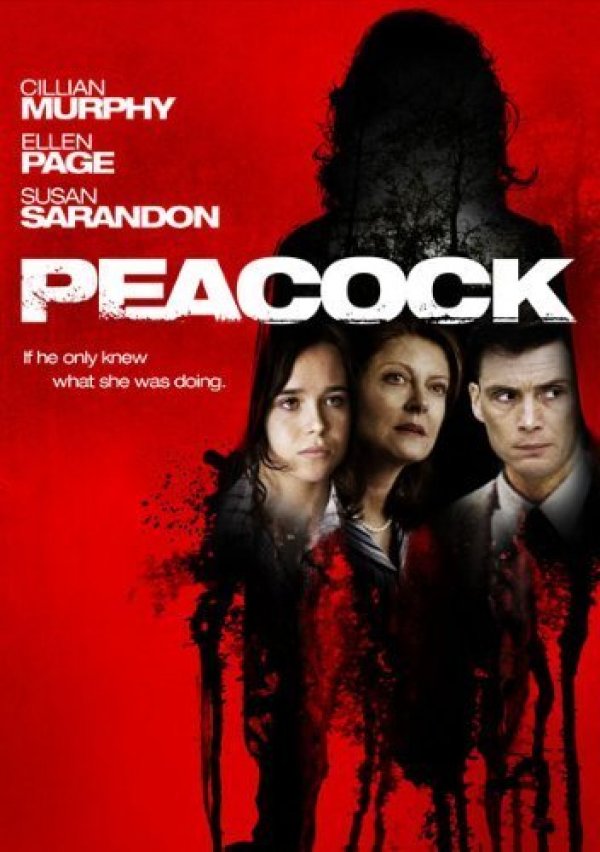
Peacock (2010)


John Skillpa (Cillian Murphy) is a timid, socially-awkward bank clerk living in tiny Peacock, Nebraska who prefers to keep to himself. This might have to do with John’s secret: he has another personality no one knows about, a woman named Emma, who each morning does his chores and cooks for him before he starts his day. However, everything changes when a train derails into Skillpa’s backyard, exposing Emma to the curious neighbors, who assume “her” to be John’s wife. As John struggles to maintain control over his other personality as well as keep up the façade that she is his wife, his already disturbed psyche becomes further unbalanced.

Peacock is an above-average thriller, but I’ll tell you right now it definitely won’t be for everyone. It’s a slow, subtle character-study about a man with a fractured psyche that plays more of like a drama than a thriller (though it’s pretty darn suspenseful!). If you aren’t put off by languidly paced films, however, Peacock is an intensely psychological experience that I definitely found to be worth my while, despite its flaws.

The best thing about the film is no doubt Cillian Murphy’s amazing performances as both John and Emma. These are two completely separate people, with distinctly different ways of talking, walking and different personalities and facial tics, but Murphy makes them both believable and I even starting thinking of them as two separate people instead of one man. How Murphy didn’t receive more accolades for his performance is beyond me, because he is purely brilliant in this film.

Rounding out the cast are several other famous faces – Ellen Page, Susan Sarandon, Bill Pullman, Josh Lucas, Keith Carradine. Not even against these accomplished actors is Murphy’s performance diminished, though the other actors do a fine job as well. Page played the role of a desperate young mother, Carradine and Sarandon played the wealthy mayor and his wife, Lucas the town cop and Pullman the annoying boss at the bank. While each character adds another layer of complexity to the story, some of these extraneous characters felt like they weren’t really vital to the story. Perhaps the connection between some of these characters and John/Emma never really meshed for me, but something was a bit lacking in their development.

Nevertheless, the best parts of the film were when John/Emma went behind the others’ back to interact with the townsfolk. When Emma would approve something (like a political rally in the backyard), John would find out later and just lose it! John was so out-of-control that you came to prefer Emma’s cool-headed way of approaching problems, even if she was manipulative and calculating. As she slowly took over more and more of John’s life and became the more dominant personality, John really begins to panic and this unbalance creates a lot of tension and suspense.

Now, a lot of people have commented that it’s not at all believable that the townspeople couldn’t tell that John/Emma were the same person, and while watching the movie I tended to agree. However, looking back I realized that if Murphy’s performance was so convincing to me, I suppose it would also work on the townspeople. Plus, the two separate personalities had completely different ways of moving and speaking. However, I still think it would have been more believable if writers Michael Lander (who also directed) and Ryan Roy had just made Emma John’s sister or cousin. At least that way it would explain the striking resemblance between the two!

Despite this, I found myself getting sucked into the twisted, dreary story. Besides the fantastic performances, director Michael Lander creates a somber, post-Dustbowl era (the movie could be set anywhere from the 1930’s to the 1950’s) atmosphere. The film itself is beautifully filmed and its dark tones create a melancholy, ominous tone. Even the obligatory backstory of John being an abused little boy or the previously mentioned flaws didn’t really sully the hauntingly filmed movie.

Peacock doesn’t work all the time, but if you are looking for a sophisticated, tense psychological film it is worth checking out!

Available from Amazon!

Wednesday, June 23, 2010

Fugue (2010)


After viewing director Barbara Stepansky’s film tense psychological film Hurt last winter, I was excited to check out her newest effort, Fugue, which promised another psychological storyline, only this one included the possibility of the supernatural.

Fugue’s premise is based upon a rare disorder called a fugue state or dissociative fugue, which according to Wikipedia is “characterized by reversible amnesia for personal identity, including the memories, personality and other identifying characteristics of individuality. The state is usually short-lived (hours to days), but can last months or longer.”

Fugue begins with Charlotte (Abigail Mittel) moving into a new house with her older, college professor boyfriend Howard (Richard Gunn). Charlotte has just suffered an accident that is barely hinted at, but that’s okay because she and Howard are trying for a baby and seem happy for their new start. However, it’s not long before Charlotte begins to sense a malevolent presence in the house and begins seeing visions of a threatening black-haired woman. She comes to suspect that something horrible happened in the house, and is determined to find out what…but at what cost?

I wasn’t as impressed with Fugue as I was with Hurt, but that doesn’t mean it was necessarily a bad movie. On the contrary, it boasted a story with plenty of twists and turns, excellent acting and even a few disconcerting scares.

The story’s details felt unique, even if the whole “is she crazy or isn’t she” angle seems overplayed. Luckily, writer Matt Harry balances out these clichés with plenty of surprises. In fact, I enjoyed how Fugue messed with your head, and just when you thought you had it all figured out it threw you for a loop and took the story in an entirely different direction. However, the story also tended to drag in places and didn’t quite grab my attention from the start. The film’s saving graces were its unexpected twists and turns as well as a bloody finale, which turned it from typical psychological thriller to something much more engrossing.

Also superb were the performances by all involved, but especially Abigail Mittel as Charlotte. Mittel made her character believable and likable (perhaps even when she shouldn’t have been), and I found myself rooting for her the whole time. I also thought Richard Gunn did a fine job as her boyfriend, who patiently endured or tried to explain away Charlotte’s ghostly visions.

The direction by Stepansky really captured the claustrophobic feel of the house and surrounding garden terraces. It made you feel boxed in and trapped, adding even more tension to the film. While the film was more a thriller than anything else, Stepansky included several nice scares and disturbing scenes. The ghost haunting Charlotte looked marvelous with a few simple effects of blurring out her eyes and mouth. Plus, the action scenes near the end really wake the film up and were filmed in such a way that they really put you in the moment.

My biggest complaint of the film probably won’t affect its official release at all, but I think it’s worth mentioning that the audio levels were absolutely awful and I couldn’t understand about half of the dialogue. Why you ask? Throughout the ENTIRE film there is an annoying music track that drowns out the dialogue. The constant music ruins the mood of the film instead of enhancing it. The film would have greatly benefited from less music and more silence, or at least have balanced audio levels. One minute I was cranking up the audio to hear dialogue, the next turning it wayyyy down so I wouldn’t have to hear the repetitive music. I think the fugue that Charlotte plays on the piano and keeps humming would have sufficed for music as opposed to the tiresome score used throughout the film. I hope this is an issue they resolve before released Fugue to the public, because this grating annoyance made it difficult to sit through.

Despite that and a few pacing problems, Fugue was a low-key indie thriller that kept me on my toes with its twists and turns. If you happen to see it at a film festival and enjoy slow-burning thrillers don’t pass it up!

For more info, visit Fugue’s Official Site!

Monday, June 14, 2010

Bunny Lake is Missing (1965)


In this stylish and tense ‘60s British mystery, young mother Ann (Carol Lynley) has just moved to London to be with her brother Steven (Keir Dullea). Her young daughter, Bunny, goes missing after Ann drops her off at her first day of school, but no one even remembers seeing the child. Steven is overprotective of Ann and immediately blames the school, but when the police become involved Detective Newhouse (Laurence Olivier) can’t seem to find any evidence to show that Bunny ever existed.

I’d heard of Bunny Lake is Missing on and off for years, but never checked it out before now. I’m not sure why I waited this long, because it’s a fantastically tense and well-done thriller that still holds up to this day!

The audience is continually held in suspense because we’re never quite sure whether Bunny is real and missing or if she is just a product of Ann’s imagination. Director Otto Preminger does a fantastic job of keeping us in rapt attention as Ann tries to retrace her steps to prove that Bunny is very much a real person. The mystery is heightened by the shadowy black-and-white that gives it a noir feel and the stunning chiaroscuro photography (I especially love the sinister and suspenseful sequence at a doll shop that changes everything!). All in all, the film is beautifully filmed and additionally gives us a nice peek at ‘60s London.

The acting by Carol Lynley as Ann is brilliant. She is continually standing up for herself, asserting that she isn’t crazy and that Bunny really does exist, but she does this with just a shred of doubt so that the audience isn’t quite sure it can trust her. Keir Dullea was also great as the concerned brother who wanted to blame everyone but Ann. He had great intensity in the role and it was hard to take my eyes off him whenever he was in a scene! The legendary Laurence Olivier did a serviceable job as the detective, but this character didn’t seem like much of a challenge for him and his performance feels phoned in. That’s okay, though, as the real star of the show is Lynley and all her frenetic and frustrated energy as Ann!

Now, I don’t want to spoil the ending for anyone, but it’s a doozy! I certainly didn’t see it coming, though as it gets nearer to the conclusion it becomes a vague possibility. The reveal is perfectly timed so when it does happen you are left momentarily shocked and then immensely satisfied. The ideal way to end a film, no?

I was surprised watching Bunny Lake because of how tense and intense of a film it is – especially since before watching I’d heard claims of its campiness. However, I found no evidence of camp, but just a straightforward thriller that kept me on my toes. Though it is regarded as a cult classic, I believe Bunny Lake is Missing deserves a much wider audience and would fit in nicely with other classic psychological horror.

If you are into classic horror mysteries with plenty of twists and turns, I highly recommend checking out Bunny Lake is Missing, an underrated psychological thriller.

Available on Amazon!

Thursday, June 3, 2010

Home Movie (2008)


Home video cameras offer families a chance to capture precious moments, whether it’s in the backyard, on vacations, during holidays or just everyday life. Home videos are usually meant to capture the best of times, but sometimes they can also capture the worst. Usually this footage ends up on America’s Funniest Home Videos or Break.com, but what if home videos showed something truly disturbing, like every parent’s worst nightmare that their kids are not the sweet and innocent children they thought they were raising but instead sick and twisted little bastards? What if a family’s home videos revealed the extent of their children’s sadistic nature?

This is the basic premise of Home Movie, which uses “found footage” to document one family’s desperation as they watch their creepy kids commit unspeakable horrors, all through the lens of the family camcorder. I hadn’t heard anything about Home Movie before watching it and wasn’t expecting much, but it delivers a truly sinister and disturbing story.

The film shows us the Poe family, comprised of dad David, mom Clare, and siblings Jack and Emily. They’ve just moved to an isolated house in the country and also bought a brand spankin’ new video camera to record their adventures (well, according to David…Clare originally bought the camera for her psychology practice). They seem like a normal loving family…except their kids, twins Emily and Jack, are pretty creepy. They don’t say much and just stare into the video camera with empty expressions. And then there’s an instance where David gets hit with a baseball…which could be construed as an accident, until Jack starts throwing rocks (“Turn the camera off…He’s throwing rocks at me”). The kids’ bratty behavior begins to escalate and goes from petulant (throwing rocks, behaving badly at dinner) to downright shocking (crucifying the family pet on Christmas). Clare recommends counseling/medication and tapes her sessions with the troublesome twosome. She also begins to suspect that David is abusing them and causing them to lash out. However, David, a Lutheran minister, thinks the kids are possessed by evil spirits and believes an exorcism is in order. Through all this, the twins’ progressively violent and shocking behavior only seems to be getting worse…are they being abused? Are they possessed? Or are they just burgeoning sociopaths?

I am really surprised that this film hasn’t been given more attention, because it’s a fine flick. Writer/director Christopher Denham creates a chilling story and shocking visuals. The children are just creepy to begin with (kudos to child actors Amber Joy Williams and Austin Williams for their convincing performances), but Denham creates so much tension by giving us a voyeuristic view of the Poe household. We feel as if we are a fly on the wall while watching the horrific events unfold.

Also, Denham uses the home video footage wisely, so it appears realistic and believable (which is much harder than it looks). For example, the parents are always saying “shut that camera off!” when something bad happens. The footage that is shown comes off as very natural and is never forced. Every disturbing detail is captured and there are plenty of shocks throughout the film as well as a twisted ending. The story builds subtly, but the intensity levels keep rising with each new “incident” the family experiences. It takes a little patience to get through the first part of the film, but the tension keeps mounting and mounting until you just can’t look away.  I also enjoyed how the story explored many different explanations for the children’s behavior. Are they being abused? Are they demon possessed? Is something evil in the house influencing them? Are they just pure evil? These different possibilities kept me on my toes and on the edge of my seat.

Considering there were only four characters in the film and the action was always focused on them, the actors all did a phenomenal job. As mentioned previously, real-life siblings Amber Joy and Austin Williams did a very convincing job of portraying evil children. The film could have easily gone campy if they gave over the top performances, but they played it very subtly, which ended up making their characters VERY unsettling. Props must also be given to director Denham for really getting these stellar performances out of child actors. Adrian Pasdar and Cady McClain were equally brilliant as the befuddled parents. Their performances came off as very natural and completely believable. You could really feel their frustration, confusion and fear through their performances and couldn’t help but sympathize with them.

This is a rare independent film whose atmosphere and psychological terror deliver unrelenting dread, tension and suspense. Home Movie is an underrated film that deserves more attention from horror fans and is one of the best “found footage” or “faux documentary” indies to rock my world. You should definitely check it out…

Buy it on Amazon!

Wednesday, June 2, 2010

After.Life (2010)


Christina Ricci naked.

That seems to be the film’s only selling point, at least according to most reviews of this film. However, its actual storyline is pretty intriguing and this film has a lot more going for it that Ms. Ricci’s nudity.

After being involved in a car accident, Anna (Christina Ricci), wakes up in a funeral home where the sole proprietor Eliot Deacon (Liam Neeson) tells her she is now dead as he prepares her body for burial. Though Anna still feels very much alive,  Eliot tells her he has a special gift to speak with the dead and is there to help her make the transition to her afterlife. Anna’s distraught boyfriend Paul (Justin Long) comes to believe that the funeral director is hiding something and that Anna could still be very much alive. He has just a few days until her funeral to get to the bottom of Anna’s demise, but he may already be too late as Anna comes to accept her fate.

Besides all the fanboys going gaga over the nudity, there is a lot more to After.Life than T&A. It is a much more complex and intriguing film than others have given it credit for and definitely deserves a look.

Director Agnieszka Wojtowicz-Vosloo (who also co-wrote the film with Paul Vosloo and Jakub Korolczuk) crafts a beautifully subtle film about appreciating one’s life before the inevitability of death. The first thing that really grabbed me was the color symbolism used throughout the film. The color red, the color of blood and of life and vitality, is used predominately. Before her accident, Anna has frequent nosebleeds and has her hair dyed red, both blood and dye shown swirling down the drain. Also, the clinical white interior of the funeral “preparation room” and the autumnal world outside symbolize the transition from life to death, the “preparation room” acting as a sort of purgatory while the changing seasons outside show the cycle of life. I don’t mean to get all analytical on you, though, so let’s get back to what works about After.Life!

Besides the symbolism surrounding the visuals, director Wojitowicz-Vosloo also infuses the story with mystery, and we as the audience are never quite sure of each of the character’s culpability or innocence. Is Anna really dead or is Eliot some sick psycho? The answers are neither clear-cut nor easy, which makes After.Life a much more satisfying and complex film.

Also, the actors all do a fabulous job in their roles. I especially loved Liam Neeson as Eliot Deacon, the creepy funeral director. He played the part with equal parts menace and charm, never letting Anna or the audience know if he could be trusted or not. Christina Ricci also gives a remarkable performance as the unhappy Anna. There are parts of the film where she is naked, but I felt the direction made the nudity feel cold and clinical, never erotic. Plus, the nudity never distracted from Ricci’s strong performance as the confused Anna. Justin Long also appears as Anna’s distraught boyfriend and gives quite a solid performance.

With all these positives going for the film you might think After.Life was without flaw, but that isn’t the case. Its slow pace certainly won’t work for everyone, and the film tends to drag a bit in the middle. It doesn’t feature visceral action, instead opting for psychological drama. Very little blood is spilled in the film as the psychological terror of being dead is explored instead. However, I thoroughly enjoyed how After.Life explored themes of life and death and what comes after. It kept me guessing up until the end, and with no clear-cut answers it stayed with me long after I had finished viewing it.

Available from Amazon!

Wednesday, April 28, 2010

After Dark Horrorfest 4 - All 8 Films to Die For Reviewed (2010)


I finally got around to checking out all of After Dark Horrorfest’s “8 Films to Die For” since they were only in theaters for two seconds!

I don’t feel like writing a lengthy review for each film, so I’m going to do a quickie review of each and list them from best to worst.

Note: All synopsis are courtesy of Netflix. Yeah, I’m lazy like that sometimes.

1.) Hidden (aka Skjult)- Kai Koss (Kristoffer Joner) returns to his family’s eerie woodland estate and makes plans to sell the house, hoping to put the memories of his tragic childhood behind him. But a presence even more wicked than his abusive mother has taken up residence in the place. Pål Øie (Dark Woods) writes and directs this atmospheric horror flick from Norway. Karin Park, Arthur Berning and Bjarte Hjelmeland co-star.

Definitely the best of the bunch, Hidden’s atmospheric story was intriguing, mysterious, and, best of all, scary! The psychological thriller is methodically paced and offers plenty of twists and turns. It is also gorgeous to look at (the creepy house, the weird, woodland-themed hotel, the eerie woods)! I also enjoyed how it is a mixture of haunted house/ghost/serial killer/slasher themes and makes you think. If you like subtle horror that slowly gets under your skin, Hidden is for you!

2.) Lake Mungo – When a series of inexplicable supernatural events strikes their home, Russell (David Pledger) and June (Rosie Traynor) Palmer try to figure out exactly what is behind the tragic drowning death of Alice (Talia Zucker), their 16-year-old daughter. A psychic (Steve Jodrell) might be able to help them. Joel Anderson writes and directs this psychological thriller; Martin Sharpe, Scott Terrill and Tamara Donnellan co-star.

Another methodically paced spookfest, Lake Mungo plays like a faux docu-drama where family members, police, doctors, neighbors, etc. are interviewed about the drowning death of Alice and subsequent home video is shown that appears to capture Alice’s ghost. The spook-factor comes from the fact that this film feels so real and offers some definitively creepy grainy video evidence of a haunting. The film loses some steam after a twist towards the middle, but the creepy images will haunt you for days!

3.) The Graves – When sisters Megan (Clare Grant) and Abby (Jillian Murray) Graves go on a road trip before recent college graduate Megan starts a job in New York, their fun search for a silly roadside attraction turns into a nightmare after they stumble into evil Skull City. The supernatural residents of this abandoned mine town like to rip out visitors’ souls, and after Megan is badly wounded, Abby must fight to save them both in this bloody spine-chiller.

While the two previous films are subtle and psychological horror, The Graves is straight up survival horror as Megan and Abby try to survive the nasty residents of a former mining town. This is a fast-paced and entertaining film, especially since the two lead female characters are so strong and a joy to root for. However, it does become a bit repetitive after a while (they keep running and hiding) and it would have been nice if the townsfolk were a bit more developed. However, it’s a fun flick that doesn’t disappoint!

4.) Kill Theory – A celebratory vacation turns into a nightmare for a group of recent college graduates when a sadistic sociopath forces them into a horrific game: They must kill each other off until only one survivor remains. As tensions grow and the murders begin, relationships falter and new alliances are formed. Chris Moore directs this gory slasher flick that stars Agnes Bruckner, Taryn Manning and Patrick Flueger.

Though this sounds like a stereotypical slasher, it actually has some tricks up its sleeves and turned out to be pretty entertaining. It has an interesting premise that it follows through with until the end and even throws us for a loop with a nice twist! It does have its “meh” moments, but overall Kill Theory turned out a lot better than I expected it to.

5.) Dread – Assisted by two naïve classmates, duplicitous Quaid (Shaun Evans) conducts a devious research project examining students’ innermost fears. Once armed with data, Quaid methodically torments his hapless subjects, taking full advantage of their weaknesses. Adapted from a short story by Clive Barker, writer-director Anthony DiBlasi’s horror movie offers a potent mixture of heart-pounding thrills and extreme violence. Jackson Rathbone co-stars.

I was really looking forward to this film, especially since it was adapted from a Clive Barker story. However, I found it kind of boring and meandering. I lost interest in the film pretty quickly and was disappointed in its predictable story and ending. However, I will say that it has one of the best (worst?) scenes of torturing a vegetarian ever! The vegetarian is locked in a room and will starve unless she eats a hunk of groddy meat left in her cell. As a vegan, this scene definitely skeeved me out! However, that was the only scene that really “got” me…the rest of the film was pretty blah.

6.) The Final – Dane (Marc Donato), an unpopular high school student, leads a group of outcasts seeking revenge on the popular kids who harassed and humiliated them for years — and their plan includes gruesome forms of torture learned in history class and horror films. Confining the bullies at the remote house Dane inherited, the outcasts turn the tables and subject their victims to a night of grisly treatment in this gory horror flick.

Ya know, this film didn’t start out so bad, but after a while it just felt like a high school version of Saw. It definitely needed more character development of both the popular (victims) and unpopular (killers) kids. It really went downhill when the characters we are supposed to identify with, the unpopular kids, turn into the bad guys and start killing indiscriminately. When that happened I didn’t have anyone to root for or identify with so I was pretty ambivalent for the rest of the film. The set-up of the costume party to get revenge on the popular kids was pretty clever, though, and made for some great scenes! Too bad it went downhill after about 30 – 45 minutes. FAIL!

7.) Zombies of Mass Destruction (ZMD) – When flesh-eating zombies assault their idyllic town, a ragtag group of locals — including gay couple Tom (Doug Fahl) and Lance (Cooper Hopkins), Iranian American college student Frida (Janette Armand) and conservative Rev. Haggis (Bill Johns) — join forces to repel the brutal onslaught. Set in a paranoid post-9/11 America, this nerve-racking horror movie offers witty social satire as well as an abundance of blood and guts.

I just could not get into this movie and was bored all the way through. I don’t know what it was but it didn’t engage me at all. It just felt like any other zombie movie except with two gay dudes in it. I guess I was expecting it to be funnier or something, but I can hardly remember this film at all. Pass.

8.) The Reeds – When a group of London friends boating through Norfolk Broads takes a wrong turn in the dense, reedy waters, they find themselves haunted by a terrifying and ancient evil in this eerie spine chiller directed by Nick Cohen. It soon becomes apparent that they’re no match for the malevolent forces that lurk in the vast waterway. Eli Marienthal, Scarlett Alice Johnson, Geoff Bell and Emma Catherwood star.

The bottom of the barrel is The Reeds, which just feels unoriginal and that you’ve  seen the same movie 100 times before. It boasts a few gross-out/spooky scenes (the scenes of the burned dog were sick), but overall the story is just weak and didn’t keep my interest. Even the “twist” at the end was predictable. I think I even started doing chores while this was on because I was so bored. Definitely pass!

Order the box set on Amazon!

Wednesday, January 27, 2010

Vindication (2010)


In Bart Mastronardi’s debut feature film, Vindication,the theme of all-consuming guilt is explored by the lead character of Nicholas (Keith Fraser), a troubled and depressed young art student. After a failed suicide attempt, the lines between reality and fantasy begin to blur and madness overtakes Nicholas. As he tries to conquer his guilt and discover who he really is, this path leads him on a murderous and bloody journey of self-discovery.

Vindication is a very creative indie effort and has some pretty effective scenes, but it is not without flaws. One of its most glaring flaws is the running length, which is far too long, especially in regards to the nightmarish, languid way the narrative is constructed. Many of the film’s scenes feel drawn out, repetitive and unnecessary. Plus, it took its sweet time getting to the meat of the story after Nicholas’ attempted suicide.  Character development is important, but it shouldn’t be done to the extent where the audience loses interest in the actual story! When the film finally got around to the horrific part of the story, it lingered too long on unnecessary characters (like the bickering couple at the masked rave) or drew out scenes that should have lasted a few seconds or minutes. I think if this had been condensed into a short film it would have been much more effective, because as a feature length the film just doesn’t work, especially since I spent most of my time watching the clock instead of the movie.

The story and the way it was portrayed was pretty clever, but the script is cluttered with Shakespearean-inspired speech and quotations. At first I enjoyed this device, but by the end of the film I had grown tired of it. Like a play, the film is very dramatic, over-the-top and theatrical, reminding me of a classical Greek tragedy. Mastronardi uses lots of symbolism throughout the film, but like the dramatic Shakespearean-isms it sometimes comes on too strong. Mastronardi also utilizes some very interesting characters throughout, and while I enjoyed most of them (the blind seer, Nicholas’ personal demon, Nicholas himself) some of them just appeared (or disappeared) with no apparent explanation. Again, the story is in need of some serious editing to straighten out its more convoluted points.

Despite its flaws, I enjoyed the artistic and philosophical nature of Vindication. At its best, it reminded me of the superior indie films The Psychomanteum and Mercy, both which feature the same surreal atmosphere of Vindication. It has some nice photography, even though at times shots aren’t as clear as they should be. Still, it’s a well-composed film that shows some creative use of camera angles, especially for it being Mastronardi’s first feature.

Another one of the film’s strengths lies in the actors, especially the lead of Nicholas as played by Keith Fraser. Fraser really makes us care for his troubled character, even when he starts hacking up his buddies and random strangers. Through Fraser’s performance we feel Nicholas’ pain and really feel where he’s coming from (especially during the scene where he confronts his dickwad of a father, played viciously by Jerry Murdock). I also enjoyed performances by Zoe Daelman Chlanda as Nicholas’ dead mother, Cassandra, and Alan Rowe Kelly as Urbane, the blind seer (both references to Greek mythology). I also loved the small cameo by Raine Brown and Joe Zaso as an expectant couple. The performance that stole the show, though, was whoever played the demon throughout the film. I believe it was filmmaker Bart Mastronardi, but I’m not positive. Whoever it was, though, did a fantastic job at creating an eerie and unforgettable character!

Vindication may have its flaws and its avant garde feel may not be for everyone, but there is no denying that it is an ambitious project that is worth a look for fans of more psychological, artsy films.

Vindication will be released by R Squared Films in April 2010.

Visit Vindication on Myspace, Facebook and its Official Site!

Tuesday, December 22, 2009

Dead Air (2009)


If you’ve ever been involved in any sort of disaster, natural or man-made, I’m sure you remember the details vividly. From the unsettling first seconds to the terrifying moments that seem to stretch on forever to the panic that settles in once the dust cleared, any kind of catastrophe is hard too forget! For example, I can clearly remember being in a large earthquake as a kid (it was freaky!) and I’m sure everyone remembers where they were on 9/11. There is just no way to ever forget those feelings of dread and fear.

Well, the film Dead Air taps into the feelings of panic, loss and chaos that occur during a sudden catastrophe. Except that this catastrophe isn’t just any natural disaster, but an organized terrorist bio-attack in every major city in the United States that infects its victims and turns them violent and dangerous. Did I mention it also has the power to bring them back from the dead?

Enter shock jock DJ Logan (Bill Moseley) as he hosts another late-night show on the air. He is joined in the studio by his co-host Gil (David Moscow), producer Lucy (Patricia Tallman) and tech Burt (Joshua Feinman). In the midst of their broadcast, they begin getting strange calls from listeners saying that all hell has broken loose. Apparently, terrorists have targeted major U.S. cities and released some kind of bio-toxin into the air, turning victims extremely violent and even resurrecting them after death. As Logan grapples with the severe situation unfolding outside and across the U.S. while delivering any information to his listeners, he also must face that fact that he is separated from his family by hordes of the infected. He doesn’t only have the infected to fear, though, because the terrorists who released the toxin in his city are converging on the radio station as well…

Dead Air is directed by Corbin Bernsen, probably best known in horror for his role in The Dentist. Bernsen delivers a tense, smart and scary horror film that taps into American’s fears of terrorist attacks. Though the infected in the film are vicious, fast and blood-thirsty, the action is more focused on Logan and what happens inside the radio station. This gives the film a more psychologically terrifying feel as we listen to callers who talk to Logan as beg for help while they are chased by zombie hordes. There is also a whole angle on Logan trying to reach his wife and child on the phone, hoping that they are safe, while debating to leave the safety of the radio station to go search for them. I also enjoyed the side story that followed the terrorists who planted the bomb in Logan’s town as they sought refuge in the radio station building. Kudos to writer Kenny Yakkel, as all of these different tenets led to a very suspenseful, enjoyable film.

Also adding to the success of the film was Bill Moseley’s layered performance as Logan. He first comes off as a prick, as most shock-rock DJ’s are wont to be, but when the excrement hits the fan he shows compassion and concern for his fellow Americans. We also see his strong dedication to his family and how well he performs under pressure. The rest of the cast do a great job as well, and it was a joy seeing Patricia Tallman (Night of the Living Dead remake) in a genre film again! I also enjoyed David Moscow’s portrayal as Logan’s slapstick sidekick and how his demeanor went from kooky to courageous as events unfolded.

Of course, your first reaction to hearing zombies and radio station under siege is to think of the great film Pontypool, but though their descriptions are similar Dead Air is slightly different in terms of tone. Dead Air tackles some heavier issues of discrimination, racism and our biased views on Muslims and people of Middle Eastern lineage. It also plays upon our fears and paranoia (an issue that Logan is discussing on-air when all hell breaks loose). Unfortunately, while this social relevance to current issues really amped up my interest in the film, some people may find the messages somewhat heavy-handed. And by the third act of the film it becomes so heavy-handed that it feels like someone is bludgeoning you with a phone book. I, for one, enjoyed the social commentary, though, and even the bland third act couldn’t really disrupt my love for this movie.

Dead Air is an intelligent horror film that really shouldn’t be overshadowed by its shallow similarities to Pontypool. It offers many smart observations on people’s motivations and human nature in response to chaos and keeps you on your toes with its engaging storyline and varied characters. I’m not sure why its release was delayed so long (it was supposed to see a nation-wide theatrical release in 2007 but was only just released straight-to-DVD recently), but it’s well worth your time!

Order it on Amazon!

Tuesday, December 15, 2009

Hurt (2009)


So, Hurt’s poster, with a woman peeking out from a dilapidated building, makes it look like another run-of-the-mill slasher horror movie, but I can promise you it is nothing like its poster makes it appear to be. Instead of the typical balls-to-the-wall horror flick, Hurt takes its time building up its dramatic story. Instead of a psycho slasher it’s filled with equally dark and devastating family secrets. It’s always nice when a horror film decides to take the more psychologically terrifying route as opposed to the in-your-face blood and guts approach.

After her husband’s untimely death, Helen Coltrane (Melora Walters) and her two teenage kids, Conrad (Jackson Rathbone) and Lenore (Johanna Braddy), are forced to move in with her brother-in-law Darryl (William Mapother). He lives in the middle of the desert in a dilapidated junk yard, so suffice to say the kids aren’t exactly thrilled, especially Lenore. It also doesn’t help that Darryl is a little odd and seems to have the hots for Helen. And yet, the family is stuck there until they receive a settlement from their late father and husband’s death.

Things get even more complicated when Helen brings home Sarah (Sofia Vassilieva), an abused foster child that her husband had been keeping an eye on before his death. When Sarah arrives the tense atmosphere of the household escalates as sinister “accidents” begin happening. When these accidents become deadly in nature, it is not long before dark family secrets are revealed.

I was immediately pulled into Hurt from the opening sequence of the titles moving fluidly through the dry desert landscape to a mysterious car wreck. The photography was stunning and the setting of the desolate desert really mirrored the Coltrane family – dry, withered, empty. Hurt shows the fragility of family relationships but also the frightening strength love can give, whether it is for good or for bad.

Hurt may not be a traditional horror film, but it’s psychological twists and turns make it for an excellent, low-key thriller.

Though I pretty much suspected from watching the trailer who the bad apple was, it still didn’t detract from my enjoyment of the film. In fact, I just wanted to know why and how the perpetrator committed the heinous acts (one particularly hard scene to watch is when a pet duckling is found with its neck broken). When the motivations are explained it all makes perfect, tragic sense.

My only problem with the film is how the “bad guy” went from a charmed life to being a manipulative and crafty villain in the span of just weeks. The divide just seemed far too wide for a regular person to cross in such a short amount of time, but then again, I suppose the need for revenge can change anyone.

The actors soon helped put these quibbles to rest with their stunning performances. Melora Walters as the weepy, wounded mother just oozed vulnerability, while Johanna Braddy as daughter Lenore brought some backbone to the family. Braddy portrayed Lenore as grieving, but also determined to move on and live her life. She is also the first person to suspect that all isn’t as it appears to be. The wonderful William Mapother played Uncle Darryl with just enough skeeviness to creep me out, but also with a few tender moments to make you rethink him as a monster. Sofia Vassilieva as the not-so-innocent Sarah gave a solid performance. Her character made me uneasy, but it wasn’t until halfway through that I really knew if she was good or evil. When she decides to take that path, though, there is no turning back for her and it’s a joy to watch the transformation!

Just what happens to the Coltrane family? Well, at first beloved family articles go missing or are destroyed. A beloved pet duckling is killed. Things become more sinister as medications are switched, people are impaled on rusty pipes or crushed by the abundant parts of metal in the junk yard and wild wolves zero in on the prey. The villain messes psychologically with the family’s heads, getting them to blame and turn on each other, before waging an all-out brutal revenge scheme on them. Don’t go into this movie looking for blood and guts, but it does have several nice moments. Overall, though, it’s much more about the psychological terror caused by all the first few subtle acts that begins to rip the Coltrane family apart. By the time they realize who is behind the sabotage it is far too late.

Directed by Barbara Stepansky (who also co-wrote the screenplay with Alison Lea Bingeman), Hurt is a tense, psychological thriller that I really enjoyed. Ignore the misleading poster, because Hurt offers much more than its poster shows.

Order it on Amazon!

Wednesday, December 9, 2009

Book Review: On Monsters - An Unnatural History of Our Worst Fears by Stephen T. Asma


What do you think of when you hear the word “monster”? Do you think of what could be lurking in the shadows or do you think of the latest murderer to pop up on the news? Are our fears governed by the unknown or the ever-present threat that a monster could be living next door? Where do our fears of monsters even come from?

Stephen T. Asma’s masterful and whimsical tome, On Monsters: An Unnatural History of Our Worst Fears, seeks to answer these questions by giving a comprehensive account of all kinds of monsters and their changing roles in society. Asma takes on through different eras to show us how monsters were perceived and how humans tried to explain and rationalize them. He covers five different parts with his book, starting with ancient monsters (griffins, Cyclops, gorgons, etc.) to Biblical monsters (Behemoth, Gog and Magog, demons, etc.) to scientific monsters (where seemingly supernatural or abnormal “monsters” were explained and rationalized by science) to the more modern “inner” monsters and examining their psychological aspects to the final part of the book which examines monsters today and tomorrow (terrorists, technology, etc.).

Asma’s expansive book seeks to examine monsters from the past and present and exactly pin point how and why each era’s monsters so terrified its denizens. The book explores how monsters were handled and how some became incorporated into scientific rationality while some defied (and continue to defy) logic.

On Monsters is an amazingly insightful, educational and even humorous book and begins with detailing some of the oldest recorded writings on monsters. Asma presents all the facts, then postulates on whether ancient monsters were actually real or just embellished accounts of extraordinary animals. He continues to do this across each era he examines, presenting more and more monsters that have been written about through the centuries. On Monsters would be a fascinating read if it were merely a catalog of monsters, but Asma goes much, much further than cryptozoology and examines the philosophies of many different cultures when dealing with “monsters”. For example, Asma delves into the philosophies of Aristotle, Plato, Socrates, Darwin, Freud and many, many more to try and discern their views on the monstrous and how monsters fit into their world views.

Asma accompanies his cultural and philosophical studies of monsters with his many detailed drawings along with reprinted photographs and pictures from other texts. These add to an overall comprehension of the monsters and each era’s apprehension about them. It’s so great to be able to see interpretations as to how certain by-gone monsters looked (griffins, Cyclops, manticores, Behemoth, the dog-headed version of St. Christopher, sea monsters, etc.) as well as more misunderstood “monsters”, including people with medical conditions that were put into side shows (Fedor Jeftichew – the “dog-faced boy” and William Henry Johnson – “Zip the Pinhead”) and medical anomalies like the so-called “headless children”. Asma’s own drawings are extremely detailed and really look like sketches one might find in old scientific texts on supposed “monsters”.

On Monsters is an insightful and wondrous book packed to the gills with the history of monsters and how views on monsters have changed across time. Yet, each era will have its own examples of monsters and the monstrous can never be fully eradicated. Asma shows us that if we learn to live with our “monsters” our lives might be all the better for it.

Order it on Amazon!

Monday, December 7, 2009

The Curse of Micah Rood (2009)


The Curse of Micah Rood is a short film based on an old and true Connecticut legend of cursed apples that have a pattern that looks like a blood stain in their center. The legend dates back to 17th century Connecticut, and the variety of apple was available up until the 1930’s.

Filmmaker Alec Asten has stayed true to the original legend of Micah Rood and constructed an eerie short film on the supposed true events.

The film begins in 17th century Connecticut and hard-working farmer Micah Rood. Rood is obsessed with his apple orchard, which yields some of the sweetest fruit in New England, and he is convinced the townspeople are stealing from him. Because of this, he distrusts pretty much anyone and has become a recluse. His suspicions are further aroused when a traveling peddler comes to his farm and seeks shelter. He seems overly interested in Rood’s apples, putting Rood on the defensive. The next morning Rood discovers that the peddler has stolen apples from him and exacts swift and brutal justice underneath his prize apple tree. Obsession and madness soon follow when the apples are discovered to be tainted in their middles with blood-like splotches.

Filmmaker Alec Asten has crafted a taut and intriguing short film that is also visually rich. The unique story, with the screenplay by Nick Checker, is one that hasn’t been explored before and it makes for an eerily haunting film. The fact that the film is based on a true story makes it that much more interesting. The Micah Rood apple, with its distinctive bloody spot in its middle, mysteriously appeared in conjunction with the legend, but the last known variety of the apple tree was destroyed by a hurricane in the 1930’s. Still, its strange markings have never been scientifically explained and there have never been any other apple varieties like it.

Besides the rich story, the film is wrapped in an ominous tension that keeps building until the startling finale. The cinematography by Marc Wishengrad is filled with stark tones, flickering shadows and splashes of vibrant color, all which help build suspense and create a spooky atmosphere. I especially loved the shots of blood dripping from the apple trees.

The acting was also surprisingly good, especially for a low-budget film. Ron Palillo, best known for playing “Horshack” in the ‘70s show Welcome Back Kotter, does well playing Micah Rood, though sometimes the character’s thick Scottish accent gives the short an unintentionally comic feel. Some of the dialogue feels a bit heavy-handed and melodramatic at times, but other than those two problems I enjoyed this short very much.

The Curse of Micah Rood is an excellent short film that relies on psychological thrills as opposed to copious blood and gore. If you dig historical horror stories that are based on true legends, The Curse of Micah Rood is a very engaging film to check out!

Visit the Official Site!
Related Posts Plugin for WordPress, Blogger...