Showing posts with label child abuse. Show all posts

Monday, June 28, 2010

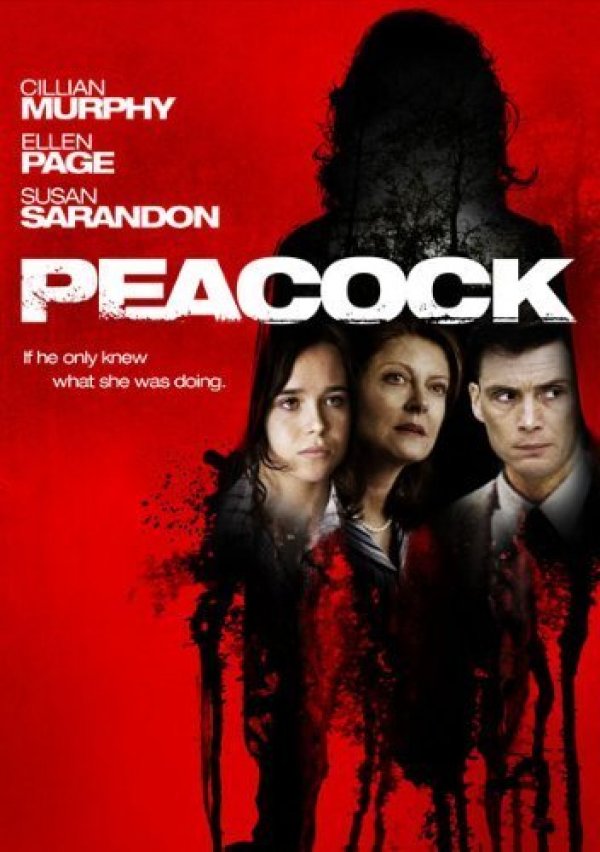
Peacock (2010)


John Skillpa (Cillian Murphy) is a timid, socially-awkward bank clerk living in tiny Peacock, Nebraska who prefers to keep to himself. This might have to do with John’s secret: he has another personality no one knows about, a woman named Emma, who each morning does his chores and cooks for him before he starts his day. However, everything changes when a train derails into Skillpa’s backyard, exposing Emma to the curious neighbors, who assume “her” to be John’s wife. As John struggles to maintain control over his other personality as well as keep up the façade that she is his wife, his already disturbed psyche becomes further unbalanced.

Peacock is an above-average thriller, but I’ll tell you right now it definitely won’t be for everyone. It’s a slow, subtle character-study about a man with a fractured psyche that plays more of like a drama than a thriller (though it’s pretty darn suspenseful!). If you aren’t put off by languidly paced films, however, Peacock is an intensely psychological experience that I definitely found to be worth my while, despite its flaws.

The best thing about the film is no doubt Cillian Murphy’s amazing performances as both John and Emma. These are two completely separate people, with distinctly different ways of talking, walking and different personalities and facial tics, but Murphy makes them both believable and I even starting thinking of them as two separate people instead of one man. How Murphy didn’t receive more accolades for his performance is beyond me, because he is purely brilliant in this film.

Rounding out the cast are several other famous faces – Ellen Page, Susan Sarandon, Bill Pullman, Josh Lucas, Keith Carradine. Not even against these accomplished actors is Murphy’s performance diminished, though the other actors do a fine job as well. Page played the role of a desperate young mother, Carradine and Sarandon played the wealthy mayor and his wife, Lucas the town cop and Pullman the annoying boss at the bank. While each character adds another layer of complexity to the story, some of these extraneous characters felt like they weren’t really vital to the story. Perhaps the connection between some of these characters and John/Emma never really meshed for me, but something was a bit lacking in their development.

Nevertheless, the best parts of the film were when John/Emma went behind the others’ back to interact with the townsfolk. When Emma would approve something (like a political rally in the backyard), John would find out later and just lose it! John was so out-of-control that you came to prefer Emma’s cool-headed way of approaching problems, even if she was manipulative and calculating. As she slowly took over more and more of John’s life and became the more dominant personality, John really begins to panic and this unbalance creates a lot of tension and suspense.

Now, a lot of people have commented that it’s not at all believable that the townspeople couldn’t tell that John/Emma were the same person, and while watching the movie I tended to agree. However, looking back I realized that if Murphy’s performance was so convincing to me, I suppose it would also work on the townspeople. Plus, the two separate personalities had completely different ways of moving and speaking. However, I still think it would have been more believable if writers Michael Lander (who also directed) and Ryan Roy had just made Emma John’s sister or cousin. At least that way it would explain the striking resemblance between the two!

Despite this, I found myself getting sucked into the twisted, dreary story. Besides the fantastic performances, director Michael Lander creates a somber, post-Dustbowl era (the movie could be set anywhere from the 1930’s to the 1950’s) atmosphere. The film itself is beautifully filmed and its dark tones create a melancholy, ominous tone. Even the obligatory backstory of John being an abused little boy or the previously mentioned flaws didn’t really sully the hauntingly filmed movie.

Peacock doesn’t work all the time, but if you are looking for a sophisticated, tense psychological film it is worth checking out!

Available from Amazon!

Thursday, June 3, 2010

Home Movie (2008)


Home video cameras offer families a chance to capture precious moments, whether it’s in the backyard, on vacations, during holidays or just everyday life. Home videos are usually meant to capture the best of times, but sometimes they can also capture the worst. Usually this footage ends up on America’s Funniest Home Videos or Break.com, but what if home videos showed something truly disturbing, like every parent’s worst nightmare that their kids are not the sweet and innocent children they thought they were raising but instead sick and twisted little bastards? What if a family’s home videos revealed the extent of their children’s sadistic nature?

This is the basic premise of Home Movie, which uses “found footage” to document one family’s desperation as they watch their creepy kids commit unspeakable horrors, all through the lens of the family camcorder. I hadn’t heard anything about Home Movie before watching it and wasn’t expecting much, but it delivers a truly sinister and disturbing story.

The film shows us the Poe family, comprised of dad David, mom Clare, and siblings Jack and Emily. They’ve just moved to an isolated house in the country and also bought a brand spankin’ new video camera to record their adventures (well, according to David…Clare originally bought the camera for her psychology practice). They seem like a normal loving family…except their kids, twins Emily and Jack, are pretty creepy. They don’t say much and just stare into the video camera with empty expressions. And then there’s an instance where David gets hit with a baseball…which could be construed as an accident, until Jack starts throwing rocks (“Turn the camera off…He’s throwing rocks at me”). The kids’ bratty behavior begins to escalate and goes from petulant (throwing rocks, behaving badly at dinner) to downright shocking (crucifying the family pet on Christmas). Clare recommends counseling/medication and tapes her sessions with the troublesome twosome. She also begins to suspect that David is abusing them and causing them to lash out. However, David, a Lutheran minister, thinks the kids are possessed by evil spirits and believes an exorcism is in order. Through all this, the twins’ progressively violent and shocking behavior only seems to be getting worse…are they being abused? Are they possessed? Or are they just burgeoning sociopaths?

I am really surprised that this film hasn’t been given more attention, because it’s a fine flick. Writer/director Christopher Denham creates a chilling story and shocking visuals. The children are just creepy to begin with (kudos to child actors Amber Joy Williams and Austin Williams for their convincing performances), but Denham creates so much tension by giving us a voyeuristic view of the Poe household. We feel as if we are a fly on the wall while watching the horrific events unfold.

Also, Denham uses the home video footage wisely, so it appears realistic and believable (which is much harder than it looks). For example, the parents are always saying “shut that camera off!” when something bad happens. The footage that is shown comes off as very natural and is never forced. Every disturbing detail is captured and there are plenty of shocks throughout the film as well as a twisted ending. The story builds subtly, but the intensity levels keep rising with each new “incident” the family experiences. It takes a little patience to get through the first part of the film, but the tension keeps mounting and mounting until you just can’t look away.  I also enjoyed how the story explored many different explanations for the children’s behavior. Are they being abused? Are they demon possessed? Is something evil in the house influencing them? Are they just pure evil? These different possibilities kept me on my toes and on the edge of my seat.

Considering there were only four characters in the film and the action was always focused on them, the actors all did a phenomenal job. As mentioned previously, real-life siblings Amber Joy and Austin Williams did a very convincing job of portraying evil children. The film could have easily gone campy if they gave over the top performances, but they played it very subtly, which ended up making their characters VERY unsettling. Props must also be given to director Denham for really getting these stellar performances out of child actors. Adrian Pasdar and Cady McClain were equally brilliant as the befuddled parents. Their performances came off as very natural and completely believable. You could really feel their frustration, confusion and fear through their performances and couldn’t help but sympathize with them.

This is a rare independent film whose atmosphere and psychological terror deliver unrelenting dread, tension and suspense. Home Movie is an underrated film that deserves more attention from horror fans and is one of the best “found footage” or “faux documentary” indies to rock my world. You should definitely check it out…

Buy it on Amazon!

Tuesday, January 26, 2010

7 Days (2010)


7 Days (aka Les 7 Jours du talion) just had its world premiere at 2010’s Sundance Festival and this torture thriller opened to a lot of buzz. I wasn’t expecting much with this film, perhaps just a more artsy version of Saw, but 7 Days explores much more emotional depths with its gritty and melancholy look at vengeance.

Surgeon Bruno Hamel (Claude Legault) and wife Sylvie (Fanny Mallette) have a strong, loving relationship and a cute young daughter named Jasmine (Rose-Marie Coallier). One afternoon, Jasmine goes out to distribute invitations to her upcoming birthday party but never returns home. The frantic parents and police search the nearby neighborhood and soon find the brutalized body of Jasmine, who has been raped and killed. The police soon track down the alleged rapist and killer, Anthony Lemaire (Martin Dubreuil), who has a long rap sheet of sexual offences. Bruno is not satisfied with what the police have in store for Lemaire and after a carefully orchestrated plan kidnaps Lemaire as he is transported by police and takes him to a remote cabin. Bruno tortures Lemaire for the seven days that lead up to the date that would have been his daughter’s ninth birthday. As he slowly wrenches the life out of Lemaire, the police, led by Detective Hervé Mercure (Rémy Girard) who has experienced his own family tragedy, try to stop Bruno from becoming the monster he is trying to kill.

7 Days is certainly an affecting piece of cinema, one that will certainly leave viewers stunned and shaken up. It is not, as I first assumed, Saw for the art crowd. First off, it has a stark and cold gray color palette that sets the somber and grim mood of the film and makes it heartbreakingly beautiful. The direction by Daniel Grou is unsettling and unwavering in its look. For example, there is a truly disturbing shot of the lifeless Jasmine that lingers over every spot of blood and every speck of dirt on her brutalized and broken body. It is one of the most horrifying images of a murdered child I’ve ever seen in a film and it makes the viewer terribly angry and hopelessly sad all at once. Grou also lets the camera linger on the tortured body of Lemaire as well as a dead carcass of a deer, and while some shots are drawn out too long (and frustratingly indulgent), for the most part the demented direction of Grou fits the melancholy mood of the story perfectly.

The story, adapted for the screen by Patrick Senécal and based on his book, is certainly nothing new (a parent who will sacrifice everything to see that the murderer and/or rapist of their family member is appropriately punished), but it is the emotional turmoil of the story that kept me watching. The more and more Bruno tortures Lemaire the more and more he himself is turning into the monster he is so desperately trying to punish. Some of the torture is so harsh (sledgehammer to the knee, whipped with chains, a surgery where Lemaire can feel it all even though he is paralyzed, etc.) that I sometimes found myself starting to sympathize with Lemaire, even though he was a pedophile, rapist and murderer. This conflict is also echoed in Bruno, who begins to struggle with the idea of killing Lemaire. Writer Senécal really makes us think about what is right and what is wrong or if there is just gray area that is better left to one’s own interpretation. And, gosh darn it, I like a film that challenges me to think!

The actor who plays Bruno, Claude Legault, does an awe-inspiring job of portraying the conflict mentioned above. The inner turmoil he faces is brought to light by Legault’s subtle but strong performance. I must also commend Fanny Mallette for playing the heartbroken mother, Sylvie. She did a wonderful job of playing the mourning parent who was still strong when her husband abducted the killer and she had to face the police by herself.

As for the film being billed a “torture thriller”, don’t confuse that with the term I so loathe, “torture porn”. 7 Days is not about being exploitative at all, but rather examining the complex emotions and actions of a victim-turned-potential-killer. It is heavy on the emotional drama, which definitely won’t please some horror fans. As mentioned before, gorehounds looking for a cheap thrill will probably be disappointed. 7 Days aims much higher than your standard exploitative horror film and while I like a challenging horror film, some people simply don’t and will be put off by the film’s art house themes. However, if you are looking for a thought-provoking and cringe-inducing film 7 Days may be right up your alley!

And guess what? You can catch 7 Days on video-on-demand as part of the Sundance Selects VOD rollout! Check your local cable provider for availability.

Tuesday, December 15, 2009

Hurt (2009)


So, Hurt’s poster, with a woman peeking out from a dilapidated building, makes it look like another run-of-the-mill slasher horror movie, but I can promise you it is nothing like its poster makes it appear to be. Instead of the typical balls-to-the-wall horror flick, Hurt takes its time building up its dramatic story. Instead of a psycho slasher it’s filled with equally dark and devastating family secrets. It’s always nice when a horror film decides to take the more psychologically terrifying route as opposed to the in-your-face blood and guts approach.

After her husband’s untimely death, Helen Coltrane (Melora Walters) and her two teenage kids, Conrad (Jackson Rathbone) and Lenore (Johanna Braddy), are forced to move in with her brother-in-law Darryl (William Mapother). He lives in the middle of the desert in a dilapidated junk yard, so suffice to say the kids aren’t exactly thrilled, especially Lenore. It also doesn’t help that Darryl is a little odd and seems to have the hots for Helen. And yet, the family is stuck there until they receive a settlement from their late father and husband’s death.

Things get even more complicated when Helen brings home Sarah (Sofia Vassilieva), an abused foster child that her husband had been keeping an eye on before his death. When Sarah arrives the tense atmosphere of the household escalates as sinister “accidents” begin happening. When these accidents become deadly in nature, it is not long before dark family secrets are revealed.

I was immediately pulled into Hurt from the opening sequence of the titles moving fluidly through the dry desert landscape to a mysterious car wreck. The photography was stunning and the setting of the desolate desert really mirrored the Coltrane family – dry, withered, empty. Hurt shows the fragility of family relationships but also the frightening strength love can give, whether it is for good or for bad.

Hurt may not be a traditional horror film, but it’s psychological twists and turns make it for an excellent, low-key thriller.

Though I pretty much suspected from watching the trailer who the bad apple was, it still didn’t detract from my enjoyment of the film. In fact, I just wanted to know why and how the perpetrator committed the heinous acts (one particularly hard scene to watch is when a pet duckling is found with its neck broken). When the motivations are explained it all makes perfect, tragic sense.

My only problem with the film is how the “bad guy” went from a charmed life to being a manipulative and crafty villain in the span of just weeks. The divide just seemed far too wide for a regular person to cross in such a short amount of time, but then again, I suppose the need for revenge can change anyone.

The actors soon helped put these quibbles to rest with their stunning performances. Melora Walters as the weepy, wounded mother just oozed vulnerability, while Johanna Braddy as daughter Lenore brought some backbone to the family. Braddy portrayed Lenore as grieving, but also determined to move on and live her life. She is also the first person to suspect that all isn’t as it appears to be. The wonderful William Mapother played Uncle Darryl with just enough skeeviness to creep me out, but also with a few tender moments to make you rethink him as a monster. Sofia Vassilieva as the not-so-innocent Sarah gave a solid performance. Her character made me uneasy, but it wasn’t until halfway through that I really knew if she was good or evil. When she decides to take that path, though, there is no turning back for her and it’s a joy to watch the transformation!

Just what happens to the Coltrane family? Well, at first beloved family articles go missing or are destroyed. A beloved pet duckling is killed. Things become more sinister as medications are switched, people are impaled on rusty pipes or crushed by the abundant parts of metal in the junk yard and wild wolves zero in on the prey. The villain messes psychologically with the family’s heads, getting them to blame and turn on each other, before waging an all-out brutal revenge scheme on them. Don’t go into this movie looking for blood and guts, but it does have several nice moments. Overall, though, it’s much more about the psychological terror caused by all the first few subtle acts that begins to rip the Coltrane family apart. By the time they realize who is behind the sabotage it is far too late.

Directed by Barbara Stepansky (who also co-wrote the screenplay with Alison Lea Bingeman), Hurt is a tense, psychological thriller that I really enjoyed. Ignore the misleading poster, because Hurt offers much more than its poster shows.

Order it on Amazon!

Monday, December 14, 2009

Basement Jack (2009)


Last year we reviewed Evilution, the first film in a planned trilogy from writer Brian Patrick O’Toole. The three films are set to revolve around the strange Manager (played by Nathan Bexton) of a creepy apartment complex called the Necropolitan. Basement Jack only has a few nods towards Evilution (it featured the same apartment complex and sinister Manager) and it is a very different film from Evilution. Instead of zombies, we get a seriously bad ass slasher movie.

Eleven years ago, Karen Cook (Michelle Morrow) survived a massacre perpetrated by then seventeen-year-old Jack Riley (Eric Peter-Kaiser), nicknamed by the media “Basement Jack” for his penchant to hide in family’s basements before slaughtering them. The killing spree began when Jack killed his domineering, insane suburban mother (Lynn Lowry) after she tortured him one too many times with electrical shocks and then he moved on to killing whole families headed by blonde matriarchs that were mommy look-alikes.

Yes, boy definitely has mommy issues.

After Karen stopped him, Jack was tried for his crimes, but his lawyers got him off on temporary insanity. A year ago he was released and has started killing again, though no one seems to realize it except for Karen. Karen tracks Basement Jack to the small town of Downer’s Grove, where she hooks up with bumbling rookie Chris Watts (Sam Skoryna) to try and stop the vicious killer.

Basement Jack is a fun throwback to ‘80s slashers but is unique enough to stand on its own. It didn’t need to fall back on familiar and stereotypical slasher tropes (well, except for a few – the killer always comes back to life!) and was unique enough to keep my attention throughout its entire running time.

First off, the film looks great! It was easy to forget I was watching an indie film because it certainly doesn’t look low budget! Everything looked professional, from the lighting to the direction (by Michael Shelton) to the cinematography (by Mathew Rudenberg). Even the score (by Alan Howarth) was excellent and accompanied the action perfectly.

Secondly, Basement Jack has a great story, written by Brian Patrick O’Toole. Some people might complain that too much time was spent focusing on Jack’s childhood and back story, but I thoroughly enjoyed being exposed to his horrifying upbringing. The character of his mother is definitely one for the horror history books! The story also kept things interesting with the inclusion of the cops’ perspective (among them was Tiffany Shepis in fine form!). I will say that things became a bit repetitive with Karen going to the cops, them not believing her and thinking of her as a suspect for the murders – over and over again. Other than that, though, I enjoyed the story and the characters very much.

Plus, with a few exceptions, the acting was pretty solid. There were a few stiff performances here and there, but all the main characters did an amazing job. My favorite performance was from Lynn Lowry who played Jack’s electrifying mother. “Momma loves you with a cuddle and a kiss!” has never sounded so…wrong and disturbing. Eric Peter-Kaiser played a very menacing killer, though he likes to twirl his machete a bit too much and is dressed like a Ramones reject. Regardless of those facts, I found his portrayal of Basement Jack utterly convincing and intimidating. Also, Michelle Morrow put in a lot of talent and energy into the character of Karen and made her very relatable to the audience. And Tiffany Shepis puts on a good show (and keeps her clothes on) in a small role as a cocky cop. It’s always a pleasure to see Shepis, who always brings a certain spark to her roles!

The film boasts some pretty respectable gore effects, too, though a few are on the distractible CGI side. However, Basement Jack slices and dices his way through many a victim, and most of the time it’s gory goodness. And not only does he just make mincemeat of people, he also arranges them in grisly tableaus satirizing the perfect, all-American family that he wishes he had had growing up. This vicious visions are the most disturbing next to Jack’s flashbacks of his cuckoo-for-cocoa-puffs mother, that is!

Overall, I found Basement Jack to be a highly entertaining throwback to the ‘80s slashers we all hold dear. It has a few flaws here and there, but nothing to really dampen my enjoyment of it. Basement Jack is one of the better modern indie slashers I’ve seen and it’s nice to know that the familiar slasher formula can be updated and tweaking in such a way where it can still be enjoyable.

Order it on Amazon!

Tuesday, October 20, 2009

The Brotherhood of Satan (1971)


In this little-seen and underrated Satanic flick, elderly residents of a isolated town have taken to snatching children and turning them into followers of Satan. Once they’ve collected enough children, a ritual will be held to transpose the senior citizens souls into the bodies of the kids, giving them renewed life!

Meanwhile, Ben (Charles Bateman), his girlfriend Nicky (Ahna Capri) and his daughter K.T. (Geri Reischl) are on their way to grandmother’s house when they happen upon a horrible accident and drive to the nearest town for help. Unfortunately, it’s the same Satanic town mentioned above and there they are met with hysterical townsfolk. They drive away, but car trouble forces them back into town. Once back in, a supernatural force keeps them and the rest of the townsfolk trapped. Seems that the senior citizen Satanists need one more child to perform their Black Mass, and that child is K.T. Will Ben save his daughter and the town before it’s too late and the small fry of Satan are unleashed?

The Brotherhood of Satan certainly has a convoluted and confusing way of unfolding its narrative, but as the pieces come together you are drawn further and further into the story. Besides its weird narrative structure, the film also boasts some odd scenes including a toy tank turning into a real tank and crushing a car and a dancing doll that causes the death of some parents, among others. The real highlight of the film for me was the Satan-worshipping party the seniors had. It was just like a potluck, except upon entry each person pledged their allegiance to Satan and one of their own was tried for allowing her grandson to be baptized. When she was deemed guilty, the ferocity and rage her brethren had towards her was truly frightening. There are also clever ideas used throughout the movie, including children’s toys as the instruments of murder (I don’t want to speak too much on this lest I give anything away, but toys come to (larger than) life to exact murder on parents).

Though the film is very PG-ish and lacks much blood and/or gore, the use of weird camera angles, an evocative score, creepy kids, the colorful visuals and the disorienting narrative really help give it a nightmarish, disturbing quality. Director Bernard McEveety and writers L.Q. Jones (who also stars as the town’s sheriff), Sean MacGregor and William Welch did an excellent job with the film, and I can’t understand why it hasn’t gotten more recognition over the years. It certainly isn’t perfect (especially with the confusing narrative structure), but it certainly deserves another look from horror fans.

If you are looking for a quirky ‘70s Satanic movie, The Brotherhood of Satan is one that should not be overlooked. With shades of Rosemary’s Baby and Race with the Devil, it really deserves a bigger audience!

Order it on Amazon!

Thursday, July 16, 2009

Jack Be Nimble (1993)


Jack Be Nimble is a pretty obscure 1993 New Zealand horror film starring Alexis Arquette (back when “she” was a “he”) that deals with evil foster families, deaths by hypnosis and a psychic sister who has a rather icky relationship with an older, equally psychically-gifted man. It is a very dark and solemn film that really doesn’t have much of a strong plot, instead focusing on the odd characters scattered throughout and its somber atmosphere.

The film begins with two young siblings witnessing their mother have a nervous breakdown. When their father comes home, the mother has split, and the children are placed in an orphan’s home. Soon the siblings are separated as the little girl, named Dora, is adopted by doting parents, while little Jack is adopted by a cruel farming family. As Dora grows up with kisses, presents and lots of love, Jack grows up being mercilessly abused by his foster father, mother and four sisters, both mentally and physically. The two never stop thinking about each other, and eventually Jack builds a kind of hypnosis machine and dispatches of his cruel family, setting out on the road to find his sister. His sister has also developed psychic abilities and is able to pinpoint where Jack is. With the help of an older psychic, whom I suppose becomes her boyfriend (such awkward sex scenes…), she finds Jack and the two set out to find their biological parents. Yet, Jack harbors a lot of hatred for them, and Dora fears what he might do with his hypnosis machine. Also, Jack is being trailed by his four sisters, who are out for revenge for what he did to their parents.

Where to even begin with this odd little flick? I suppose the first thing I noticed was the somber mood throughout. This is a dark film that unflinchingly deals with child abuse and the ensuing psychological damage that occurs. It could also be seen as a study of nurture vs. nature, with two siblings being reared in extremely different circumstances. It is definitely not a “fun” horror flick and carries its grim tone throughout. The tone is almost otherworldly, like it was lifted straight out of a Grimm Brothers’ fairy tale.

Adding to the fairy tale-like atmosphere are the almost-caricatured characters of Jack’s evil family – from brutish father to uptight and cruel mother to the silent yet menacing four sisters. I also liked the use of chiaroscuro throughout the film. Deep, dark shadows dominated the first part of the film, only to be juxtaposed with lighter, brighter colors later in the film. Most of the film carried with it a bleak atmosphere, though, and utilized the contrast of light and dark to show just how black the darkness really was.

Story-wise, the plot wasn’t that developed, and it felt like writer Garth Maxwell (who also directed) was a bit all over the place with the psychic/telekinetic/hypnotic powers of the lead characters. Nonetheless, the result was intense interactions between the two siblings. Actors Alexis Arquette and Sarah Smuts-Kennedy, who played Jack and Dora respectively, had a great chemistry and really gave the roles their all. I was surprised at how intense and serious Arquette could act, considering I only remember him from The Wedding Singer and Bride of Chucky. And Smuts-Kennedy (poor girl, doesn’t she have a separate stage name?) was equally good as Dora, even in the intensely awkward sex scenes she had to do with the creepy older guy.

The film isn’t that gory or bloody, but the deaths were very satisfying to watch, especially since most of the victims deserved it. Jack’s hypnosis machine was especially intriguing, but it wasn’t explained much. I think he, like his sister, had certain telepathic abilities but needed the machine he built to channel them. Anyways, I really enjoyed seeing him getting payback against his family in rather satisfying ways. The ending when they must face the four sisters was pretty tense, with someone’s grisly death being somewhat unexpected and a bit of a letdown. And the strange last scene just seemed really unnecessary, like out-of-nowhere unnecessary!

Jack Be Nimble is a very odd, off-kilter horror film that feels more of like a twisted fairy tale rather than a straight-forward horror film. Despite its flimsy story, I was nonetheless intrigued by the characters and their abilities. Add in some evil people you can enjoy watching die via hypnosis and telekinesis and you’ve got yourself an overall satisfying, if not weird, horror flick! If you are looking for something completely different with a grim, somber feel to it, you should give Jack Be Nimble a look!

Buy on Amazon!

Wednesday, May 7, 2008

Snuff: A Documentary About Killing on Camera (2008)


Director Paul von Stoetzel’s documentary, Snuff: A Documentary About Killing on Camera, explores the controversy of the “snuff” film and if these “murdered for profit” films really do exist. Snuff, as defined in the film, is a film that features a murder onscreen, usually preceded by sex, made explicitly for profit. Snuff isn’t made for pleasure nor is it death that just happens to be caught on film. In snuff, a person dies on camera for the sole purpose of making money off that scene.

Many people have questioned if snuff really exists and the FBI still vehemently denies it’s out there. Snuff: A Documentary About Killing on Camera presents filmmakers, cinephiles and even FBI profilers with their thoughts on snuff films.

The official synopsis from Killing Joke Films describes it as:

“… a feature film examining the existence of films in which people are murdered on camera and the culture surrounding them. Through interviews with former FBI Profilers, Cultural Academics, and Film Historians the documentary delves into the disturbing history and myth of Snuff Films. The FBI claims there is no evidence to prove the existence of Snuff and, therefore, Snuff Films are a myth. This documentary analyzes the relationships between war, cult films, serial killers and pornography to prove whether or not this pervasive myth is, in fact, reality.”
 
Through these interviews and graphic scenes of torture, bloodshed and murder from controversial horror films as well as real scenes of death, filmmaker von Stoetzel examines the validity of snuff films and if they are truly real or not. The result is an emotional, powerful and troubling look into a society that views REAL torture and death as entertainment.

This amazingly comprehensive documentary is a real eye-opener to the ugly, twisted side of entertainment. While we would rather not believe human beings would pay to see real people get killed, this does happen, all in the name of entertainment. There are many segments that are hard to watch, especially one about a child pornography ring whose leaders were arrested after causing the death of at least one child. Outrageously, the leaders of the ring were released from Russian jail due to overcrowding and the head of the ring was only sentenced for 11 years for the atrocities they committed. Another particularly difficult segment to sit through was a discussion of war snuff, specifically the infamous execution by beheading of an American. The scary thing is that this video isn’t even considered “snuff” and is readily available to anyone for free on the Internet.

The film also features some surprisingly emotional scenes, specifically two in which Texas Chain Saw Massacre producer Mark L. Rosen talks about the previously mentioned child exploitation and another in which he describes watching a real snuff film. Both are powerful scenes, but Rosen becomes most visibly shaken when discussing the snuff film. He was approached by an investor who wanted him to distribute an “adult” film and invited to watch it in his hotel room. While two beefy bodyguards guarded the door of that hotel room, Rosen viewed the film that featured violent sex and, at the end, a woman’s throat being cut on screen. He goes on to tearfully say that there’s no way special effects were involved. His recollection of the event is touching and really makes you think about the atrocities being committed out in the world that most know nothing about. Rosen still doesn’t know what became of that snuff film and doesn’t care to.

Despite the horrors the film exposes, its execution (no pun intended) is equally well done. Von Stoetzel has done an excellent job assembling interviewees that have differing opinions and letting them all express their thoughts. The production values are equally high and I liked how the shocking clips from movies, the news and other sources were played in between the interviews. It also made you think about our current YouTube generation, where real and brutal acts of violence caught on video end up on the Internet for everyone to see. Snuff collectors might not be willing to pay exorbitant prices for snuff films if they can just watch them for free on the Internet. It also raises the question if people (including kids and teens) who watch these real death videos, which are so prevalent these days, are becoming desensitized.

The filmmaker isn’t kidding when a warning message is flashed across the screen at the beginning of the film, warning it isn’t for the faint of heart or spirit. I had plenty of trouble sitting through its disturbing elements, including the infamous video of an American being beheaded in the Iraq War. There were many shocking moments in the film, whether from controversial films like the Faces of Death series (though now we know many of these were fake), Henry: Portrait of a Serial Killer, The Texas Chain Saw Massacre, alleged snuff films, news and/or war footage as well as some footage shot by two serial killers that show them torturing a family. I can handle all the fake gore a movie can throw at me, but I get very shaken up over real-life torture, dismemberment and death. And, let me tell you, Snuff: A Documentary About Killing on Camera, definitely left me shaken up.

Snuff: A Documentary About Killing on Camera, is an excellent, although horrifying, documentary on the notorious “snuff” film. It never seeks to exploit its subject, but treats it with a reverence and respect to get the truth out. Filmmaker Paul Von Stoetzel has created a moving and thoroughly engaging look at the myth surrounding snuff films. If you can handle the disturbing elements of “real-life” horrors this documentary portrays, then it comes highly recommended.

Visit Killing Joke Films and Snuff: A Documentary About Killing on Camera’s Official Site!

Tuesday, March 18, 2008

Book Review: Into the Cruel Sea by Rich Ristow


The same day I received Rich Ristow’s Into the Cruel Sea I finished it. Once I picked up the novelette, I couldn’t put it down because Ristow’s debut, released by Skullvines Press, is hauntingly engaging.

Seventeen year old Beth lives in the midst of paradise, but things certainly aren’t peachy-keen in her own life. Beth lives at home with her abusive father, meek mother and helpless younger brother on a military base on the balmy island of Bermuda in 1984. A few months prior, her boyfriend Wade butchered his own parents and disappeared without a trace. The only thing he left behind was a pile of clothes on the beach. As Beth mourns him and tries to move on, she is forced to face her violent father on a daily basis. Beth tries to cope by drowning herself in alcohol and drugs but that only dulls her intense anguish, which is both physical and mental.

Lately, Beth has been having intense and realistic dreams about Wade; dreams in which he returns to her a changed man, but not for the better. He has cold, clammy skin, is drenched in saltwater and has gills on the side of his neck! Beth soon realizes that the dreams are real and that Wade wants her to come with him…Into the Cruel Sea.

Like sunlight reflected off a crystal blue ocean, Into the Cruel Sea will dazzle you. Its pacing is just about perfect as it grabs your attention from the stunningly creepy prologue and keeps it until the thrilling ending. Ristow has crafted a fast-paced piece of fiction, but one that doesn’t skimp on characterization.

For such a short novel, the characters are all well-developed to the point where you can sympathize with them. Beth is the epitome of a teenage girl growing up trapped between a rock and a hard place. Ristow’s writing brings her pain and suffering to life and makes us care about Beth. Still, she is no pushover and eventually stands up for herself to make her own decisions. Of course, the novelette is more about this coming of age than anything else. After years of abuse at the hands of her brutal father and being trapped on the island with seemingly no happy future, Beth’s realization that she can leave everything behind is empowering and will have you cheering for her.

As for Wade, he is portrayed as the monster that rises out of the depths of the sea for Beth and as another obstacle to her happiness. Wade is like a zombie Romeo, returning from death to claim his long-lost love. His transformation from an odd boy who hears “voices” to a cold-blooded murderer to a menacing sea creature is as enthralling as it is brutal.

Speaking of brutal, there are some nicely done gore scenes throughout the book. Wade’s hands have turned into vicious webbed claws and his teeth have grown sharper, which just makes it perfect for him to slash people’s skin into strips of flesh. One particular grisly scene describes the aftermath of one of Wade’s attacks:

“He was covered in long gashes. Flaps of flesh hung from his lower jaw, exposing the upper and lower sets of teeth. One of his crushed eyes hung out of its socket.” 

While these scenes of gore are entertaining, they are never empty and we feel empathy toward the victims. Ristow expertly weaves emotion into the horror tale, which only serves to elevate the subtle terror further.

Into the Cruel Sea is as exciting and exhilarating as a dip into startlingly cool water whose depths you can’t quite make out. It’s a refreshing horror story that doesn’t rely on clichés to move the story along. Despite it’s unique and fantastical “mer-man” monster, it still manages to evoke emotion and be believable at the same time. If you’re looking for a quick read from a great new author, check out Into the Cruel Sea by Rich Ristow!

Available from Amazon!

Tuesday, October 2, 2007

The Girl Next Door (2007)


Based on the Jack Ketchum book of the same name, The Girl Next Door tells of the horrors hidden behind white picket fence suburbia in the 1950’s. It is an unflinchingly brutal and heartbreaking film that stays true to the book’s narrative and manages to bring the book’s disturbing scenes to shocking life.

The film begins with every kid’s favorite time of year…summertime! A time of freedom, hanging out with friends and long summer days to do whatever you want. On a dead end street in suburbia, though, the summer of ‘58 will forever change the life of a young boy. David (Daniel Manche) lives next door to the Chandlers. The Chandlers consist of single mom Ruth (Blanche Baker), whose husband ran off with another woman years ago, and her three sons, Woofer (Austin Williams), Donny (Benjamin Ross Kaplan) and Willy Jr (Graham Patrick Martin). They have just adopted their two cousins, Meg (Blythe Auffarth) and Susan (Madeline Taylor), whose parents died in a car accident. Both girls were involved in the crash, and while Meg escaped with only a few scars, younger Susan has to now walk with leg braces and crutches. David and the other boys spend their days lounging around the Chandler house (Ruth has always been a cool mom and lets them drink and smoke). David gets a crush on Meg, but begins to notice how poorly Ruth treats the girls. She verbally abuses them, and things quickly escalate to physical abuse. Woofer, Donny and Willy Jr. quickly join in, and soon even other neighborhood kids are joining in to torment the girls. David seems powerless to do anything, even when things get so bad that Ruth has Meg strung up in the basement, blindfolded and just hanging by her arms. Meg’s torture only gets more and more sadistic and brutal at the hands of Ruth, her sons and the neighborhood kids. Can David do something to help or will he too fall victim to Ruth’s insanity and cruelty?

Book adaptations are tricky to pull off, but The Girl Next Door manages to recreate the intensity and horror of Jack Ketchum’s book. The horrifying events that take place in the Chandler household feel very real and watching the film you are very aware that this could possibly be happening right next door to you. It is, in fact, based on the shocking true story of 16-year-old Sylvia Likens, who was beaten, raped and tortured until her death by an adoptive family and the neighborhood kids in Indiana in 1965.

The real crime that was committed, along with the book that was inspired by it and this film are all examples of how vile, cruel and evil some people can be. The depravity in the film is shocking, and not just because it graphically shows the torture (it doesn’t). It’s the emotion (or lack of emotion) and mob mentality behind the actions of the Chandlers and all who joined in that will really chill your bones. I run a horror review site and I’ve seen some pretty messed up stuff in my day, but the cruelty portrayed in this movie actually brought tears to my eyes.

Director Gregory Wilson films unobtrusively and lets the film unfold before our eyes. The audience is treated as a voyeur, and like David, there is nothing we can do to stop the evil occurring right before our eyes. We are stuck just watching the shocking torture that is happening to Meg and Susan. The direction is so unobtrusive that you actually feel that you are there, a trick that Jack Ketchum also pulls off in the novel.
Speaking of the novel, screenwriters Daniel Farrands and Philip Nutman did a fine job adapting the book and showing the heartbreaking emotions that Meg, Susan and David go through, as well as the hate that Ruth feels towards the younger girls. The confusion and conflict David goes through feels very real and is portrayed quite well by Daniel Manche. Blythe Auffarth does an amazing job in her portrayal of Meg. Meg’s strong will, even through extreme pain, is shown very well by Auffarth. I expect to see great things from this young actress in the future. Blanche Baker also does a great job as Ruth, really making the audience hate her.

My only complaint with the characters is that there wasn’t enough time spent on Woofer, Donny and Willy Jr. Their characters just weren’t fleshed out enough to truly buy their horrific actions. The book paints a much clearer picture as to who each one really is and what drives them to engage in such deviant and disturbing behavior. Still, with the time constraints of a film, I understand that some things needed to be trimmed down and the overall feeling of the book remains intact.

The Girl Next Door is definitely not a film for everyone. When faced with the true horrors of this world as opposed to the cartoonish and larger-than-life slashers and serial killers, most people will wet their pants after watching this film. It is a heartbreakingly brutal look at the vile nature of some humans and is packed with sincere emotion.

It’s also a film that must be seen.

Available from Amazon!
Related Posts Plugin for WordPress, Blogger...